Is TIG or MIG Better for Beginners? The Basics
On this page (9 sections)
- MIG vs. TIG: Which Welding Process is Easiest for Newbies?
- Understanding the Core Differences: How They Work
- Why MIG is Typically Easier to Learn
- When TIG Might Still Be an Option (But It’s Harder!)
- What About Other Welding Processes?
- Key Differences Summarized for Beginners
- Your First Steps to Welding Success: A Checklist
- Conclusion
- Frequently Asked Questions
When you’re starting out with welding, picking the right machine can feel like a puzzle. For a broader comparison of beginner-friendly options, read our guide to the easiest process to learn. For beginners, MIG welding is generally the better choice over TIG. MIG welders are known for being easier to learn and offer a more forgiving experience when you’re first learning the ropes of joining metal.
Both MIG and TIG have their strengths, but the learning curve is a big factor for new welders. We found that MIG welding typically requires less practice to achieve decent results. This means you can start creating projects sooner. Understanding the key differences in usability helps you make the best choice for your learning journey.
- MIG is usually easier for beginners.
- It has a faster learning curve.
- TIG offers more control but is harder to master.
- Consider your project needs.
Let’s walk through exactly why MIG is often recommended for new welders and what makes it so beginner-friendly.
MIG vs. TIG: Which Welding Process is Easiest for Newbies?
When you’re just starting to learn welding, the most important question is often about ease of use. You want to pick a welding process that helps you get good results without a massive amount of frustration. We’ve looked at how MIG and TIG welding stack up for beginners, and the answer is pretty clear.
Many welders and instructors agree that MIG welding is generally much easier for beginners to pick up. It’s often recommended as the first welding process for someone new to the craft. Let’s break down why.
Understanding the Core Differences: How They Work
Before we dive into which is easier, it helps to know the basic idea behind each process. Both MIG and TIG join metals using heat from an electric arc. They both use a filler material to build up the weld bead.
MIG Welding: The Beginner’s Buddy
MIG stands for Metal Inert Gas. It’s also called Gas Metal Arc Welding, or GMAW. MIG welding uses a continuously feeding wire electrode. This wire is fed through your welding gun. A shielding gas flows from the gun too.
The wire melts as it goes through the arc. This melted welding wire becomes your filler material for the weld. The shielding gas protects the molten weld pool from contaminants in the air. Think of it like a protective umbrella for your hot metal.
The key advantage for beginners is that the wire feeds automatically. You just need to manage the gun angle and movement. It’s a bit like learning to use a hot glue gun, but with much hotter materials!
TIG Welding: The Precision Artist
TIG stands for Tungsten Inert Gas. Its official name is Gas Tungsten Arc Welding, or GTAW. TIG welding uses a non-consumable tungsten electrode. This electrode creates the arc. You hold the tungsten electrode in one hand.
You feed filler metal into the weld puddle with your other hand, using a separate filler rod. A shielding gas, usually argon, also comes out of the torch. This gas protects the weld area.
TIG welding gives you incredible control over the weld puddle. This allows for very clean and precise welds. It’s often used for thin metals, exotic alloys, and when appearance is very important.
Why MIG is Typically Easier to Learn
So, why do most people suggest MIG for beginners? It comes down to a few key factors that make the learning process smoother.
The “One Hand Controls Everything” Advantage
With MIG, your welding gun does most of the work for you. The wire feeds automatically. Your main job is to pull the trigger and move the gun smoothly along the joint. This frees up your brainpower to focus on other things.
You can concentrate on the arc, the puddle, and how the metal is melting. You don’t have to coordinate feeding a filler rod at the same time. Many beginners find this simplifies the learning curve significantly.
More Forgiving of Movement and Stick-out
MIG welding is more forgiving if your hand isn’t perfectly steady. A little bit of wobble is less likely to ruin the weld. The distance from the welding tip to the workpiece (stick-out) is also less critical than with TIG.
If you hold the TIG torch a bit too close or too far, it can cause problems with the weld quality. With MIG, you have a bit more leeway. This means fewer early mistakes that can be discouraging.
Faster to Get Decent Results
Because the wire is feeding automatically and it’s more forgiving, you can often get acceptable-looking welds with MIG much faster. This is a huge confidence booster for new welders.
When you can start seeing decent results quickly, you’re more likely to stick with it and keep practicing. TIG, on the other hand, can take a lot more practice before your welds look clean and consistent. Many sources suggest hundreds of hours of practice for TIG mastery (Lincoln Electric).
Less Equipment Coordination Needed (Initially)
For basic MIG welding, you grab the gun, pull the trigger, and go. For TIG, you often need to manage the torch, the filler rod, and sometimes a foot pedal to control amperage. It’s like trying to pat your head and rub your stomach at the same time, but with very hot metal!
While TIG setups can be simpler for certain tasks, the initial coordination needed for a beginner is often higher. This is why many entry-level welding machines are MIG welders.
When TIG Might Still Be an Option (But It’s Harder!)
While MIG is generally better for beginners, there are situations where you might consider TIG, even if it’s a steeper climb.
When Precision is the Absolute Top Priority
If your very first project absolutely demands the cleanest, most precise weld possible, and you’re willing to put in the extra effort, TIG could be considered. For example, if you’re welding thin aluminum for an artistic piece.
However, even for these projects, many experienced welders would still recommend starting with MIG to build foundational skills. You can then transition to TIG if needed.
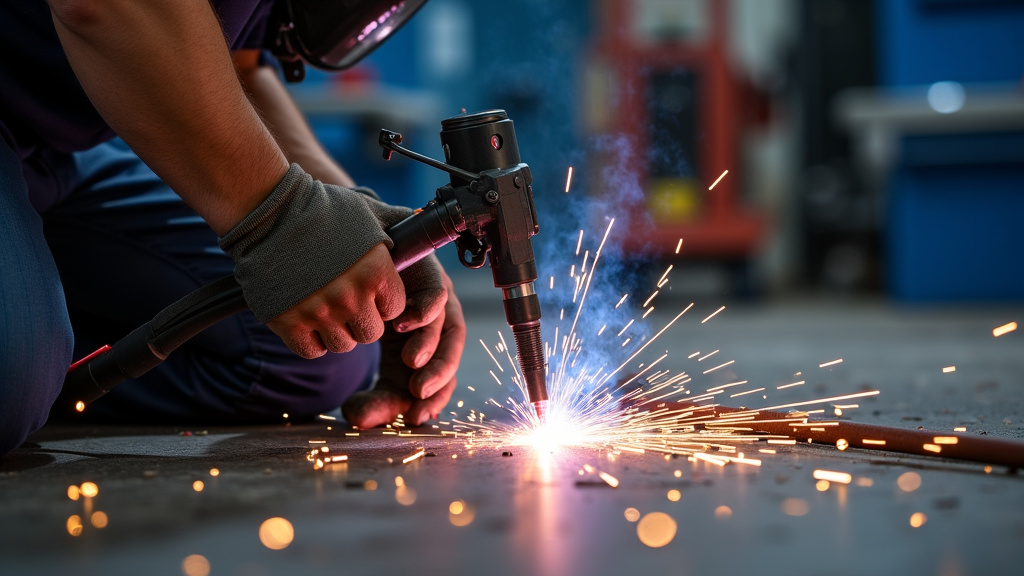
Certain Thin Metals
TIG excels at welding very thin metals, like 20-gauge steel or thin aluminum. The control it offers allows you to melt the metal precisely without blowing holes through it.
MIG can also weld thin metals, but it requires more skill and specific settings. A beginner might find it harder to avoid burn-through with MIG on very thin materials.
What About Other Welding Processes?
You might hear about other welding types like Stick (SMAW) or Flux-Cored (FCAW). Stick welding is rugged and great for outdoor or dirty conditions, but it has a challenging arc to control for beginners. Flux-cored is similar to MIG but uses a wire with flux inside, which can produce more spatter (messy bits) and fumes. Learn more about welding slag and how it forms.
For most hobbyists and DIYers starting out, MIG is the most user-friendly and versatile choice. It’s the best way to get welding and start building projects.
Key Differences Summarized for Beginners
To make it super clear, let’s put the main differences in a quick chart.
| Feature | MIG Welding | TIG Welding |
|---|---|---|
| Ease of Learning | Much Easier | Difficult |
| Control | Good | Excellent |
| Speed | Faster | Slower |
| Equipment Complexity | Simpler | More Complex (Coordination) |
| Result Appearance | Good to Very Good | Excellent (If Mastered) |
| Best For Beginners | Yes | No (Not Recommended) |
Your First Steps to Welding Success: A Checklist
Ready to get started? Here’s a quick list to guide you toward welding with confidence.
- Choose MIG: For your first welding machine, pick a MIG welder.
- Get Basic Safety Gear: You’ll need a helmet, gloves, and protective clothing.
- Start Simple: Begin with basic practice joints on scrap metal.
- Practice Movement: Focus on moving the gun smoothly and at a consistent speed.
- Learn Your Machine: Read your welder’s manual and understand the settings.
- Don’t Get Discouraged: Everyone makes mistakes when learning. Keep practicing!
By choosing MIG, you’re setting yourself up for a more enjoyable and productive learning experience. You’ll be making cool projects before you know it!
Conclusion
When you’re starting your welding journey, choosing the right tool makes a big difference. Our research and findings show that MIG welding is hands-down the easier path for beginners. Its automatic wire feed and more forgiving nature mean you’ll see better results faster. This helps build your confidence and keeps you motivated to practice. While TIG welding offers amazing precision, it comes with a much steeper learning curve. For most new welders, focusing on MIG first sets you up for success. Your next step should be to invest in a good entry-level MIG welder and start practicing those basic techniques.
Frequently Asked Questions
Will I really see results faster with MIG welding?
Yes, you typically will. MIG’s automatic wire feed means you don’t have to manage a separate filler rod. This simplifies the process, allowing you to focus on your movement. Many beginners find they can make decent-looking welds within their first few sessions.
Can I weld aluminum with a beginner MIG welder?
Some entry-level MIG welders can handle aluminum, but it often requires a spool gun attachment. Aluminum is trickier to weld than steel. For absolute beginners, it’s best to start practicing on steel before attempting aluminum.
What’s the biggest mistake beginners make with MIG welding?
A common mistake is incorrect gun angle or travel speed. Holding the gun at the wrong angle can lead to poor penetration or a weak weld. Moving too fast or too slow can create different weld defects. Consistent movement is key.
How much practice does it actually take to get good at MIG?
Getting decent results takes hours of practice. You’ll improve significantly by consistently practicing basic joints like butt, lap, and corner welds. Many sources suggest hundreds of hours for true mastery, but you can achieve usable results much sooner with dedicated practice.
Should I consider Flux-Cored welding if it’s similar to MIG?
Flux-cored welding uses a wire that has its own shielding inside, making it good for outdoor or windy conditions. However, it tends to produce more spatter and fumes than standard MIG. For indoor use and cleaner welds, standard MIG is usually preferred by beginners.