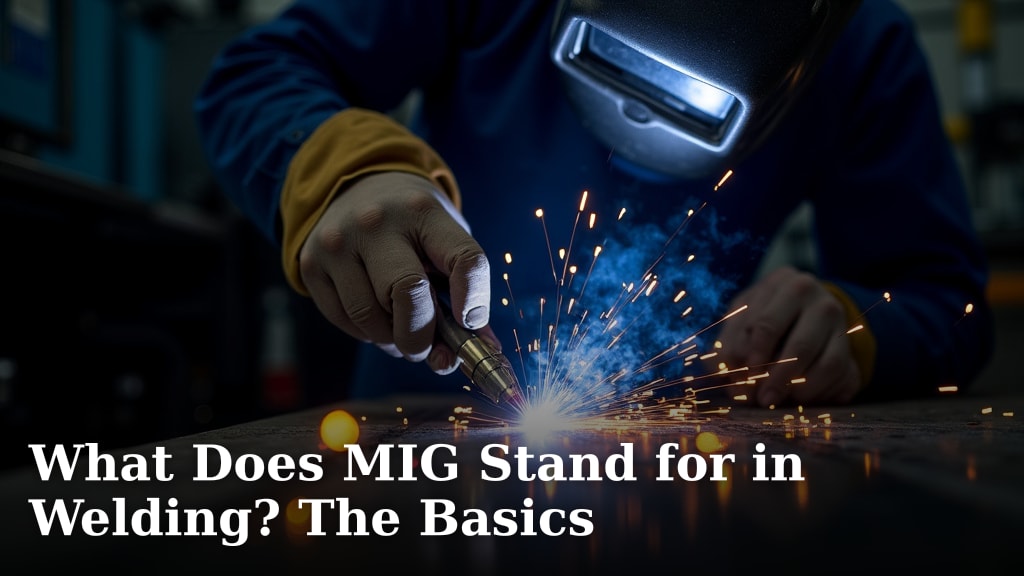
What Does MIG Stand for in Welding? The Basics
MIG stands for Metal Inert Gas welding. It’s a popular welding process that uses a continuous wire electrode and a shielding gas to create strong welds. Think of it as a super-powered hot glue gun for metal.
This welding method is often called GMAW, or Gas Metal Arc Welding. MIG welding is known for being relatively easy to learn. Many hobbyists and professionals alike choose it for its speed and versatility across different metal types. You can get great results with a little practice!
- MIG stands for Metal Inert Gas welding.
- It uses a wire electrode and shielding gas.
- It’s also known as GMAW (Gas Metal Arc Welding).
- MIG welding is popular for its ease of use and speed.
- It works well on various types of metal.
Ready to learn more about this common welding technique? Below, we’ll break down exactly what MIG welding is and how it works, so you can understand the basics.
Understanding MIG Welding: What the Acronym Means
You’ve probably heard the term “MIG welding” before, especially if you’re looking into welding for your projects. But what does MIG actually stand for? It’s a simple but important piece of knowledge for anyone getting started.
MIG is short for Metal Inert Gas welding. This name gives you a clue about how the process works. It involves using a gas to protect the welding area and the molten metal. This protection is key to creating a strong and clean weld.
The Core Components of MIG Welding
To truly understand MIG welding, let’s break down its main parts. You’ll see how they work together to join metal pieces.
The Wire Electrode: Your Welding “Pen”
Think of the welding gun as a special kind of pen. Instead of ink, it uses a continuous wire made of metal. This wire is the electrode that actually melts to form the weld. It’s fed automatically through the gun.
The wire comes on a spool. As you pull the trigger on the welding gun, the wire feeds out. It also carries the electrical current needed to melt the metal. The type of wire you use depends on the metal you’re welding.
The Shielding Gas: Your Protective Bubble
This is where the “Gas” part of MIG comes in. A shielding gas flows out of the welding gun. It surrounds the electric arc and the molten weld puddle. This gas is crucial for preventing contamination.
The air around us contains oxygen and nitrogen. These gases can weaken the weld if they mix with the molten metal. The shielding gas displaces the air. It creates a clean environment for the weld to form properly. This is why the “Inert” part of the original name is also important.
Inert vs. Active Gases
Originally, MIG welding strictly used inert gases. Inert gases don’t react chemically with the metal. Common inert gases include Argon and Helium. These are still used for certain applications, especially with non-ferrous metals like aluminum.
However, many modern MIG welding applications now use active gases or a mix. Active gases can react with the metal in a controlled way. This can help improve the welding characteristics. For example, adding a small amount of CO2 to Argon is common for welding steel. This gas mix is technically what makes it Gas Metal Arc Welding (GMAW).
The Power Source: The Electric Heartbeat
Every welding process needs electricity. MIG welding uses a power source, often called a welder or a power supply. This machine converts the wall outlet power into the type of electrical current needed for welding.
The power source provides the voltage and amperage. These settings control the heat of the welding arc. You adjust them based on the thickness and type of metal you’re working with. A good power source will provide a consistent flow of power for smooth welding.
The Welding Gun: The Tool in Your Hand
The welding gun is what you hold. It’s connected to the power source by a cable. The gun has a trigger that starts the wire feed and the electric arc. It also houses the nozzle where the shielding gas flows out.
You’ll guide the gun along the seam you want to weld. The tip of the gun is close to the workpiece. It needs to be the correct distance to create a good weld. Different guns are available for different types of welding and positions.
How MIG Welding Actually Joins Metal
Now that you know the parts, let’s see how they come together. It’s a fascinating dance of electricity, heat, and metal.
Creating the Arc
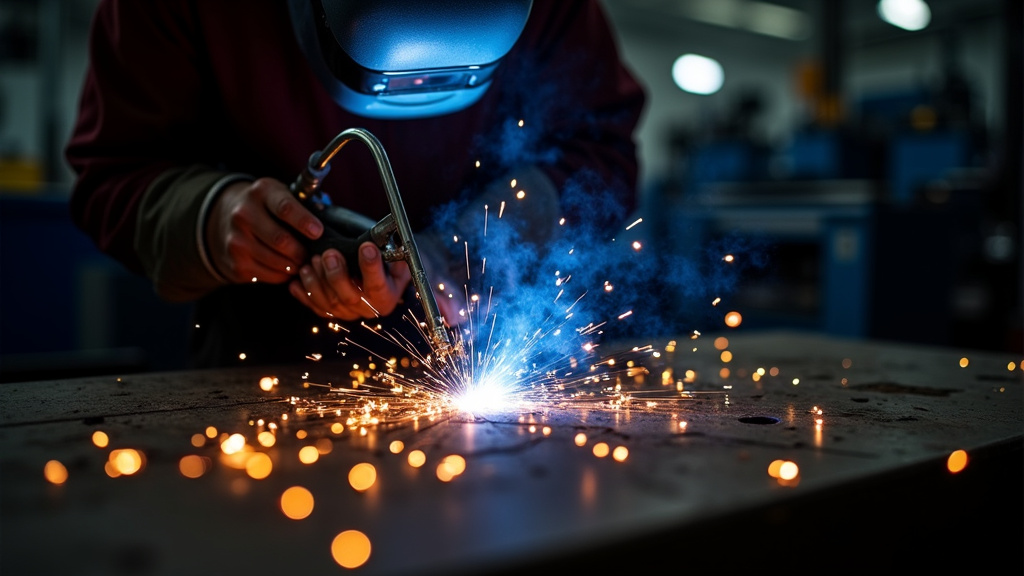
When you pull the trigger on the gun, two things happen. First, the wire electrode starts feeding out. Second, the power source sends electricity through the wire. When the wire gets very close to the metal workpiece, the electricity jumps across the gap. This creates a bright, hot electric arc.
Melting and Fusing
The electric arc is incredibly hot. It melts both the tip of the wire electrode and the base metal of your workpiece. The molten wire metal then flows into the molten base metal. This creates a weld puddle.
As you move the gun along the joint, the arc continuously melts the wire and the base metal. The shielding gas protects this molten puddle from the air. As the puddle moves, it cools and solidifies. This forms a strong, fused joint between the two pieces of metal.
Why MIG Welding is So Popular
You might be wondering why so many people choose MIG welding. There are several good reasons why it’s a favorite for beginners and pros alike.
Ease of Learning
Compared to some other welding methods, MIG welding is often considered easier to learn. The automatic wire feed and the stable arc make it more forgiving. You can focus on guiding the gun and getting a feel for the process.
Many welding guides and online videos show that with just a little practice, you can start making decent welds. It’s a great way to get into metalworking without an overwhelming learning curve.
Speed and Efficiency
MIG welding is known for its speed. Because the wire electrode is fed continuously, you don’t have to stop to replace electrodes like in some other processes. You can lay down a weld much faster.
This efficiency makes it ideal for production work or larger projects. You can get more done in less time. This is a big advantage for both hobbyists and professional fabricators.
Versatility Across Metal Types
One of the biggest benefits of MIG welding is its versatility. You can use it to weld a variety of metals. This includes mild steel, stainless steel, and aluminum.
The ability to switch wire types and adjust settings allows you to adapt the process. This means you can tackle many different types of metalworking projects. This flexibility is a major reason for its widespread use.
Clean Welds
When done correctly, MIG welding produces clean and attractive welds. The shielding gas helps minimize spatter (small drops of molten metal that fly off). This means less cleanup is usually required after welding.
The welds often have a smooth, even appearance. This is especially true when using the right settings and technique. This aesthetic quality is important for many projects.
MIG vs. Other Welding Types (A Quick Look)
While MIG is popular, it’s helpful to know it’s not the only welding method out there. Understanding the differences can help you choose the right tool for your job.
| Welding Type | Electrode Type | Shielding | Common Uses |
|---|---|---|---|
| MIG (GMAW) | Continuous Wire | Inert or Active Gas | General fabrication, automotive, construction |
| TIG (GTAW) | Non-consumable Tungsten Electrode | Inert Gas (Argon) | High-quality, precision work, thin metals, aerospace |
| Stick (SMAW) | Coated Electrode (Flux-covered) | Flux coating burns off to create gas | Outdoor, windy conditions, thick materials, structural work |
As you can see, each type has its own strengths. MIG welding hits a sweet spot for many everyday users.
Getting Started with MIG Welding: Your Checklist
Thinking about giving MIG welding a try? Here’s a quick rundown of things to keep in mind:
- Understand the basics: Know what MIG stands for and how the parts work.
- Choose the right welder: Select a machine suitable for the thickness of metal you’ll be welding.
- Get the right materials: You’ll need wire, shielding gas (if applicable), and safety gear.
- Practice your technique: Start with scrap metal to get a feel for the gun and the arc.
- Prioritize safety: Always wear appropriate safety gear, including a welding helmet.
Conclusion
You now understand that MIG stands for Metal Inert Gas welding. This popular process uses a continuous wire electrode and a shielding gas to create strong metal joints. We’ve covered its core components like the wire, gas, power source, and gun. You also learned how the electric arc melts and fuses metal, forming a weld puddle protected from air.
Its ease of learning, speed, and versatility make it a favorite for many projects. If you’re ready to start welding, remember to gather your safety gear and practice on scrap metal. Understanding these basics is your first step to successful MIG welding.
Frequently Asked Questions
What does the “Inert” in Metal Inert Gas really mean for my welds?
The “Inert” part refers to the shielding gas. Inert gases like Argon don’t chemically react with the molten metal. This prevents contamination, ensuring a cleaner and stronger weld. While some modern MIG welding uses active gas mixes, the original term highlights this protective function.
Can I use MIG welding on any type of metal?
MIG welding is very versatile and works well on common metals like mild steel, stainless steel, and aluminum. You’ll need to choose the correct wire type and shielding gas for each metal. For example, aluminum often requires pure Argon gas and specific aluminum wire.
Is MIG welding truly easy for beginners to learn?
Yes, MIG welding is generally considered one of the easier welding processes for beginners. The continuous wire feed and stable arc make it more forgiving. You can focus on guiding the gun and developing your technique with practice.
What is the difference between MIG and GMAW?
There’s no difference; they refer to the same process. MIG stands for Metal Inert Gas, the original name. GMAW is the technical term, Gas Metal Arc Welding. Modern MIG often uses active gases, so GMAW is more accurate, but the terms are used interchangeably.
How much practice does it take to get good at MIG welding?
Most people find they can make decent welds after just a few hours of practice. Getting truly proficient takes more time and consistent effort. Starting with scrap metal and focusing on steady gun movement will help you improve quickly.