What Is Welding Slag? A Beginner’s Guide
On this page (9 sections)
- Understanding Welding Slag: Your Essential Beginner’s Guide
- What Exactly Is Welding Slag?
- When Do You Encounter Welding Slag?
- Identifying Welding Slag: What to Look For
- The Process of Removing Welding Slag
- When Slag Is a Problem (and When It Isn’t)
- A Quick Slag Removal Checklist for Beginners
- Conclusion
- Frequently Asked Questions
Welding slag is a protective layer that forms on the surface of a weld. It’s made from impurities in the welding materials. This layer helps shield the molten metal from the air. Think of it like a tiny shield for your weld.
Understanding slag is important for any welder, especially beginners. It’s a normal part of many welding processes, like stick welding. Knowing what it is and how to deal with it helps create stronger, cleaner welds. Many welders find that managing slag is key to good results.
- Welding slag is a protective byproduct of welding.
- It forms from melting flux or coating materials.
- Slag shields the cooling weld metal from air.
- It usually needs to be removed after welding.
Let’s break down what welding slag really is and why you’ll encounter it. We’ll cover how to identify it and what to do with it.
Understanding Welding Slag: Your Essential Beginner’s Guide
So, you’ve started welding, and you’re seeing this crusty stuff on your welds? That’s slag! It’s a normal part of many welding processes. Don’t let it scare you. Think of it as a visitor that overstays its welcome. We’ll help you understand what it is and how to handle it.
What Exactly Is Welding Slag?
Welding slag is essentially a byproduct of the welding process. It forms when the flux coating on a welding electrode or the flux used in a flux-cored wire melts. This melted flux then shields the molten weld pool. It prevents contamination from the surrounding air. After the weld cools, this shielding material solidifies. It creates the slag layer you see.
Slag isn’t just random gunk. It’s a crucial part of creating a strong weld. It does this by protecting the hot metal. This protection is especially important for certain welding methods. Stick welding (SMAW) and flux-cored arc welding (FCAW) are prime examples. The slag solidifies on top of the weld bead.
The Science Behind Slag Formation
When you strike an arc, the heat is intense. This heat melts the electrode tip and the base metal. It also melts the flux coating on the electrode. This flux contains various compounds. These compounds perform several jobs. They help stabilize the arc. They also generate shielding gases. And they form that protective molten slag. This molten slag floats on top of the weld pool. It’s less dense than the molten metal. This is why it sits on the surface. It acts like a blanket. It keeps oxygen and nitrogen from the air out. These gases can weaken a weld. They can make it brittle.
As the weld pool cools and solidifies, the slag cools too. It hardens into a glassy or rocky layer. The composition of the flux determines the characteristics of the slag. Some slag is brittle and flakes off easily. Other types can be harder to remove. Different electrode types will produce different kinds of slag. This is a key reason why choosing the right electrode matters. It affects not only the weld itself but also the slag you’ll deal with later.
Why Is Slag Important for Your Weld?
You might be wondering why you even need this stuff. Slag plays a really important role. It’s all about protecting your weld. Imagine trying to pour a delicate sauce. You wouldn’t want dust or debris falling into it. Slag acts like a cover for your molten metal. It keeps impurities out. This ensures the weld metal solidifies cleanly. This clean solidification is vital for weld strength and integrity. Without this shielding, your welds would be much weaker.
The slag also helps control the cooling rate of the weld. A slower cooling rate can sometimes be beneficial. It can reduce stress and cracking. Different flux compositions result in different slag properties. Some fluxes are designed for faster cooling. Others are for slower cooling. This is an advanced topic, but it shows how slag isn’t just a leftover. It’s an active participant in the welding process.
When Do You Encounter Welding Slag?
You’ll primarily see slag when you’re using certain welding processes. Stick welding and flux-cored welding are the main culprits. These methods rely on flux to create shielding. This flux then turns into slag. Other welding processes, like TIG (Tungsten Inert Gas) welding and MIG (Metal Inert Gas) welding, use shielding gases. These gases come from a gas cylinder. They don’t produce slag. So, if you’re TIG or MIG welding, you probably won’t have to worry about slag.
Stick Welding and Slag
Stick welding, or SMAW, is one of the oldest welding methods. It uses a consumable electrode coated in flux. When you weld, this coating burns. It creates shielding gases and molten slag. The slag covers the weld bead. It’s very common in construction and repair work. If you’re stick welding, expect slag. It’s part of the job. You’ll need to learn how to manage it.
Flux-Cored Arc Welding (FCAW) and Slag
Flux-cored welding is similar to stick welding. It uses a tubular wire electrode. This wire contains flux in its core. As the wire melts, the flux is released. It forms shielding gases and slag. FCAW can be done with or without external shielding gas. Even when using gas, some slag is usually produced. This process is popular for its speed and versatility. It’s used in heavy fabrication and outdoor welding.
Welding Processes That Don’t Produce Slag
On the flip side, TIG and MIG welding are known for their clean welds. TIG welding uses a non-consumable tungsten electrode. It relies on an inert gas like argon for shielding. MIG welding uses a solid wire electrode. It also uses a shielding gas. These gases displace the air. They prevent contamination without forming slag. So, if you prefer a weld with minimal cleanup, TIG or MIG welding might be your preference.
Identifying Welding Slag: What to Look For
Recognizing slag is pretty straightforward once you know what it looks like. It typically appears as a rough, often dark-colored layer on top of your weld bead. It can look like dried mud, a thin glass shell, or even small pebbles. The texture can vary greatly. Some slag is brittle and chips off easily. Other slag is harder and might require more effort to remove. You’ll usually see it along the edges of the weld bead. It can also form in between multiple weld passes.
The color can range from gray and black to reddish-brown. This depends on the electrode and flux composition. Sometimes, you might see small, dark inclusions within the weld metal itself. These can be bits of slag that didn’t float to the surface. These are called slag inclusions, and they are a type of weld defect. They weaken the weld.
Common Slag Textures and Colors
We found that slag texture can be described in a few ways. Some slag is papery thin. It peels away like an onion. Other types are chunky and uneven. You might even see glassy smooth sections. The color is a good indicator too. Black and dark gray are very common. Reddish or brown hues can appear. This often happens when the flux contains iron powder. The appearance of the slag gives you clues. It tells you about the welding consumables you used.
Distinguishing Slag from Spatter
It’s important to know the difference between slag and spatter. Spatter consists of small droplets of molten metal. These droplets spray away from the weld. They stick to the surrounding base metal. Spatter is usually shiny and metallic. Slag, on the other hand, is duller and non-metallic. It forms a continuous layer over the weld bead. Spatter is generally easier to remove with a wire brush. Slag might need chipping or grinding.
The Process of Removing Welding Slag
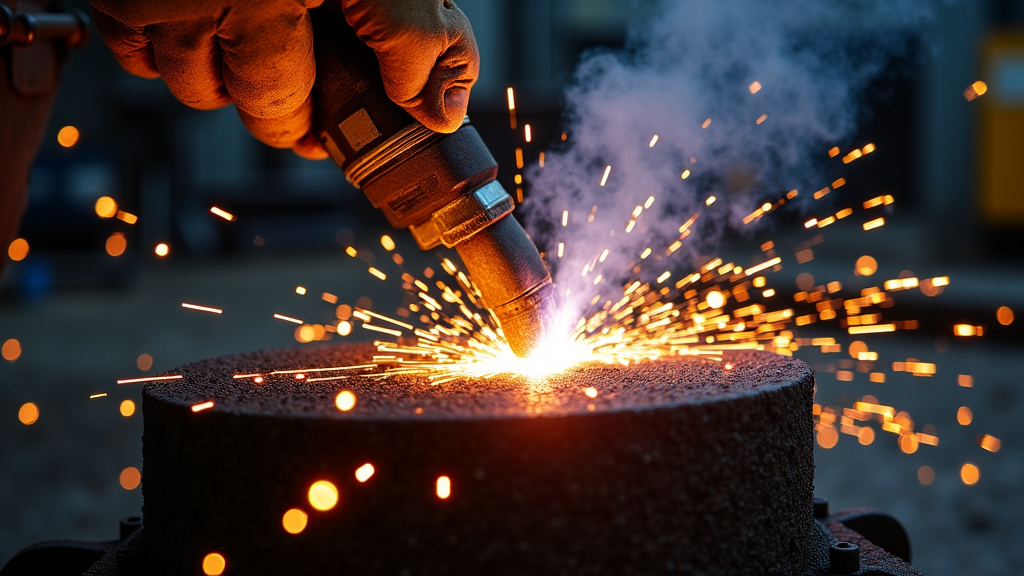
Removing slag is a necessary step after welding with stick or flux-cored processes. It’s often called “slag chipping.” You’ll need a few tools for this. A chipping hammer is the most common. It has a pointed or chisel-shaped end. This is perfect for breaking up the slag. You’ll also want a stiff wire brush. This helps clean off any remaining residue.
For tougher slag, you might need a grinder. Always wear appropriate safety gear. This includes safety glasses, a welding helmet, gloves, and protective clothing. Flying chips of slag can be sharp. They can cause injury. It’s always better to be safe than sorry.
Essential Tools for Slag Removal
Here are the basic tools you’ll need to tackle slag:
- Chipping hammer: This is your primary tool for breaking off larger pieces of slag.
- Wire brush: A stiff wire brush is essential for cleaning away smaller bits and residue.
- Safety glasses or face shield: Absolutely critical to protect your eyes from flying debris.
- Gloves: Heavy-duty gloves will protect your hands from sharp slag pieces and heat.
- Grinder (optional): For very stubborn slag, a grinder can be useful.
Techniques for Efficient Slag Removal
Start by using the chipping hammer. Tap it along the edges of the weld bead. This will help loosen the slag. Work your way across the weld. Once the larger pieces are off, use the wire brush. Scrub the weld surface thoroughly. You want to remove all remaining slag. Pay attention to the areas between weld passes. Slag can get trapped there. If you’re using a grinder, do so gently. You don’t want to remove base metal. Many welders find a systematic approach works best. Chip, then brush. Repeat as needed.
What About Slag Inclusions?
Slag inclusions happen when slag gets trapped inside the weld metal. This is a weld defect. It means the slag didn’t float out. It often occurs if you weld too quickly. It can also happen if you don’t clean between weld passes properly. If you see slag trapped within the weld, it needs to be fixed. You might have to grind out the defective area. Then, reweld it, making sure to clean properly. This is why proper technique is so important. We found that cleaning between passes is key to preventing this. Many welding codes strictly limit slag inclusions.
When Slag Is a Problem (and When It Isn’t)
Slag is a normal part of many welding processes. However, sometimes it can cause issues. It’s not always the slag itself, but how it’s handled. Or sometimes, it’s the type of slag produced.
When Slag Needs to Be Removed
For most applications, slag must be removed. This is especially true for structural welds. It’s also necessary for welds that will be painted or coated. Any remaining slag can interfere with adhesion. It can also hide cracks or other defects. Welders often perform a visual inspection after slag removal. This ensures a clean, sound weld surface.
In some specific, non-critical applications, a light layer of slag might be left. However, this is rare. It’s always best practice to remove it. We found that adhering to inspection standards requires complete slag removal. This ensures the weld meets quality requirements.
Can Slag Ever Be Beneficial?
In a way, the slag is beneficial during the welding process itself. As we’ve discussed, it protects the weld pool. After welding, its main “benefit” is that it shielded the metal. Once it’s solidified, it’s generally considered waste material. Some specialized welding processes might utilize flux for specific effects. But for the everyday welder, think of it as something to remove.
Common Slag-Related Weld Defects
Besides slag inclusions, there are other issues. Poor slag removal can lead to surface contamination. This can affect the appearance. It can also impact the performance of any coatings applied later. If slag is too hard to remove, it might indicate an incorrect electrode choice. Or it could mean the welding parameters aren’t set correctly. Research shows that using the wrong electrode type is a common cause of difficult slag.
A Quick Slag Removal Checklist for Beginners
Ready to tackle that slag? Keep this simple checklist handy:
- Ensure your weld is cool enough to handle safely.
- Gather your chipping hammer and wire brush.
- Put on your safety glasses and gloves.
- Start by chipping away the larger pieces of slag.
- Use the wire brush to clean the weld surface.
- Inspect the weld for any remaining slag or inclusions.
Conclusion
You’ve learned that welding slag is a normal, protective byproduct essential for many welding processes like stick and flux-cored welding. It shields your molten metal, ensuring stronger welds. Remember, it’s not just leftover material; it plays a vital role in weld integrity. While it needs to be removed for most applications, understanding its purpose is key. Now you know what to look for, why it’s there, and how to safely clean it up. Your next step is to practice identifying and removing slag from your own welds. Keep practicing, and you’ll master this part of welding in no time.
Frequently Asked Questions
What’s the main reason slag forms during welding?
Slag forms primarily from the melting flux coating on welding electrodes or flux-cored wires. This flux contains compounds that burn away to create shielding gases and the slag layer itself. Its main job is to protect the hot, molten weld metal from the air.
Can I leave slag on my weld if it’s not going to be seen?
For most projects, it’s best practice to remove all slag. Even if not visible, remaining slag can affect the weld’s integrity or how paint or coatings adhere later. Research shows that leaving slag can lead to hidden defects or poor surface preparation.
Why is slag harder to remove on some welds than others?
The hardness and ease of removal depend on the flux composition in your welding consumables. Different electrodes and wires produce slag with varying properties. Using the wrong type of electrode for your project can result in slag that’s more difficult to chip or brush off.
Is slag the same thing as welding spatter?
No, slag and spatter are different. Spatter consists of small, molten metal droplets that fly off the weld and stick to surrounding surfaces. Slag is a solid, non-metallic layer that forms over the weld bead itself. Spatter usually looks metallic and shiny, while slag is duller.
How do I know if I have slag inclusions in my weld?
Slag inclusions appear as dark, non-metallic pockets trapped within the solid weld metal, not just on the surface. They often occur if you weld too fast or don’t clean properly between multiple weld passes. Inspecting your weld carefully after removing surface slag can help you spot these defects.