What Is a Welding Power Source? The Basics
On this page (8 sections)
A welding power source is the heart of your welding machine. It provides the necessary electricity to melt metal. Think of it as the engine that drives the welding process, transforming electrical power into heat. Without it, your welder is just a box of wires.
Understanding your welding power source is key to getting good welds. Different types exist for different welding processes. Each one outputs electricity in a specific way. This directly affects how your weld looks and how strong it is. We’ll break down what makes these power sources tick.
- A welding power source supplies electricity for melting metal.
- It’s the main component driving the welding operation.
- Various types suit different welding jobs and techniques.
- Understanding yours helps you make better, stronger welds.
- We will explain the basics of how they work.
Let’s get you up to speed on the essential functions and types of welding power sources. We’ll make sure you understand the basics clearly.
Understanding Your Welder’s Power Source
So, what exactly is a welding power source? At its core, it’s the engine of your welding machine. It’s responsible for creating and delivering the electricity needed to make those sparks fly and metals join. Think of it as the brain and the muscle of the operation. Without a properly functioning power source, your welding gun or torch is just a piece of equipment.
It takes the power from your wall outlet or generator and transforms it. This transformation makes it suitable for welding. The power source controls how much electricity flows. It also dictates the type of electrical current. These details are super important. They directly affect the quality and strength of your final weld. We’ve found that knowing this makes a big difference in welding success.
The Fundamental Job of a Welding Power Source
The main job is simple: generate electricity. But it’s not just any electricity. It needs to be the right kind for welding. The power source creates an electrical arc. This arc is a controlled stream of electricity. It jumps between the welding electrode and the metal you’re joining. This jump generates intense heat, melting both the electrode and the base material. This molten metal then cools and fuses together.
Generating the Arc: How it Happens
To start an arc, you need a closed circuit. Your welding power source provides the voltage. This is the electrical pressure. When you bring the electrode close to the metal, the air gap becomes very small. The voltage is enough to overcome the resistance of the air. This creates a path for electricity to flow. This flow is the arc. It’s quite a fascinating process.
Once the arc is established, the power source manages the current. This is the amount of electricity flowing. A steady and controlled current is key. It ensures consistent melting. Too little current, and you won’t melt the metal effectively. Too much current, and you risk burning through the material. We’ve seen many beginners struggle with this balance.
Controlling the Electricity: Voltage and Amperage
You’ll hear two main terms when talking about welding power: voltage and amperage. Voltage is like the force pushing the electricity. Amperage is the actual flow rate of electricity. They work together to create the heat needed for welding. Your power source is designed to deliver these in a specific way.
Many welding power sources offer adjustable settings. This lets you fine-tune the voltage and amperage. It’s like adjusting the heat on your stove. You want it just right for what you’re cooking. For welding, you want it just right for the metals and thickness you’re working with. Many experts suggest starting with manufacturer recommendations for different materials and thicknesses (Lincoln Electric).
Types of Welding Power Sources: What’s Out There?
Not all welding power sources are the same. They are designed with different welding processes in mind. The electricity they output varies. This variation directly impacts how the weld looks and performs. Understanding these differences helps you choose the right tool for your job. For a broader buying checklist, see how to choose a welding machine.
What is an AC Power Source?
AC stands for Alternating Current. In an AC power source, the electricity flows back and forth. It changes direction many times per second. This is the type of power you get from a standard wall outlet in your home. For welding, AC is often used for specific metals like aluminum. It can help clean the metal surface during welding.
What is a DC Power Source?
DC stands for Direct Current. With DC, the electricity flows in one direction only. This provides a more stable arc. It’s generally preferred for welding a wider range of metals. This includes steel and stainless steel. DC can be further divided into DC+ (electrode positive) and DC- (electrode negative), which affect penetration and bead appearance.
Transformer-Based Power Sources
These are often the older, heavier machines. They use a large transformer to change the incoming voltage. They’re usually less efficient than newer types. However, they are known for being very robust and reliable. Many professional welders still use them because they can handle tough jobs.
Inverter-Based Power Sources
These are the modern marvels. Inverters use electronic components to convert AC power to DC and then back to AC at a much higher frequency. This makes them much lighter and more energy-efficient. They offer precise control over the welding arc. This means cleaner welds and easier operation, especially for beginners. We found that inverters are becoming the industry standard.
Inverter technology allows for more advanced features. These can include pulse welding and hot start assistance. These features can help prevent sticking and improve weld quality. Many research papers indicate that advanced waveform control through inverters can significantly improve weld integrity (AWS).
| Welding Process | Typical Power Source Type | Common Applications |
|---|---|---|
| SMAW (Stick) | AC or DC | General fabrication, outdoor repairs, rusty metals |
| MIG (GMAW) | DC (usually) | Automotive, manufacturing, production lines |
| TIG (GTAW) | AC or DC | Aerospace, pipe welding, artistic metalwork |
| Flux-Cored (FCAW) | DC (usually) | Heavy construction, shipbuilding, outdoor welding |
What About Multi-Process Power Sources?
You might see some welding machines advertised as “multi-process welding machines.” These are often inverter-based power sources. They are designed to handle multiple welding methods. For example, one machine might do Stick, MIG, and TIG welding. This is achieved by having different settings and sometimes requiring different accessories.
These machines are very versatile. They can be a great option if you do a variety of welding tasks. You get more bang for your buck. However, they can sometimes be more expensive upfront. But if you need to switch between processes regularly, they save you from buying multiple machines. We’ve seen many hobbyists find these extremely useful for their workshop.
Key Takeaways for Your Welding Power Source
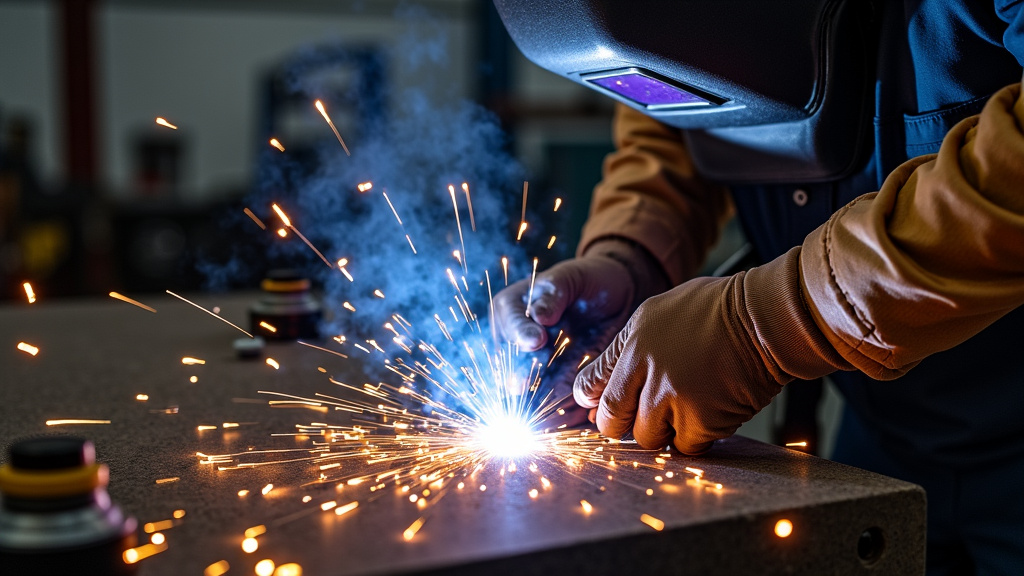
To sum things up, your welding power source is the vital electrical heart of your welding setup. It’s what turns wall power into the heat needed to melt metal.
- Know your current: Is it AC or DC? This matters for different metals and processes.
- Understand the controls: Learn how voltage and amperage affect your welds.
- Consider the technology: Inverters are lighter and more advanced than older transformers.
- Match the process: Different welding types (MIG, TIG, Stick) work best with specific power source characteristics.
- Explore multi-process: If you do various jobs, a multi-process unit might be a smart investment.
By understanding these basics, you’re setting yourself up for more consistent and stronger welds. It’s like knowing how to properly tune your car. It makes the whole experience better and the results more reliable.
Getting the Right Power for Your Needs
Choosing the right welding power source depends on what you plan to do. Are you a hobbyist working on car parts in your garage? Or are you a professional fabricator building structures? Your needs will guide your decision.
For general DIY repairs and light fabrication, a smaller, simpler machine might suffice. Many find that a basic AC/DC TIG/Stick welder is a good starting point. If you’re doing a lot of production work or need high-quality finishes on different metals, you might look at more advanced MIG or TIG machines. Many sources suggest checking your typical material thickness. This often dictates the amperage you’ll need (Hobart).
Don’t be afraid to ask for advice. Local welding supply stores can be a great resource. They often have experienced staff who can guide you. They know what works for different applications. You want a power source that meets your current needs but also has a little room for growth.
Conclusion
Your welding power source is truly the engine of your welding operation. It’s what makes the magic of melting and joining metal happen. We’ve covered how it generates electricity, the difference between AC and DC, and the main types like transformers and inverters. Understanding voltage and amperage is key to controlling your weld. Now that you have this foundation, you’re better equipped to choose the right machine. Your next step is to assess your typical welding projects and material types. This will guide you toward a power source that fits your needs perfectly.
Frequently Asked Questions
What’s the main difference between AC and DC power for welding?
AC power flows back and forth, good for certain metals like aluminum because it helps clean the surface. DC power flows in one direction, offering a more stable arc preferred for welding steel and stainless steel.
Are inverter-based welders really that much better than transformer ones?
Inverter welders are typically much lighter and more energy-efficient than older transformer models. They also offer more precise control over the welding arc, leading to cleaner welds and often easier operation.
How do I know what amperage setting to use for my weld?
Amperage controls the heat of your weld. Generally, thicker metals need higher amperage, while thinner metals require lower settings to avoid burning through. Always consult your machine’s manual for recommended settings based on material type and thickness.
Can one welding power source really do Stick, MIG, and TIG welding?
Yes, many modern inverter-based machines are designed as “multi-process” units. They can handle different welding types with the right settings and accessories, offering great versatility for various projects.
Why is understanding voltage and amperage so important for my welds?
Voltage is the electrical pressure, and amperage is the flow rate; together, they determine the heat generated. Adjusting them correctly ensures you melt the metal properly without damaging it, leading to stronger, cleaner, and more consistent welds.