What Is a Stick Welder? The Quick Answer
On this page (8 sections)
A stick welder, also known as a SMAW welder or arc welder, is a type of welding machine that uses a consumable electrode rod coated in flux to create a weld. This electrode melts, adding metal to the joint being welded. It’s a popular choice for many welding projects because it’s simple to use and very portable.
When you’re looking to join pieces of metal, a stick welder is often the go-to tool for DIY projects and heavy-duty repairs. They work well in windy conditions and on dirty or rusty metal. This makes them incredibly versatile for outdoor work.
- Stick welders use a flux-coated rod.
- The rod melts to form the weld.
- They are known for being simple and portable.
- Good for outdoor and less-than-perfect surfaces.
- A great option for many basic welding needs.
Let’s walk through exactly what a stick welder is and why you might choose one for your next project.
Understanding the Stick Welder: Your Go-To Arc Machine
So, what exactly is a stick welder, and why is it such a popular choice for so many people? Simply put, a stick welder, also known as Shielded Metal Arc Welding (SMAW), uses a special rod to join metal. This rod is called an electrode. It’s coated in a material called flux. This flux is important. It protects the molten metal from the air. It also helps create a stable arc. This process results in a strong weld.
Think of it like using a very hot, very precise glue gun for metal. But instead of glue, you’re using melted metal from the electrode. And instead of just sticking things together, you’re creating a permanent bond. It’s a fundamental welding process. Many people learn to weld with a stick welder first. Its straightforward nature makes it accessible.
How Does a Stick Welder Actually Work?
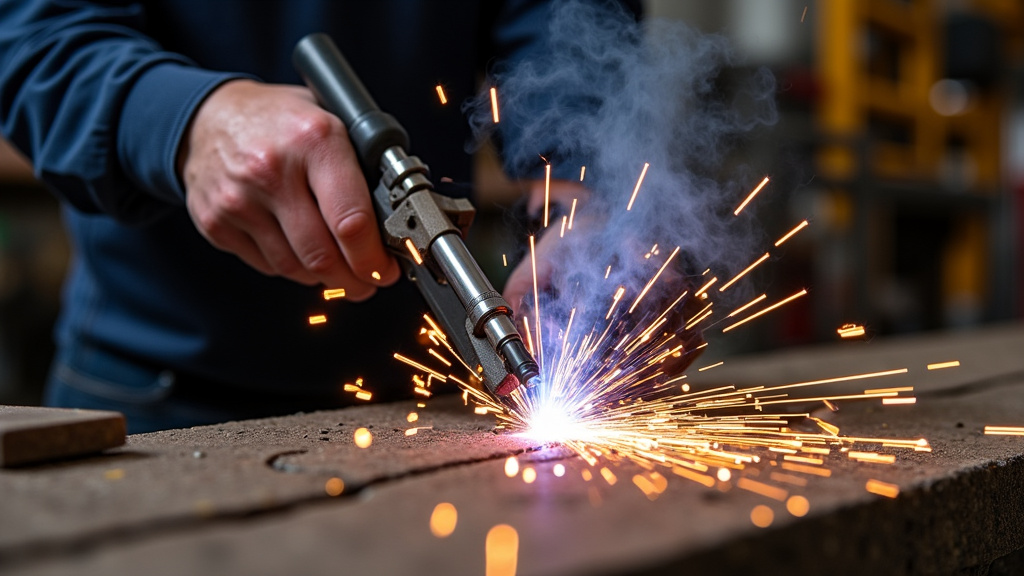
The magic of a stick welder happens when you strike an arc. You bring the electrode close to the metal you want to join. This creates an electrical circuit. A powerful electrical current flows. This current heats the electrode and the base metal. The tip of the electrode melts. It forms a pool of molten metal. This pool flows into the gap between the pieces of metal you’re welding.
As the molten metal cools, it solidifies. This forms the weld. The flux coating on the electrode plays a few key roles during this. It creates a shielding gas. This gas pushes away impurities from the air. It also helps form slag. Slag is a crusty byproduct that forms on top of the weld. Once the weld cools, you chip this slag away. What’s left is a strong, clean weld bead.
The Role of the Electrode
The electrode is the heart of the stick welding process. It’s not just a piece of metal. It’s a carefully designed consumable. Electrodes come in many types. They are classified by their metal composition and the type of flux coating. The type of electrode you choose depends on the metal you are welding and the position you are welding in.
For example, some electrodes are great for mild steel. Others are designed for stainless steel or cast iron. The flux coating isn’t just for show, either. It contains ingredients that help stabilize the arc. It also adds elements to the weld metal to give it strength. Some flux coatings help create a smoother bead. Others help with faster welding speeds. You’ll often see electrodes identified by a number, like “6011” or “7018”. This number tells you about its strength and characteristics.
Understanding the Flux Coating
The flux coating on the electrode is a chemical mixture. It’s applied to the core wire. When it heats up, it melts. It then burns off to create a protective gas shield. This shield prevents oxygen and nitrogen from the air from contaminating the molten weld pool. These atmospheric gases can weaken a weld. So, the flux is a critical protective layer.
The flux also contains deoxidizers. These help remove oxides (rust or scale) from the base metal. This makes stick welding more forgiving on surfaces that aren’t perfectly clean. Plus, the flux melts and forms slag. This slag floats on top of the molten metal. It helps slow down the cooling process. This can improve the mechanical properties of the weld. As mentioned, it also gives you that satisfying crunchy sound. After the weld cools, you chip it off.
What Makes a Stick Welder So Appealing?
Stick welders have been around for a long time. There’s a good reason for their lasting popularity. They offer a great balance of performance and ease of use. This makes them a top choice for many situations. Let’s break down the main reasons why.
Simplicity and Ease of Use
Compared to some other welding methods, stick welding is relatively simple to learn. The equipment itself is not overly complicated. You have a power source, a welding cable, a electrode holder, and a ground clamp. Once you understand the basics of striking an arc and maintaining the correct distance, you can start making welds.
You don’t need a separate gas cylinder like you do with MIG welding. This cuts down on setup time and complexity. Many beginners find the direct control over the arc satisfying. It feels very hands-on. You’re the one controlling the heat and the metal deposition.
Portability and Durability
Stick welders are often very compact and lightweight. Many models are designed to be easily carried to different job sites. This is a huge advantage if you need to weld in various locations. You can often power them with a generator. This makes them ideal for remote work. Think about working on a farm, a construction site, or even just in your backyard.
The machines themselves are also built to be tough. They are often used in demanding environments. They can handle a bit of dust, dirt, and vibration. This ruggedness means they can last for many years with proper care. They are not delicate pieces of equipment.
Versatility on Different Surfaces
One of the biggest advantages of stick welding is its ability to handle less-than-perfect metal. Do you have a piece of metal with some rust or mill scale on it? A stick welder can often still make a good weld. The flux coating helps clean the surface as you go. This makes it a great choice for repair work.
It’s also excellent for outdoor welding. Wind can easily blow away the shielding gas used in other welding processes, like MIG. However, the flux coating on stick electrodes creates its own shielding gas and slag cover. This makes it much more resistant to wind. This is why you’ll see stick welders used frequently on construction sites and in agricultural settings.
Cost-Effectiveness
When you look at the initial investment, stick welders are often among the most affordable welding machines available. The machines themselves can be less expensive than comparable MIG or TIG welders. The consumable costs are also generally lower.
Electrode rods are relatively inexpensive. You don’t have the ongoing cost of shielding gas. This makes stick welding a very budget-friendly option. This is especially appealing for hobbyists, DIYers, and small businesses.
When Should You Choose a Stick Welder?
So, based on what we’ve discussed, when is a stick welder the right tool for your job? It really comes down to the specific needs of your project.
Outdoor Projects and Windy Conditions
If your welding is going to happen outside, especially where there might be a breeze, stick welding is a top contender. The self-shielding nature of the electrode makes it far more practical than gas-shielded processes in these conditions. You won’t have to worry as much about the wind blowing away your protection.
Repair Work on Rusty or Dirty Metal
For fixing old equipment, gates, trailers, or anything that might not be perfectly clean, stick welding shines. Its ability to handle a bit of surface contamination means you can often get a good weld without spending hours preparing the metal. This can be a huge time saver for repair jobs.
Thicker Metal Fabrication
Stick welders are known for their ability to lay down a strong, deep weld. They are often used for joining thicker materials. Many common stick electrodes are rated for high tensile strength. This makes them suitable for structural applications where durability is key. Think about welding frame components or heavy brackets.
Budget-Conscious DIYers and Hobbyists
If you’re just starting out with welding or have a limited budget, a stick welder is an excellent entry point. The lower upfront cost of the equipment and consumables makes it accessible. You can get a good quality machine that will let you tackle a wide range of projects without breaking the bank.
When Portability is Key
If you need to move your welding setup frequently, a stick welder is a great choice. Their compact size and lack of a gas bottle make them easy to transport. This is perfect if you have multiple work locations or need to bring your welder to the job.
Basic Stick Welding Checklist for Success
Ready to get started? Here’s a quick checklist to help you prepare for your stick welding sessions:
- Ensure your power source is set to the correct amperage for your electrode and material.
- Have your electrode holder, ground clamp, and chipping hammer ready.
- Wear appropriate personal protective equipment (PPE) – helmet, gloves, jacket, and sturdy footwear.
- Clean any excess rust or paint from your welding area.
- Practice striking an arc on a scrap piece of metal first.
- Keep your electrode at a consistent angle and distance from the workpiece.
Comparing Stick Welding to Other Methods
It’s helpful to understand where stick welding fits in compared to other common welding types. Each has its own strengths.
| Welding Type | Pros | Cons | Best For |
|---|---|---|---|
| Stick (SMAW) | Portable, durable, works in wind, good on dirty metal, cost-effective. | More smoke, requires slag removal, harder to get perfectly clean welds, more practice needed for appearance. | Outdoor repairs, thick metal, structural work, DIY projects. |
| MIG (GMAW) | Fast, easy to learn for clean welds, good for thin to medium metal, less smoke. | Requires shielding gas (wind sensitive), equipment can be more expensive, not ideal for very dirty/rusty metal. | Auto repair, fabrication shops, home projects on clean metal. |
| TIG (GTAW) | Highest quality welds, very precise, great for thin and exotic metals, no spatter. | Slowest process, requires high skill level, equipment is most expensive, very sensitive to contamination. | Aerospace, high-end custom work, stainless steel, aluminum, precision pipes. |
As you can see, stick welding offers a unique blend of advantages. Its ability to perform well in challenging conditions makes it indispensable for many tradespeople and hobbyists. Many experts agree that for general repair and fabrication, especially outdoors, stick welding remains a reliable workhorse.
Conclusion
You’ve learned that a stick welder, or SMAW, is a straightforward and robust tool for joining metal. Its ability to work in windy conditions and on less-than-perfect surfaces makes it incredibly versatile. For DIYers, outdoor projects, and repair work, a stick welder offers a cost-effective and reliable solution. If you’re looking for a welder that’s portable, durable, and forgiving, a stick welder is likely your best bet. To start welding, gather your essential gear and practice striking an arc. You’re ready to tackle your projects!
Frequently Asked Questions
What is the most common type of stick electrode?
The most common stick electrodes for general-purpose welding are the 6011 and 6013 types. These are designed for mild steel and are known for their ease of use. They work well for both general fabrication and repair tasks. You’ll find them in most hardware stores.
How much amperage do I need for a stick welder?
The amperage you need depends on the thickness of the metal and the type of electrode you’re using. For thin materials and smaller electrodes, you might use around 50-75 amps. For thicker metal and larger electrodes, you could need 100 amps or more. Always check the electrode manufacturer’s recommendations.
Can I use a stick welder to weld thin sheet metal?
Stick welding can be challenging on very thin sheet metal. The intense heat can easily burn through it. While experienced welders can manage it with specific techniques and electrodes, it’s generally not the ideal process for thin materials. MIG welding is often preferred for sheet metal.
How do I keep my stick welder running smoothly?
Proper maintenance is key to a long-lasting stick welder. Keep the machine clean and free of dust and debris. Ensure all cables and connections are secure and free from damage. Store your electrodes in a dry place to prevent them from absorbing moisture. Regular cleaning will help prevent overheating.
Is stick welding messy compared to other methods?
Yes, stick welding tends to produce more smoke and spatter than MIG or TIG welding. The flux coating burns off, creating slag and fumes. This means you’ll need good ventilation and appropriate safety gear. You’ll also need to chip away the slag after welding. Despite this, its portability and performance often outweigh the mess.