What Is the Easiest Welding Process to Learn?
On this page (8 sections)
When you’re asking what is the easiest welding process to learn, the answer most often points to MIG welding. Also known as Gas Metal Arc Welding (GMAW), MIG welding is widely considered the most beginner-friendly because it offers the most forgiving technique. You can get started with MIG relatively quickly.
This process is popular for its speed and versatility. Many DIYers and hobbyists find MIG welding accessible. It doesn’t require a lot of specialized training to get decent results. You’ll find it used for everything from car repair to building furniture. It’s a great entry point into the welding world.
- MIG welding is usually the easiest process for beginners.
- It’s known for being forgiving and user-friendly.
- You can learn the basics and start welding projects fairly quickly.
- It’s a versatile process used in many applications.
Let’s take a closer look at why MIG welding stands out for newcomers and what you can expect when you start learning.
Figuring Out the Simplest Welding Method to Start With
When you’re just getting into welding, it’s smart to pick a method that won’t make you want to quit. We’ve looked into it, and most folks agree: MIG welding is usually the easiest. It’s like learning to ride a bike with training wheels on.
Why MIG Welding is Your Best Bet for Beginners
So, what makes MIG welding so friendly for newcomers? It’s mainly about how forgiving it is. You get a lot of room for error, which is exactly what you need when you’re learning to control a hot piece of metal.
The “Gun” is Your Friend
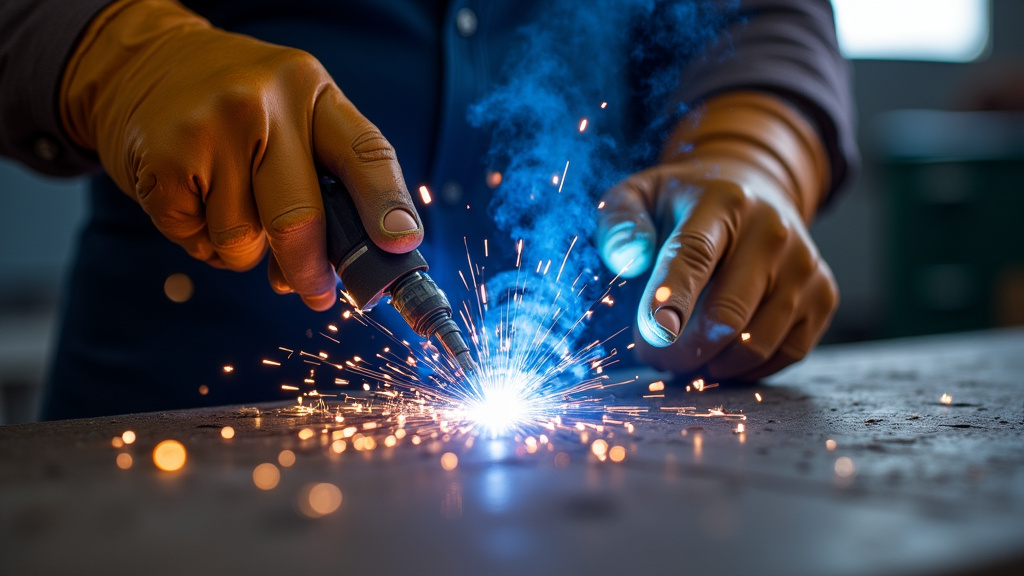
MIG welding uses a special gun. This gun feeds wire automatically. You just point and shoot, kind of like a soldering iron but much more powerful. This means you don’t have to worry about holding a separate electrode like you do with some other welding types. It’s one less thing to juggle.
Clear Visual Feedback
When you’re MIG welding, you can often see exactly what’s happening. The molten metal glows, and you can adjust your speed and angle as you go. This immediate feedback helps you learn faster. You can see if your weld is too hot, too cold, or if you’re moving too fast or too slow.
Less Fiddling, More Welding
Other welding processes can involve a lot of setup and adjustment. You might need to grind metal, clean it obsessively, or swap out consumables frequently. With MIG, you can often get right to welding. You feed the wire, pull the trigger, and the machine does a lot of the work for you. This reduces the number of variables you need to manage at once.
Comparing MIG to Other Welding Processes
To really understand why MIG stands out, let’s briefly look at a couple of other common welding methods.
Stick Welding (SMAW)
Stick welding, or Shielded Metal Arc Welding, is one of the oldest methods. It uses a rod that burns away as you weld. It’s great for outdoor work and on dirty metal. However, the rod melts, and you have to manage both the rod and the arc. It can be a bit more challenging for beginners to get a clean, consistent bead. You also deal with a lot of spatter and slag that needs cleaning. Many experts suggest it’s a good second step after you’ve mastered MIG.
TIG Welding (GTAW)
TIG welding, or Gas Tungsten Arc Welding, is known for producing beautiful, precise welds. It uses a non-consumable tungsten electrode. You often use your other hand to feed filler metal. This process requires a lot of control and coordination. It’s often described as welding with a torch and chopsticks. While TIG welds look amazing, it’s definitely not the easiest to learn. It takes significant practice to master.
| Process | Ease of Learning | Typical Applications | Learning Curve |
|---|---|---|---|
| MIG (GMAW) | Easiest | General fabrication, automotive, DIY projects | Relatively quick to get decent results |
| Stick (SMAW) | Medium | Heavy fabrication, outdoor work, pipe welding | Moderate, requires coordination |
| TIG (GTAW) | Most Difficult | Aerospace, high-quality artistic metalwork, thin metals | Steep learning curve, requires fine motor skills |
What You’ll Need to Get Started with MIG
Getting into MIG welding is pretty straightforward. You won’t need a workshop full of specialized tools right away. Here’s a basic rundown of what you’ll typically need.
The MIG Welder Itself
There are many beginner-friendly MIG welders available. Many models are designed for home use. Look for a machine that can handle the thickness of metal you plan to work with. Some are even dual-purpose, offering MIG and Flux-Cored options. This gives you flexibility as you learn.
Welding Wire
You’ll need spools of welding wire. The type and size of wire depend on the metal you’re welding and the welder you have. For MIG, you’ll also need shielding gas, which protects the weld puddle from the air. Some smaller machines use flux-cored wire, which has a flux coating and doesn’t require gas. This is sometimes called “gasless MIG” and can be even simpler to start with.
Safety Gear is Non-Negotiable
Safety is super important in welding. You absolutely need a good welding helmet with an auto-darkening lens. You’ll also need welding gloves, a welding jacket or heavy cotton clothing, and safety glasses. Never skip on your personal protective equipment.
Basic Tools
Beyond the welder, you’ll want a wire brush for cleaning metal, some pliers or clamps to hold your workpieces, and maybe a grinder for preparing edges. These are handy for making sure your welds are clean and strong.
Tips for Your First MIG Welding Sessions
Ready to give it a shot? Here are a few things that will help make your first MIG welding experiences smoother.
Practice on Scrap Metal First
Don’t jump straight into your big project. Find some old pieces of metal to practice on. This lets you get a feel for the welder and practice your technique without the pressure of messing up something important. You’ll want to make sure your settings are right. Many welders suggest starting with thicker metal.
Learn Proper Gun Angle and Travel Speed
The angle of your MIG gun and how fast you move it are key. Most people suggest a slight drag angle (pushing the gun away from the weld bead) for steel. Finding the right speed means you get a consistent bead. It shouldn’t be too wide or too narrow. This is something you’ll just get a feel for with practice.
Keep Your Workspace Clean
Clean metal makes for better welds. Remove any rust, paint, oil, or dirt from the area you’re welding. A clean surface helps the weld penetrate properly and avoids defects. Think of it like cleaning a wound before bandaging it.
Don’t Be Afraid to Adjust Settings
Welders have settings for voltage and wire speed. These need to be matched to the thickness of your metal and the wire you’re using. If your weld looks rough, too bubbly, or not melting in properly, try adjusting these settings. Most welder manuals have charts to help you start. Experimenting is part of the learning process.
Checklist for Your First MIG Welding Steps
Here’s a quick rundown to get you started:
- Choose a beginner-friendly MIG welder.
- Get the right safety gear: helmet, gloves, clothing.
- Stock up on welding wire suitable for your welder.
- Find a supply of shielding gas (if your welder requires it).
- Gather basic tools like a wire brush and clamps.
- Secure some scrap metal for practice.
Conclusion
You’ve learned that MIG welding is your best bet for starting out. Its forgiving nature and straightforward operation make it the easiest process to pick up. You can get comfortable with the basics and start creating projects much faster than with other methods. Remember, safety is key, so always gear up properly.
Your next step is to find a beginner-friendly MIG welder and some scrap metal. Practice makes perfect, and with a little patience and focus, you’ll be welding like a pro before you know it. Happy welding!
Frequently Asked Questions
Can I really start welding with just a MIG welder?
Yes, you can! A MIG welder is designed to be user-friendly for beginners. You’ll need the welder, wire, safety gear, and some basic tools to get started. Many home-use models are available that make the learning process smoother.
Is it hard to learn the welding gun technique for MIG?
Most people find the MIG gun technique much easier to learn. The machine feeds the wire automatically, so you focus on positioning the gun and maintaining a steady movement. It’s less about managing multiple components simultaneously than other methods.
Do I need to clean the metal a lot before MIG welding?
Cleaning your metal is important for strong welds, but MIG can be a bit more forgiving with slightly less-than-perfect surfaces compared to TIG. However, removing rust, paint, and grease will always give you the best results and make your learning process easier.
What if I make a mistake while MIG welding?
That’s why practicing on scrap metal is so important! If you make a mistake, you can often grind it down and try again. MIG welding’s forgiving nature means small errors are usually fixable, allowing you to learn from them without ruining your main project.
How long does it usually take to get good at MIG welding?
You can get decent results with MIG welding relatively quickly, often within your first few sessions with practice. Becoming a master takes more time and consistent effort, but achieving basic proficiency and completing simple projects is very accessible for beginners.