Is Welding Hard to Learn? What to Expect
On this page (5 sections)
Is welding hard to learn? For many people, the answer is yes, it can be challenging, but it’s definitely learnable. It requires patience, practice, and attention to detail. You’ll need to master new skills and understand safety procedures. But with the right approach, you can become a skilled welder.
Learning to weld involves understanding different types of welding processes. Each process has its own techniques and equipment. You’ll learn about metal properties and how to create strong joints. Safety is always the top priority. Mastering welding takes time and consistent effort. But the reward is a highly sought-after skill.
- Welding is challenging but learnable.
- Success depends on patience and practice.
- Safety is a critical part of learning.
- Different welding types require unique skills.
- Consistent effort leads to mastery.
Let’s walk through what you can expect when you decide to learn welding. We’ll cover the common challenges and what you can do to overcome them.
You’re wondering if welding is a difficult skill to learn. It’s a fair question! Many people find it challenging at first, but with the right guidance and dedication, it’s absolutely within your reach.
Getting Started: Your Welding Learning Journey
So, what’s involved in learning to weld? It’s about more than just holding a torch. You’ll learn to work with heat, metal, and electricity. Safety is always the number one priority. We’ll break down what you can expect in the learning process.
The Initial Learning Curve: What to Expect
Think of learning to weld like learning a new sport or a musical instrument. There’s a learning curve. You won’t be a master welder overnight. It requires consistent practice and a willingness to learn from mistakes. Many beginners feel a bit overwhelmed initially. That’s completely normal!
Understanding Welding Basics
Before you even strike an arc, you’ll learn the fundamentals. This includes understanding different metals and how they react to heat. You’ll also learn about welding joints and why certain configurations are stronger. Safety gear is non-negotiable. You’ll learn about welding helmets, gloves, and protective clothing. These are your first lines of defense (CDC).
The First Welds: A Taste of Reality
Your first attempts at welding might look… interesting. You might see uneven beads, splatters, or holes. This is where practice truly makes a difference. Don’t get discouraged! Every welder started exactly where you are now. We found that patience is your best friend during this phase.
Common Challenges Welders Face
What are some common hurdles you might encounter? Let’s be honest, welding isn’t always easy. But knowing what to expect can help you prepare.
Achieving a Consistent Weld Bead
One of the biggest challenges is creating a smooth, consistent bead. This means maintaining the right distance between your welding gun and the metal. You also need to control your travel speed. Too fast, and the weld won’t penetrate. Too slow, and you can burn through. It takes a lot of muscle memory to get this right.
Understanding Heat Input and Metal Control
Controlling the heat is critical. Too much heat can warp your metal or cause it to melt away. Not enough heat means a weak, unjoined piece. This balance is one of the trickiest parts to master. It’s like juggling – you need to keep multiple things in the air at once (like heat, speed, and angle).
Safety First: Avoiding Hazards
Welding involves intense light, heat, and sparks. You need to be aware of potential dangers. Burns, eye damage from arc flash, and fumes are all risks. Following safety protocols diligently is key to preventing injuries. Experts emphasize that proper ventilation is crucial to avoid inhaling harmful fumes (OSHA).
Different Welding Processes: Which is Right for You?
Welding isn’t a one-size-fits-all skill. There are several common processes, each with its own learning curve and applications. Understanding these can help you choose your path.
Stick Welding (SMAW)
Shielded Metal Arc Welding, or stick welding, is one of the oldest methods. It uses a coated consumable electrode. It’s known for being versatile, especially for outdoor work and on dirty or rusty metals. However, it can be messy and requires practice to control.
MIG Welding (GMAW)
Gas Metal Arc Welding, commonly called MIG, is often considered the easiest to learn for beginners. It uses a continuously feeding wire electrode and a shielding gas. MIG welding is fast and produces clean welds. You’ll find it’s great for thinner metals. Many hobbyists and DIYers start with MIG.
TIG Welding (GTAW)
Gas Tungsten Arc Welding, or TIG, is known for producing the highest quality and cleanest welds. It uses a non-consumable tungsten electrode and a separate filler rod. TIG welding offers incredible precision but is generally considered the most difficult to master. It requires very fine motor control and coordination.
Here’s a quick look at how they compare:
| Process | Ease of Learning | Best For | Common Uses |
|---|---|---|---|
| Stick (SMAW) | Moderate | Outdoor, dirty/rusty metals | Construction, heavy fabrication |
| MIG (GMAW) | Easiest | Thin to medium metals, speed | Automotive, manufacturing, DIY |
| TIG (GTAW) | Most Difficult | Precision, clean appearance | Aerospace, artistic metalwork, high-end fabrication |
Flux-Cored Arc Welding (FCAW)
Flux-cored welding is similar to MIG but uses a wire with a flux core. This flux provides shielding, making it good for outdoor use without a separate gas bottle. It can produce strong welds but also generates more spatter and smoke. Many find it a good middle ground between stick and MIG.
Your Path to Becoming a Skilled Welder
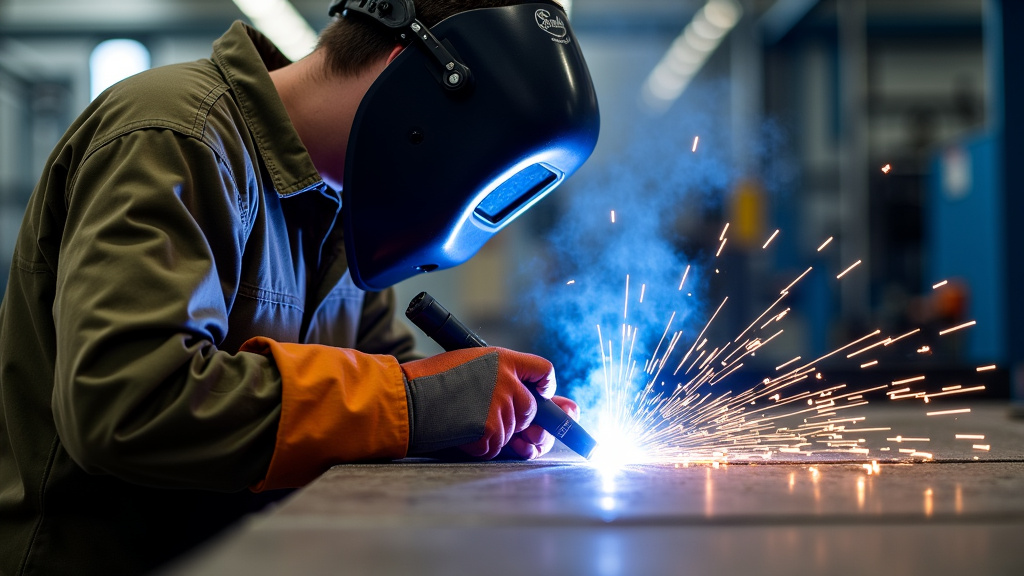
Learning to weld is a journey. It involves dedication, proper training, and lots of hands-on practice. Here’s a checklist of things that will help you succeed:
- Find a good training program.
- Invest in quality safety gear.
- Practice, practice, practice!
- Learn from experienced welders.
- Be patient with yourself.
- Never compromise on safety.
Conclusion
You’ve learned that welding can be challenging, but it’s absolutely a learnable skill. Your journey will involve patience and lots of practice. Understanding the basics of different welding processes, like MIG and TIG, will help you choose your path. Remember that safety is always the first step. Don’t get discouraged by early imperfections; every skilled welder started somewhere. If you’re ready to start, look for a local welding school or community college program to get hands-on training.
Frequently Asked Questions
How long does it take to get good at welding?
Becoming proficient in welding takes time and consistent effort. You might be able to produce basic welds within a few weeks of dedicated practice. However, mastering consistency, different materials, and advanced techniques can take months or even years of hands-on experience. Treat it like learning any craft; patience is key.
What is the hardest part of learning to weld?
Many beginners find controlling the arc and maintaining a steady travel speed the most challenging. It requires developing good hand-eye coordination and muscle memory to create smooth, consistent weld beads. Learning to manage heat input without warping the metal is also a common hurdle.
Is MIG welding really the easiest to learn?
Yes, MIG welding is widely considered the easiest for beginners to pick up. The process uses a wire feed that’s automatically controlled, and it’s more forgiving with technique. You can often get decent results fairly quickly, making it a popular choice for DIYers and those new to the trade.
Do I need formal training to learn welding?
While you can learn some basics through online resources and practice, formal training is highly recommended. Welding schools and trade programs provide structured learning, expert guidance, and crucial safety education. This structured approach helps you build a strong foundation and avoid developing bad habits.
What’s the most important safety gear for a beginner?
Your most important safety gear includes a proper welding helmet with adequate shade for arc protection, welding gloves to protect your hands from heat and sparks, and flame-resistant clothing to cover your arms and legs. Good ventilation is also essential to avoid inhaling harmful fumes.