What Is a Welding Helmet? What to Expect
On this page (4 sections)
A welding helmet is a specialized shield designed to protect your face and eyes from intense light, heat, and sparks generated during welding. Think of it as your essential safety gear, like a seatbelt for your face. It’s your first line of defense against arc flash and molten metal.
Wearing the right helmet ensures you can see your work clearly without causing eye damage. It’s a tool that helps you weld safely and effectively. Different types exist, but their core job is always the same: protecting your vision.
- What it is: A safety shield for welding.
- What it does: Protects eyes and face.
- Why you need it: Prevents burns and eye damage.
- Key feature: Filters out harmful light and sparks.
- Types: Auto-darkening and passive lenses exist.
Below, we’ll walk you through what a welding helmet is and what you can expect when using one.
Understanding Your Welding Helmet: A Guide
A welding helmet is more than just a piece of safety gear. It’s your critical shield against hazards you can’t see coming. When you strike an arc, you create intense ultraviolet (UV) and infrared (IR) light. This light can cause serious damage to your eyes. Think of it like staring at the sun for too long, but much, much worse. Your helmet is designed to block this harmful radiation. It also protects your face and neck from flying sparks and hot metal spatter.
Without a helmet, welding can lead to painful conditions like arc eye, also known as photokeratitis. This is essentially a sunburn on your cornea. It’s incredibly uncomfortable and can temporarily impair your vision. Long-term exposure can even lead to cataracts. Your welding helmet ensures you can work safely and protect your vision for years to come.
The Core Components of a Welding Helmet
Most welding helmets, whether basic or advanced, share a few key components. Understanding these parts helps you appreciate their function and how they protect you. It’s like knowing how your car works to keep it running smoothly.
The Shell: Your First Line of Defense
The outer shell is usually made from a durable, heat-resistant plastic. Materials like nylon or fiberglass are common. This shell is designed to withstand high temperatures and impact. It’s the physical barrier that protects your head and face from sparks and debris. The shape of the shell also helps deflect hot metal away from your body.
The Viewing Area: Where the Magic Happens
This is the window through which you’ll watch your weld. It’s covered by the lens. The size of this viewing area can vary between helmets. A larger viewing area offers a better field of vision, which can be helpful, especially when you’re learning. However, it also means a larger surface area that needs protection.
The Lens System: The Heart of Protection
This is the most important part of your helmet. It’s what filters out the dangerous light. There are two main types of lens systems: passive and auto-darkening. Each has its own set of features and benefits.
Passive Lenses: Simple and Reliable
Passive lenses have a fixed shade number. They are always dark, even before you start welding. You’ll use a shade number appropriate for your welding process. For example, stick welding often requires a shade 10 or 11. When you strike an arc, the light is filtered through this permanent shade. These lenses are generally less expensive and require no batteries or power. They are a solid choice for hobbyists or those who don’t weld frequently.
Auto-Darkening Lenses (ADF): Convenience and Speed
Auto-darkening lenses are much more advanced. They have a special filter that senses the bright flash of the welding arc. When it detects the arc, the lens automatically darkens in a fraction of a second. Once the arc is gone, it returns to a clear state. This is incredibly convenient because you don’t have to flip your helmet up and down to see between welds. This saves time and also offers better protection, as your face is covered more often. ADF lenses usually have adjustable shade settings, sensitivity controls, and delay times. They are powered by batteries and solar cells. Many welding professionals prefer ADF helmets for their efficiency and comfort.
The Headgear: For a Comfortable Fit
The headgear is what allows you to adjust the helmet to fit your head. Good headgear is crucial for comfort, especially during long welding sessions. It typically includes straps and a pivot mechanism. This mechanism lets you tilt the helmet up and down. You can also adjust the distance between your face and the lens. A well-fitting helmet stays in place and doesn’t put undue pressure on your head.
What to Expect When You Start Welding with a Helmet
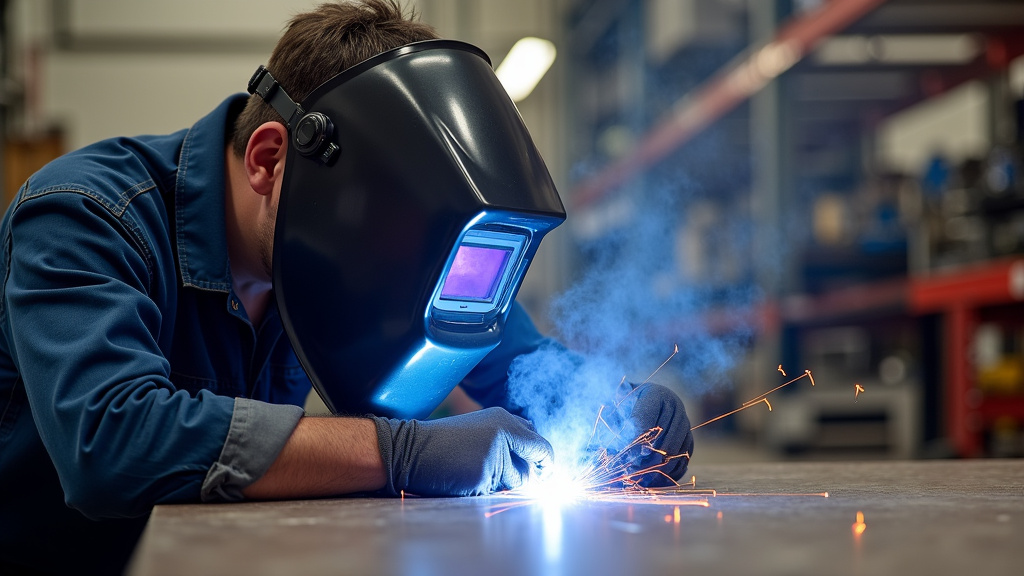
Putting on a welding helmet for the first time can feel a bit strange. It limits your field of vision and changes how you see the world. But with a little practice, it becomes second nature. Let’s break down what you can expect.
The Initial Fit and Feel
When you first put on your helmet, adjust the headgear so it fits snugly but comfortably. You want it to stay put when you move your head, but not feel like it’s crushing you. Many helmets allow you to adjust the tilt angle. Find an angle that feels natural for looking down at your workpiece. You might need to experiment a bit to get it just right. A proper fit prevents neck strain and ensures the helmet stays where it needs to be for protection.
Seeing Through the Lens
If you have a passive helmet, you’ll notice the world is tinted. If you have an auto-darkening lens set to its clear state, it might have a slight greenish or blueish hue. When you strike an arc, the sudden darkening can be startling at first. You’ll see a bright white light that instantly turns to a focused, shaded view of your weld puddle. The auto-darkening feature is designed to be incredibly fast. We found that even slight delays can be distracting, so a good ADF helmet is key for a smooth experience.
Learning to See Your Weld Puddle
One of the biggest challenges for new welders is learning to see and control the weld puddle. Your helmet is designed to help you do this. The filtered light makes the molten metal and the surrounding area visible. You’ll learn to watch the shape and movement of the puddle. You’ll also see the arc’s intensity and the base metal melting. It takes practice to develop this skill. Learning to weld takes practice with protective gear and the weld puddle. Don’t get discouraged if it feels awkward initially. Many experts say that consistent practice is the most important factor in mastering welding vision.
Adjusting Your Technique
You might find yourself needing to adjust your welding technique slightly because of the helmet. For instance, you might need to hold your torch or electrode a bit differently to keep the weld puddle in your direct line of sight. With an auto-darkening helmet, you can flip it down to start, weld for a short bit, and then flip it up to check your progress without removing the helmet. This back-and-forth can help you learn faster.
Comfort and Fatigue
A good welding helmet should be comfortable enough for extended use. If your helmet is too heavy or doesn’t fit well, it can cause neck pain and fatigue. This can impact your concentration and lead to mistakes. We found that helmets with good weight distribution and breathable padding tend to be the most comfortable. Some helmets also offer improved ventilation to reduce heat buildup inside, which is a nice bonus on warmer days.
Essential Checklist for Your Welding Helmet
Before you start welding, or if you’re considering buying a new helmet, run through this quick checklist. It covers the key features and considerations for a safe and effective experience.
- Does the helmet fit comfortably and securely on your head?
- Can you adjust the headgear for a custom fit?
- Is the viewing area large enough for your needs?
- Does the lens shade match the type of welding you do?
- If it’s auto-darkening, does it react quickly and reliably?
- Are there any cracks or damage to the shell or lens?
Maintaining Your Welding Helmet for Longevity
Your welding helmet is a tool that works hard to protect you. Proper care and maintenance will ensure it lasts longer and continues to provide reliable protection. It’s like taking care of your tools to keep them sharp and ready for action.
Cleaning the Lens
The viewing lens needs to be kept clean. Dirt, grease, and spatter can obscure your vision. Use a soft, lint-free cloth and a mild cleaning solution. Many manufacturers recommend specific lens cleaners. Avoid harsh chemicals, as they can damage the lens coatings. We found that regular cleaning, even a quick wipe before each use, makes a significant difference in visibility. Always ensure the lens is completely dry before welding.
Replacing Outer Cover Lenses
The outer cover lens is designed to take the brunt of the spatter. It’s meant to be replaced when it gets scratched or pitted. Think of it as a sacrificial shield for the main filter. Many helmets have clips or a frame that allows for easy replacement. Keeping these clean and clear is essential for maintaining the helmet’s protective qualities. Many welding safety guidelines recommend checking and replacing these lenses often.
Checking the Auto-Darkening Filter (ADF)
For auto-darkening helmets, regularly check the battery life and the sensors. Make sure the sensors are clean and unobstructed. If the ADF seems slow to react or doesn’t darken properly, it might be time to replace the batteries or the entire ADF unit. A malfunctioning ADF can be a serious safety hazard. Many ADF helmets have indicator lights for battery levels.
Inspecting the Shell and Headgear
Periodically inspect the helmet shell for any cracks, deep scratches, or signs of heat damage. If the shell is compromised, it can’t offer adequate protection. Check the headgear straps and adjustment mechanisms to ensure they are functioning correctly. A secure fit is always paramount for safety.
Conclusion
You now understand that a welding helmet is your essential shield against the intense hazards of welding. From blocking harmful UV rays to protecting you from sparks, it’s critical for your safety and long-term vision. Whether you choose a passive or auto-darkening lens, ensuring a comfortable fit and proper maintenance will make your welding experience safer and more enjoyable. Take the time to properly adjust and care for your helmet, and it will serve you well on countless projects.
Frequently Asked Questions
How do I know if my welding helmet is protecting me properly?
You can tell your helmet is protecting you if you don’t experience any discomfort or pain in your eyes after welding. Regularly inspect the shell for damage and ensure the lens is clean and free of scratches. For auto-darkening helmets, verify the shade level is appropriate for your welding task and that it darkens instantly.
What’s the main difference between a passive and an auto-darkening welding helmet?
A passive helmet has a fixed, always-dark lens that you must flip down before welding. An auto-darkening lens (ADF) automatically darkens within milliseconds when it detects the welding arc and returns to clear when the arc stops. ADF helmets offer convenience and keep your face covered more consistently.
Can I use any shade of lens for all types of welding?
No, you should not use any shade. Different welding processes produce different light intensities. Your welding helmet’s lens shade needs to match your specific welding process to provide adequate protection without hindering your view. Gasless welding also calls for process-appropriate eye protection. Always consult welding safety guidelines for recommended shade numbers.
How often should I replace the outer cover lens on my welding helmet?
You should replace the outer cover lens whenever it becomes significantly scratched, pitted, or obscured by spatter. This outer lens acts as a sacrificial barrier to protect the main filter. Keeping it clean and replacing it promptly ensures optimal visibility and continued protection.
Will wearing a welding helmet make me hotter when I weld?
A welding helmet can add some warmth due to trapping heat, especially during long sessions. However, many modern helmets are designed with good ventilation and comfortable padding to minimize discomfort. Choosing a helmet with good weight distribution can also reduce fatigue and the feeling of being overheated.