TIG vs Laser Welding: Which Should You Choose? (November 2026)
Choose TIG for flexible, manual work and laser welding for fast, precise joints with suitable equipment and setup. The right method depends on material, joint access, production pace and how much control you need at the workpiece.
On this page (10 sections)
- TIG vs laser welding: what is the main difference?
- Which process gives you more control?
- Which is faster for fabrication?
- Which one keeps heat and distortion lower?
- Which materials and joints suit each process?
- Which process needs more equipment and training?
- Which process leaves less finishing work?
- Can either process handle a repair or small batch?
- How do you choose between TIG welding and laser welding?
- What should you choose for your shop?
In a TIG welding vs laser welding decision, match the process to your material, joint access, production pace and finishing needs.
TIG uses an electric arc between a nonconsumable tungsten electrode and the workpiece; filler can be added separately. Laser welding focuses a beam of light at the joint, which can limit the surrounding heat affected area when the setup is right.
Neither method is the automatic winner for every job. We compared their practical tradeoffs so you can choose a process that fits the work and the shop.
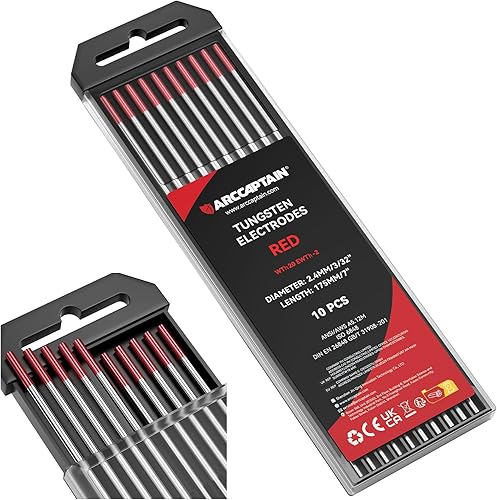 Best for DC TIG work
ARCCAPTAIN TIG Welding Tungsten Electrode 10-Pack 3/32"x

TIG vs laser welding: what is the main difference?
TIG gives the operator direct control over the arc and filler; laser welding concentrates energy at the joint and can support a faster, more repeatable workflow. That difference affects equipment, operator skill, joint preparation and the amount of finishing a part may need.
TIG is a manual arc process. The welder controls torch angle, travel speed and heat, while feeding filler by hand when the joint calls for it.
You can adjust the technique as the puddle changes, but that control depends on practice.
Laser welding can be operated by hand or integrated into a controlled production setup, depending on the system. The beam's concentrated heat can help reduce distortion on suitable parts, though fit-up, material and settings still matter.
If the process itself is new to you, start with What Is Laser Welding? Key Facts to Know and [What Does TIG Stand for in Welding?
Explained](/what-does-tig-stand-for-in-welding/). Those explain the basics before you compare machines or procedures.
Which process gives you more control?
TIG gives a trained welder more direct control over puddle shape and filler as the joint changes. Laser welding can offer precise energy placement, but the system's controls and part setup shape how much adjustment is practical during a weld.
With TIG, you can pause, alter torch travel or add filler as you work. This can help with short runs, repairs and parts that don't fit a fixed production pattern.
That flexibility comes with a skill requirement. Coordinating both hands, maintaining torch angle and controlling heat takes practice, particularly on thin material where excess heat can distort or burn through the work.
Laser systems can make consistent welds across repeated parts when the operator has suitable settings and stable positioning. A poorly fitted joint or incorrect parameters can still cause defects, so the beam doesn't remove the need for process knowledge.
Does TIG or laser welding suit detailed work?
Both can suit detailed joints, but they achieve precision in different ways. TIG relies on the welder's hand control; laser welding relies on beam placement, stable parts and a process setup suited to the material.
For repeated small joints where speed and consistency matter, a laser setup may be a better fit if the material and part design are compatible.
The word “precision” doesn't guarantee a clean result. Joint preparation, access, fit-up and operator training can matter as much as the process name.
Which is faster for fabrication?
Laser welding can be faster for suitable, repeatable joints, while TIG often fits slower, varied work better. The full job time includes preparation, setup, welding, inspection and finishing, not just arc-on or beam-on time.
A laser process may reduce the time spent welding each part in a repeated workflow. If you need fixtures, careful alignment or dedicated training, those steps still count toward production time.
TIG usually asks for more deliberate hand movement and can take longer on long seams or a high volume of parts. It may still save time on a small repair if the shop already has a TIG machine and an experienced operator.
Compare the total process for your actual batch size. The laser welding vs MIG welding comparison can also help if a wire-fed process is in your shortlist.
Which one keeps heat and distortion lower?
Laser welding often concentrates heat in a smaller area, which can help limit distortion on suitable parts. TIG can also produce sound work, but a slower weld or excess heat may affect thin material.
Heat input depends on material thickness, joint design, travel speed, settings and technique. A small heat affected area is useful only if the weld meets the strength and quality needs of the part.
For thin sheet or a visible finished surface, consider how much straightening, grinding or polishing may follow. Test the joint on representative material before committing to a production method.
Neither process removes the need to control heat. Follow the machine manual and a qualified welding procedure for work where failure could cause injury or damage.
Which materials and joints suit each process?
Choose based on the exact alloy, thickness and joint, because neither TIG nor laser welding covers every material combination. Check process guidance for the material and machine instead of assuming the method works because the base metal looks similar.
TIG is used across many metal fabrication tasks, including stainless steel and aluminum, when the machine, electrode, filler and settings fit the job. The difference between MIG and TIG welding explains how TIG compares with another common arc process.
Laser welding can suit a range of metals and precise joints, but reflectivity, thickness, access and fit-up can affect the result. Some applications may require a different beam source or process entirely.
Where beam access is limited or a joint is irregular, assess whether the laser head can reach and track the seam. TIG may be easier to adapt to a changing geometry, provided the welder can reach the joint safely.
What if the project uses aluminum?
TIG is a common choice for aluminum fabrication when the machine and setup support the alloy and thickness. Laser welding may also be appropriate for some aluminum production work, but confirm compatibility and process requirements for the specific part.
Aluminum conducts heat quickly and its surface oxide layer affects preparation. Your approach to cleaning, fit-up, filler and heat control should follow guidance for the alloy and joint.
Read how to TIG weld aluminum for setup and technique considerations. Don't treat general process advice as a qualified procedure for a safety critical component.
Which process needs more equipment and training?
TIG requires a suitable power source, torch and consumables; laser welding requires a laser system and controls suited to the application. The right cost comparison includes setup, safety equipment, training, maintenance and throughput.
A TIG setup can be flexible if your shop already has compatible equipment and gas, torch parts and electrodes. You will also need a qualified operator for consistent work.
Laser equipment can involve a larger investment and dedicated safety controls. The right configuration depends on the material, joint, expected volume and whether the work is manual or integrated into a production cell.
For TIG consumables, electrode choice matters. These red tungsten electrodes are described for DC applications, while blue 2% lanthanated tungsten electrodes are described for AC and DC use; confirm that an electrode fits your machine and procedure.
Which process leaves less finishing work?
Laser welding may reduce finishing when its focused heat and a well-fitted joint produce the surface your job needs. TIG can also create neat welds, but visible filler and heat effects may call for cleaning or finishing.
The finish depends on appearance standards, joint location, material and operator skill. A polished part may need work after either process, so define the acceptable finish before comparing cycle times.
Don't judge only by the bead's appearance. Check the required weld profile, penetration and inspection criteria for the part, especially if it carries a load or protects people.
Abrasive finishing also affects the workflow. If you grind a TIG weld, use suitable tools and protective gear, and avoid removing more material than the joint design permits.
Can either process handle a repair or small batch?
TIG is often the more practical choice for varied repairs and small batches when the shop already has the equipment and skill. Laser welding becomes more attractive when a repeatable part and production volume justify its setup.
For occasional repair work, flexibility can matter more than top speed. TIG can work across different joints without building a dedicated fixture for every part, though access and welder skill remain constraints.
For a repeated assembly, laser welding may shorten each weld and reduce variation after the system is set up. Estimate how many parts you will make and how often the design changes before weighing the investment.
Plastic repairs need a different tool altogether. The ATOLS Upgraded Plastic Welder is a hot staple kit for plastic components such as bumpers and dashboards, not a metal welding system.
A portable flux-cored machine is another separate option for small metal jobs. The Lincoln Electric 90i FC Flux Core Wire is a 120 V wire-feed welder weighing 15 lb, intended for flux-cored work rather than TIG or laser welding.
How do you choose between TIG welding and laser welding?
Let the part and workflow decide.
Before selecting, write down the material and thickness, joint design, part volume, access, finish requirement and acceptable distortion. Then confirm machine compatibility and training needs with a qualified welding professional.
Use sample parts to check fit-up, weld quality and finishing time. For critical work, follow the applicable code, procedure and inspection requirements rather than relying on a general comparison.
If neither process fits the job, consider what else is available for the material and production plan. The electron beam welding overview describes another precision process used in specialized settings.
What should you choose for your shop?
Choose TIG for adaptable fabrication and repair work; choose laser welding for compatible parts where a focused, repeatable process can justify the equipment and safety setup. Compare your actual joint, batch size and finish target before investing.
For tungsten selection, compare the electrode's intended current type and material application with your TIG machine and procedure. For process basics, review [What Is Laser Welding?
Key Facts to Know](/what-is-laser-welding/) alongside the TIG guides above.
A welding process isn't a product badge. It is a choice about how your material, operator, equipment and production needs come together.
Frequently asked questions
Is TIG welding more precise than laser welding?
Either process can make precise welds when the material, joint and setup suit it. Laser welding can focus heat in a small area and support fast, repeatable work, while TIG gives the welder direct control of the arc and filler.
The better choice depends on access, tolerance and operator skill.
Is laser welding stronger than TIG welding?
Neither process is automatically stronger. Weld strength depends on the base metal, joint design, fit-up, settings, filler choice where used, and workmanship.
Compare qualified procedures and inspect sample welds for the actual material and application before choosing a process for a critical joint.
Can laser welding replace TIG welding?
Laser welding can replace TIG for some suitable production jobs, but it is not a universal substitute. Equipment cost, joint access, material thickness, part fit and safety controls affect whether it makes sense.
TIG remains useful when a skilled operator needs flexible control over a range of repair or fabrication tasks.
Can you TIG weld aluminum?
Yes, TIG is used for aluminum, but you need a suitable machine, electrode, filler and setup for the alloy and thickness. A guide to TIG welding aluminum covers the process considerations.
Check your machine manual and use the correct protective equipment.
Is laser welding easier to learn than TIG?
Laser systems may automate parts of the process, but setup, fixturing, parameter control and laser safety still require training. TIG asks the operator to coordinate torch movement and filler by hand.
Which feels easier depends on the equipment and task, so train on the specific process before production work.


