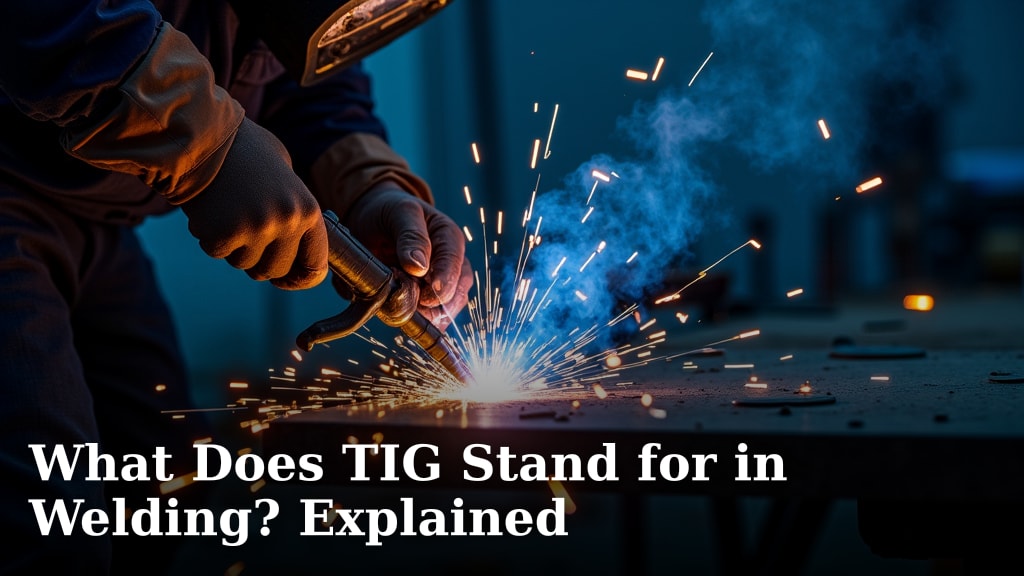
What Does TIG Stand for in Welding? Explained
TIG stands for Tungsten Inert Gas welding. It’s a welding process that uses a non-consumable tungsten electrode. This electrode is shielded by a gas, typically argon, to prevent contamination. TIG welding is known for producing clean, precise welds.
This method is often called Gas Tungsten Arc Welding, or GTAW. It’s favored for its ability to create high-quality welds on a wide range of metals. You’ll see it used for everything from car parts to airplane components. The control it offers is its biggest advantage.
- TIG stands for Tungsten Inert Gas welding.
- It uses a non-consumable tungsten electrode and an inert gas shield.
- Also known as GTAW (Gas Tungsten Arc Welding).
- Ideal for precise, clean welds on many metals.
- Offers excellent control for detailed work.
So, what makes TIG welding so special? Let’s get into the details of how this process works and why it’s such a popular choice for many projects.
Understanding the Acronym TIG in Welding
So, you’re curious about what TIG actually stands for in the welding world? It’s a great question to ask when you’re looking into different welding methods. TIG is an acronym that describes a very specific and useful welding process.
TIG stands for Tungsten Inert Gas. This name tells you a lot about how the welding works. You have a tungsten electrode, and it’s protected by an inert gas. This combination is key to its unique capabilities. Many people also know it by its technical name, which is Gas Tungsten Arc Welding, or GTAW.
Breaking Down the TIG Acronym
Let’s break down each part of the TIG acronym to really understand it.
Tungsten: The Non-Consumable Electrode
The “T” in TIG stands for Tungsten. This is a type of metal that’s incredibly heat-resistant. In TIG welding, the tungsten electrode doesn’t melt away like a typical welding rod. Think of it like a pencil that you use to draw with; the pencil itself doesn’t disappear as you sketch. The tungsten electrode is the tool that creates the arc, but it doesn’t become part of the weld itself. This is a major difference from other welding methods.
Inert Gas: The Protective Shield
The “IG” part stands for Inert Gas. An inert gas is something that doesn’t react with other substances. In TIG welding, this gas acts like a shield. It surrounds the hot tungsten electrode and the molten weld puddle. This shield prevents oxygen and nitrogen from the air from getting into the weld. Air contamination can cause weak spots, porosity (tiny holes), and make the weld brittle. Common inert gases used are argon and helium, or a mix of both. Argon is often the go-to choice for many common TIG welding tasks because it’s readily available and effective.
Why the Inert Gas is So Important
You might wonder why you can’t just use regular air to shield the weld. Well, air is mostly nitrogen and oxygen. These gases are very reactive. When they come into contact with the super-hot metal during welding, they cause problems. They can oxidize the metal, making it weak. They can also trap gases in the weld, creating those tiny holes called porosity. These holes are like weak links in a chain; they make the whole weld less strong. The inert gas keeps the weld clean and pure, leading to a much stronger and more reliable joint. Many industry standards emphasize the need for clean welds to ensure safety and longevity (American Welding Society).
How TIG Welding Works: A Step-by-Step Look
Understanding the process makes TIG welding much less mysterious. It’s a precise method that requires a bit of practice, but the results are often worth it. Let’s walk through the basic steps.
Setting Up Your Equipment
First, you’ll need your TIG welding machine, a torch, a ground clamp, a gas cylinder with an regulator, and filler metal if you’re using it. The machine controls the electrical current needed to create the arc. The torch holds the tungsten electrode and allows you to direct the arc and gas flow. The ground clamp completes the electrical circuit. The gas cylinder supplies the shielding gas, and the regulator ensures it flows at the correct rate. You’ll also select filler metal that matches the base metal you’re welding, if you need to add material.
Creating the Arc
The welder then strikes an arc between the tungsten electrode and the workpiece. This is similar to how you might strike a match. There are a couple of ways to do this: you can use a high-frequency start, which creates a spark without touching, or you can use a scratch start, where you lightly touch the tungsten to the metal and pull away quickly. The high-frequency start is gentler on the tungsten electrode and preferred by many for a cleaner beginning.
Adding Filler Metal (If Needed)
For many TIG welds, you’ll need to add filler metal to build up the joint. You do this by holding a separate rod of filler metal near the arc. As the arc melts the base metal and the tip of the filler rod, you feed the rod into the puddle. The key here is control; you dip the rod into the molten puddle just enough to add material. This is where you really see the precision of TIG welding. It allows you to add metal exactly where and when you need it, building a smooth, consistent bead.
Controlling the Weld Puddle
The welder’s main job is to control the molten weld puddle. You move the torch along the joint, keeping the arc distance consistent. At the same time, you manage the filler rod, feeding it into the puddle as needed. The gas shield flows constantly, protecting the weld. It’s like juggling a few things at once, but with practice, it becomes second nature. Many welders find this control makes TIG ideal for detailed work where other methods might be too clumsy.
Why Choose TIG Welding? The Advantages Explained
TIG welding isn’t always the fastest method, but it offers some distinct advantages that make it a top choice for many applications. Let’s look at why it’s so popular.
Unmatched Precision and Control
This is perhaps the biggest draw of TIG welding. Because you’re using a foot pedal or a thumb control to manage the amperage (the welding current) and you manually feed the filler rod, you have incredible control over the heat input and the amount of metal added. This precision allows you to create very neat, clean, and aesthetically pleasing welds. It’s often compared to drawing or painting with a welding torch. You can make tiny, precise additions of filler metal or manage a larger puddle with expert control. This makes it perfect for jobs where appearance matters.
High-Quality Welds on Diverse Metals
TIG welding is known for producing some of the cleanest and highest-quality welds available. The inert gas shield prevents contamination, resulting in welds that are typically stronger and more durable. Furthermore, TIG can be used on a very wide range of metals, including aluminum, stainless steel, mild steel, titanium, and exotic alloys. Its versatility means you can tackle many different projects without needing multiple welding processes. Many sources confirm TIG’s suitability for critical applications where weld integrity is paramount (National Institute of Standards and Technology).
No Spatter or Fumes Compared to Other Methods
Compared to some other welding processes like MIG or Stick welding, TIG produces very little spatter. Spatter is small droplets of molten metal that fly off during welding. These droplets can stick to the workpiece and the surrounding area, creating a mess that needs to be cleaned up. TIG also generates fewer fumes. While all welding produces some fumes and ventilation is always recommended, TIG is generally considered a cleaner process in this regard. This means less cleanup and a more comfortable working environment, which is a big plus for any workshop.
Versatility in Welding Positions and Applications
TIG welding can be performed in all positions: flat, horizontal, vertical, and overhead. While it might be more challenging in certain positions, the process allows for the control needed to make quality welds regardless of orientation. This versatility makes it suitable for everything from fabricating custom car parts to repairing delicate instruments. Its ability to work on thin materials without burning through is also a significant advantage, something that can be tricky with other welding methods.
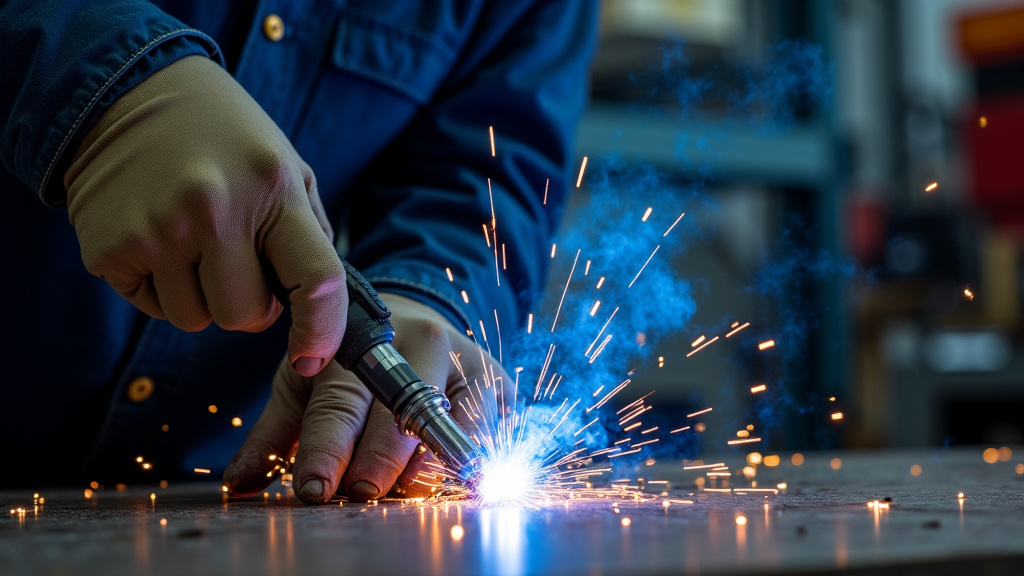
TIG Welding Key Components Checklist
To get started or to better understand what’s involved, here’s a quick rundown of the essential parts of a TIG setup:
- TIG Welding Machine (Power Source)
- TIG Torch (with appropriate consumables like collets and cups)
- Tungsten Electrodes (various types and sizes)
- Shielding Gas Cylinder (e.g., Argon) with Regulator
- Ground Clamp
- Filler Metal Rods (if needed, matched to base metal)
- Safety Gear (helmet, gloves, leathers)
Comparing TIG to Other Welding Processes
It’s helpful to see how TIG fits into the bigger welding picture. Understanding its differences from other common methods can help you decide if it’s the right choice for your needs.
| Feature | TIG (GTAW) | MIG (GMAW) | Stick (SMAW) |
|---|---|---|---|
| Electrode | Non-consumable Tungsten | Consumable Wire (feeds through torch) | Consumable Rod (flux-coated) |
| Shielding | Inert Gas (Argon, Helium) | Inert or Semi-inert Gas (Argon, CO2 mixes) | Flux coating on electrode |
| Speed | Slow | Fast | Moderate |
| Precision/Control | Very High | Moderate | Low to Moderate |
| Metal Thickness | Excellent on thin metals, also good on thick | Good on thin to medium; can struggle with very thin | Good on medium to thick; difficult on very thin |
| Cleanliness | Very clean, minimal spatter/fumes | Moderate spatter/fumes | High spatter/fumes |
| Skill Level | High | Moderate | Moderate |
| Cost (Equipment) | Moderate to High | Moderate | Low |
As you can see, TIG offers a unique blend of precision and quality that other methods often can’t match, especially for critical or cosmetic applications. While it might take more time and skill, the superior results often justify the effort. Many professional fabricators and hobbyists alike find that investing in TIG welding skills opens up a world of possibilities for creating high-quality metal projects.
Conclusion
So, you now know that TIG stands for Tungsten Inert Gas welding. It’s a precise method that uses a non-melting tungsten electrode and a shielding gas to create clean, strong welds. While it requires practice and offers a slower pace, the unmatched control and high-quality results on various metals make it a favorite for detailed and critical projects. If you’re looking for precision and a professional finish, TIG welding might be the perfect fit for your next metal project. Consider starting with some basic practice exercises to get a feel for the torch and filler rod control.
Frequently Asked Questions
Is TIG welding the best option for beginners?
TIG welding is known for its steep learning curve. While you can learn the basics, achieving consistent, high-quality welds takes considerable practice and fine motor control. Other welding methods like MIG might be more forgiving for absolute beginners.
What kind of metals can you weld with TIG?
TIG welding is incredibly versatile. You can effectively weld a wide range of metals, including aluminum, stainless steel, mild steel, titanium, copper, and various exotic alloys. This makes it suitable for many different types of projects.
Do I always need to use filler metal with TIG welding?
Not always. For some very thin materials or specific joint types, you might perform a “fusion weld” without adding any filler metal. However, for most applications where you need to build up a joint or add strength, you will use a filler rod.
How is TIG welding different from MIG welding?
The main difference is how the electrode and shielding work. TIG uses a non-consumable tungsten electrode and a separate filler rod, with shielding gas protecting the weld. MIG uses a continuously feeding wire electrode that also acts as filler, with shielding gas protecting the weld.
Why is TIG welding so much slower than other methods?
The slower speed comes from the manual process. You are controlling the arc with one hand and often feeding a filler rod with the other, all while managing gas flow. This deliberate control allows for precision but takes more time than automated wire feeding processes.