9 Best Welders for Beginners (November 2026)
The best beginner welders for home projects and practice include the YESWELDER 205Amp Stick Welder Digital Inverter IGBT for adjustable stick practice, the ATOLS Upgraded Plastic Welder for plastic repairs, and the YESWELDER 135A MIG Welder for guided MIG setup.
On this page (7 sections)
- How we chose beginner welders
- Compare the best welders for beginners
- Beginner-friendly welders for practice and home projects
- Which welding process is easiest for beginners?
- What should a beginner check before choosing a welder?
- What safety gear and setup does a new welder need?
- Which beginner welder should you choose?
The best welder for beginners is often a 110V flux core MIG machine with guided settings, such as the YESWELDER 135A. For outdoor repairs or a compact kit with fewer setup parts, a stick welder may suit you better, though it takes practice to control the arc.
Begin with the material and project. Thin mild steel, fence repairs and small brackets place different demands on a welder, and no single machine is easiest for every task.
For choosing between processes and power needs, read How to Choose a Welding Machine – Explained. Our picks below focus on machines and kits with beginner-friendly controls, practical home use and clear input requirements.
Our picks at a glance
-
1
 Best for adjustable stick practice
YESWELDER 205Amp Stick Welder Digital Inverter IGBT
9.7/10 our score
See it on Amazon -
2

-
3

- 4
 Best for automatic stick settingsCheck it
- 5
 Check it
Hpoouo 200Amp 20PCS Rods Stick Welder
Best for a starter stick kit - 6
 Check it
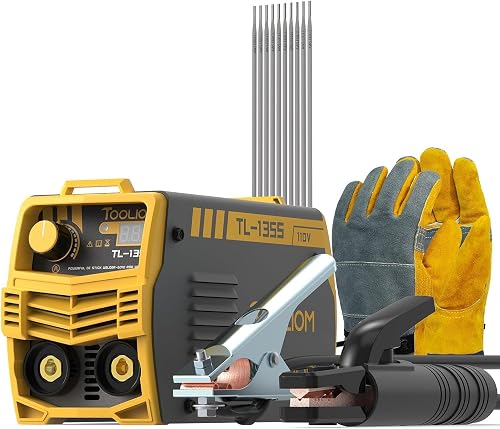
TOOLIOM 135A 110V Mini Stick Welder
Best for a dedicated 110V outlet - 7
 Check it
HGNVGZ 250A MMA Stick Welder 110V
Best for readable current settings - 8
 Check it
Saker Portable Electric Welding Machine
Best for compact 110V jobs - 9
 Check it
WRDLOSY 250A Stick Welder 110V
Best for bundled practice supplies
How we chose beginner welders
The easiest welder to use for beginners gives you controls you can understand and a process suited to your first projects. We compared input voltage, process options, current controls, arc-start features and included items.
Our score weighs specs, features and buyer feedback against what you're shopping for.
Compare the best welders for beginners
A guided MIG machine can simplify early setup, while stick welders offer portable options for metal repairs and practice. A plastic stapler belongs in a different category and suits plastic parts rather than metal.
| Product | Best for | Process | Input | Controls | Our score |
|---|---|---|---|---|---|
| YESWELDER 205Amp Stick Welder Digital Inverter IGBT | adjustable stick practice | Stick; Lift TIG mode | 110V/220V | LED display; adjustable hot start and arc force | 9.7 |
| ATOLS Upgraded Plastic Welder | plastic repairs | 9.6 | |||
| YESWELDER 135A MIG Welder | guided MIG setup | Flux core MIG, Stick, Lift TIG | 110V | 9.5 | |
| ARCCAPTAIN Stick Welder | automatic stick settings | Stick; Lift TIG mode | 110V/220V | 9.4 | |
| Hpoouo 200Amp 20PCS Rods Stick Welder | a starter stick kit | Stick | 110V | 9.3 | |
| TOOLIOM 135A 110V Mini Stick Welder | a dedicated 110V outlet | Stick; Lift TIG mode | 110V only | 9.2 | |
| HGNVGZ 250A MMA Stick Welder 110V | readable current settings | MMA stick | 110V | LCD display; adjustable current | 9.1 |
| Saker Portable Electric Welding Machine | compact 110V jobs | ARC stick | 110V | 9.0 | |
| WRDLOSY 250A Stick Welder 110V | bundled practice supplies | Stick | 110V | 8.9 |
Beginner-friendly welders for practice and home projects
The right pick depends on whether you want guided wire feed, stick practice, or a tool for plastic repairs. Check the input power and process before you plan a first project.
YESWELDER 205Amp Stick Welder Digital Inverter IGBT: Best for adjustable stick practice
- Up to 205 amps
- 110V/220V input
- LED display
- Adjustable hot start and arc force
A dual voltage stick machine with a clear LED display and adjustable arc-start features. Its range of settings suits a learner who wants room to practice as skills grow.
Pros
- Dual voltage support
- LED display
- Adjustable hot start and arc force
Cons
- Stick welding takes practice to keep a steady arc
- Lift TIG torch is not included
The YESWELDER 205Amp Stick Welder Digital Inverter IGBT gives you 110V/220V input options and a large LED display for current and mode. Hot start and arc force each have 10 adjustment levels, giving you settings to explore as you learn.
It supports 6010, 6011, 6013 and 7018 rods, and the maker describes use with stainless steel, mild steel and other metal materials. The compact machine weighs about 8.4 lb according to the maker, with a carry handle for garage or outdoor work.
Stick welding involves striking an arc and keeping the electrode moving at a steady pace. This machine's hot start and anti-stick features may reduce some setup frustration, but practice on scrap metal is still part of learning.
Pick it if you want a stick machine with dual voltage and adjustable arc features. Review the parts of a welding machine to understand the holder, ground clamp and controls before setup.
ATOLS Upgraded Plastic Welder: Best for plastic repairs
- Hot stapler kit
- Six staple types
- Includes pliers and carrying case
- For plastic parts
This hot stapler is for joining broken plastic parts, not metal welding practice. Its included staple variety makes it a focused choice for plastic repairs.
Pros
- Six staple types
- Pliers and case included
- Made for plastic repair
Cons
- Does not weld metal
- Requires matching the staple to the repair
The ATOLS Upgraded Plastic Welder repairs plastic parts with heated staples, so it is not a metal welder. Its kit includes six staple types, pliers and a carry case for repairs such as bumpers, dashboards, lamp holders and motorcycle plastic parts.
Choose it only if your project involves plastic. The maker says the tool heats staples in 1–2 seconds, and the staple types cover different shapes and repair positions.
A plastic repair kit won't teach MIG or stick welding. It can still be the easiest tool here for its specific job because it uses a handheld hot stapler rather than an electric arc.
YESWELDER 135A MIG Welder: Best for guided MIG setup
- 110V input
- Synergic voltage and wire feed control
- Flux core MIG, Stick, Lift TIG
- Includes flux core wire
Synergic control matches recommended voltage to wire feed speed, which can simplify initial settings. It supports gasless flux core MIG and stick, with Lift TIG available when you add a torch.
Pros
- Synergic control helps set voltage and wire speed
- Flux core wire included
- Three process modes
Cons
- Lift TIG torch is extra
- Made for mild steel up to 3/32 in thick
The YESWELDER 135A MIG Welder is the easiest welder to use for beginners who want guided setup. Its synergic control matches recommended voltage to wire feed speed, and it uses 110V power with gasless flux core wire.
For another MIG option, read our Titanium MIG 140 review.
It also offers stick and Lift TIG modes. The Lift TIG torch is extra, and the machine is intended for mild steel up to 3/32 in thick, so it is best matched to lighter projects rather than thick stock.
Flux core wire removes the need for a shielding gas cylinder, which can simplify an outdoor or home setup. You'll still need to set the machine for the wire and material, prepare the joint and use welding protection.
Pick this if you want a 110V machine with a guided MIG setting and multiple process options. Compare more multiprocess welding machines if you want additional modes.
For another home-focused comparison, see best welder for home use.
ARCCAPTAIN Stick Welder: Best for automatic stick settings
- 200A output
- 110V/220V input
- LED screen
- Electrode diameter based current matching
Choose an electrode diameter and the machine automatically matches current and voltage. That guided setup may help a new stick welder get started, while still allowing manual current adjustment.
Pros
- Automatic settings by electrode diameter
- Dual voltage support
- Shoulder strap included
Cons
- Lift TIG torch is not included
- Stick arc control still takes practice
The ARCCAPTAIN Stick Welder automatically matches current and voltage after you select the electrode diameter. That guided control can help a beginner start with a recommended setting, then adjust current as skill improves.
The machine supports 110V and 220V input and offers stick and Lift TIG modes. The TIG torch is not included.
A screen shows settings, and the included shoulder strap helps carry it between storage and the work area.
Like other stick welders, it requires practice to keep a steady arc and manage the electrode. Check the selected rod type and diameter before welding, then start on scrap material.
Hpoouo 200Amp 20PCS Rods Stick Welder: Best for a starter stick kit
- 110V input
- 20 welding rods included
- 20–200A adjustable current
- Hot start and anti-stick
This 110V stick kit includes 20 rods, gloves and chip hammers, so a beginner has practice consumables on hand. Hot start and anti-stick functions address two common early frustrations.
Pros
- Rods and gloves included
- Adjustable current
- Hot start and anti-stick
Cons
- Stick welding requires practice
- Check rod polarity before connecting
The Hpoouo 200Amp 20PCS Rods Stick Welder includes 20 rods, gloves and chip hammers, giving you supplies for initial practice. It runs on 110V and includes hot start, anti-stick and adjustable current.
The maker lists compatibility with several common rod types, including E6013, E6011 and E7018, with a polarity note for acidic and alkaline rods. Check the electrode instructions and machine connections before powering on.
This kit suits someone who wants stick practice and a few consumables in one package. The included gloves do not replace a welding helmet or other protective gear.
TOOLIOM 135A 110V Mini Stick Welder: Best for a dedicated 110V outlet
- 110V only
- 135A output
- Digital display
- Hot start and anti-stick
The digital display shows welding current, while hot start and anti-stick functions support arc starts. This model is for a 110V outlet only, so confirm your power before use.
Pros
- Digital current display
- Hot start and anti-stick
- Shoulder strap included
Cons
- 110V input only
- Lift TIG torch is not included
The TOOLIOM 135A 110V Mini Stick Welder is a 110V-only choice with a digital current display. It supports stick and Lift TIG, with hot start, arc force and anti-stick features.
The maker warns that connecting it to 220V can cause immediate damage and fire risk. Confirm your outlet is 110V before use, and note that the Lift TIG torch must be bought separately.
Choose it if you want a small stick machine for a known 110V outlet. It handles 6011 and 6013 electrodes, along with other listed materials such as mild steel, cast iron and stainless steel.
HGNVGZ 250A MMA Stick Welder 110V: Best for readable current settings
- 110V input
- LCD current display
- Hot start and anti-stick
- 20–250A adjustment
An LCD shows the current setting, and hot start, arc force and anti-stick functions support arc setup. The maker specifies a standard 20A household circuit breaker for reliable operation.
Pros
- LCD current display
- Hot start and anti-stick
- Compact design
Cons
- Requires a 20A circuit breaker per maker
- Stick welding takes practice
The HGNVGZ 250A MMA Stick Welder 110V has an LCD current display and hot start, arc force and anti-stick functions. The maker specifies a standard 20A household circuit breaker for reliable operation.
It supports 1/16–1/8 in rods and lists E6013, E7018, E6011 and E308. Its current range is 20–250A, but the advertised amperage alone doesn't tell you what your outlet and project can support.
Compare more 200 amp welders if you need to weigh output across models.
Consider this model if readable settings matter and your circuit meets the stated requirement. Check your home's circuit before buying, and follow the manual's guidance for rod selection and connections.
Saker Portable Electric Welding Machine: Best for compact 110V jobs
- 110V input
- 20–120A output
- Five current settings
- Supports 3/32 in rods
A five-position knob adjusts current from 20 to 120 amps. Its compact handheld form suits buyers who value portability for small metal repair tasks.
Pros
- Five current settings
- Hot start arc ignition
- Compact handheld design
Cons
- Limited to 120A output
- Current adjustment has five steps
The Saker Portable Electric Welding Machine has a five-position current knob covering 20–120A. Its compact design and 110V input suit small repair jobs where portability and simple controls matter.
For work without a nearby outlet, compare portable welder generators. An engine-driven welder can also suit remote work when you need onboard power.
It supports 3/32 in rods and includes hot start arc ignition. The five-step adjustment has fewer settings than a digital current control, which may make initial choices simpler but gives you less fine adjustment.
Pick it for a portable entry into stick welding. Expect to practice arc starts and travel speed on scrap before working on a repair you rely on.
WRDLOSY 250A Stick Welder 110V: Best for bundled practice supplies
- 110V input
- 20 rods included
- Hot start and anti-stick
- 20–250A peak setting
The starter kit includes rods, gloves, a brush, electrode holder and earth clamp. The maker specifies 150A effective output at 110V despite the 250A peak setting.
Pros
- Practice supplies included
- Digital amperage display
- Hot start and anti-stick
Cons
- Helmet is not included
- Peak and effective output differ
The WRDLOSY 250A Stick Welder 110V includes 20 rods, gloves, a brush, an electrode holder and an earth clamp. Its digital display shows amperage settings from 20A to 250A peak, while the maker specifies 150A effective output at 110V.
Hot start and anti-stick functions aim to make arc starts and electrode handling easier. A helmet is not included, so add proper eye and face protection before welding.
This is a bundled option for a beginner who wants practice supplies on hand. The maker says a dedicated 20A circuit gives the best results, and it cautions that thin sheet under 0.06 in takes more skill to avoid burn-through.
Which welding process is easiest for beginners?
Flux core MIG is often the easiest process to start with because wire feeds continuously and synergic settings can reduce manual setup. Stick welding needs more coordination, though its machines and rods can suit outdoor repair and portable work.
The YESWELDER 135A is the clearest guided option among these picks. If you want to compare the processes in more detail, read What Is the Easiest Welding Process to Learn?.
What should a beginner check before choosing a welder?
A beginner should match the welder to the material, thickness, process and available outlet. Input voltage matters: some models here support both 110V and 220V, while others are 110V only.
Also check what the kit includes. A machine may need a separate Lift TIG torch, and even a starter kit may not include a helmet.
Learn the main controls and connections with our welding machine parts guide.
For thicker steel or work that needs a 220V MIG setup, compare best 220v mig welder options. If brand range matters, our best lincoln electric welders guide covers another set of choices.
What safety gear and setup does a new welder need?
A new welder needs suitable eye and face protection, gloves, covered clothing and a clear work area. Sparks and hot metal can injure you or start fires, so remove flammable material and follow the machine manual.
Never weld without the right helmet, even when a kit includes gloves. Read [Is Welding Dangerous?
A Beginner’s Guide](/is-welding-dangerous/) before your first session, and keep fire safety and ventilation in mind.
Which beginner welder should you choose?
Choose the YESWELDER 135A if guided flux core MIG settings are your priority, or the ARCCAPTAIN if you want automatic electrode-based stick settings. Pick the YESWELDER 205Amp for dual voltage and adjustable stick controls, and the ATOLS tool only for plastic repairs.
For the easiest welder for beginners, start with the process that fits your first project, then confirm the outlet and protection you need. A best welder for aluminum and steel guide can help if those materials are central to your plans.
Our top 3 picks at a glance
-
1
Best for adjustable stick practice
YESWELDER 205Amp Stick Welder Digital Inverter IGBT
9.7/10 our score
See it on Amazon -
2
-
3
Frequently asked questions
What is the easiest welder for beginners?
A flux core MIG welder with guided settings can be an easier starting point for many people. The YESWELDER 135A matches recommended voltage to wire feed speed, so you adjust fewer settings at once.
A stick welder can cost less to set up, but keeping the electrode arc steady takes practice.
Is MIG or stick welding easier to learn?
Many beginners find flux core MIG easier to start because wire feeds continuously and guided controls can simplify setup. Stick welding uses an electrode that you move by hand, so arc length and travel speed take practice.
The easiest process depends on the projects, materials and setup you plan to use.
Can I use a beginner welder at home?
Yes, if the machine, outlet, work area and project are a safe match. Check the welder's input voltage and circuit needs, and use proper eye, face, hand and body protection.
For more setup factors, see our guide to the best welder for home use.
Do beginner welders work on aluminum?
Some machines support aluminum only with the right process, torch, wire and setup. These picks are mainly stick or flux core models, so check material and process requirements before choosing one for aluminum.
Our guide to best welders for aluminum and steel explains the differences.


