9 Best Welders for Exhaust Pipes (November 2026)
The best welders for thin exhaust pipe include the YESWELDER 160A MIG Welder for process flexibility, the YESWELDER 135A MIG Welder for thin auto panels, and the Lincoln Electric 90i FC Flux Core Wire for simple home repairs.
On this page (5 sections)
The best welder for exhaust pipe repairs is a MIG machine with controllable settings, because exhaust tubing is often thin and can burn through if too much heat stays in one spot. The YESWELDER 160A MIG Welder leads this group for its MIG and flux-core options, manual control, and 110V/220V input.
Exhaust repairs vary by pipe thickness, access, rust and joint shape. A machine that handles general automotive work still needs careful setup on thin tubing, so practice on matching scrap before welding a vehicle part.
If your project includes body panels, see our guide to the best welder for auto body work. For broader machine choices, start with How to Choose a Welding Machine – Explained.
Our picks at a glance
-
1

-
2

-
3
 Best for simple home repairs
Lincoln Electric 90i FC Flux Core Wire
9.5/10 our score
See it on Amazon
- 4
 Best for stick repair workCheck it
- 5
 Best for basic gasless MIGCheck it
- 6
 Check it
ANDELI 110V/220V PULSE Flux Core MIG Welder
Best for pulse flux-core control - 7
 Best for multi-process garage useCheck it
- 8
 Check it
HGNVGZ 250A MMA Stick Welder 110V
Best for rod welding on thicker parts - 9
 Best for dual-voltage MIG flexibilityCheck it
How we chose welders for exhaust pipe repairs
The best welding machine for exhaust pipe work should offer a process that can be controlled on thin metal, with settings and input power that fit your workspace. We compared the listed processes, voltage options, controls and portability, then favored machines with MIG or flux-core modes.
Our score weighs specs, features and buyer feedback against what you're shopping for.
A high score means a machine's stated features fit this use case, not that it will automatically make a clean weld on every pipe.
Compare these welders for exhaust pipe
MIG and flux-core models lead the comparison because they feed wire continuously, while stick welders use a consumable rod. The table shows each machine's stated process and input options to help narrow the field.
| Product | Best for | Output | Input | Processes | Our score |
|---|---|---|---|---|---|
| YESWELDER 160A MIG Welder | process flexibility | 160A | 110V/220V | MIG, flux core, stick, lift TIG | 9.6 |
| YESWELDER 135A MIG Welder | thin auto panels | 135A | 110V | Flux core, stick, lift TIG | 9.5 |
| Lincoln Electric 90i FC Flux Core Wire | simple home repairs | 120V | 9.5 | ||
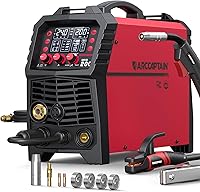
| ARCCAPTAIN Stick Welder | stick repair work | 110V/220V | Stick, lift TIG | 9.4 | |
| FEMEROL MIG Welder | basic gasless MIG | 130A | 110V | Flux-core MIG, MMA | 9.4 |
| ANDELI 110V/220V PULSE Flux Core MIG Welder | pulse flux-core control | 135A | 110V/220V | Pulse flux-core MIG, stick, lift TIG | 9.3 |
| HITBOX 200A MIG Welder | multi-process garage use | 110V/220V | Flux-core MIG, stick, lift TIG | 9.2 | |
| HGNVGZ 250A MMA Stick Welder 110V | rod welding on thicker parts | 110V | 9.1 | ||
| bestarc 145A MIG Welder | dual-voltage MIG flexibility | 145A | 110V/220V | Gas MIG, flux core, stick, lift TIG | 9.1 |
The best welder for exhaust pipe, by repair need
For most exhaust repairs, start with a MIG or flux-core option that gives you useful control over wire feed and voltage. Choose based on whether you'll work indoors or outdoors, the power available, and whether you need other processes for future jobs.
YESWELDER 160A MIG Welder: Best for process flexibility
- 160A output
- 110V/220V dual voltage
- MIG, flux core, stick and lift TIG modes
- Synergic and manual controls
Four welding modes and dual voltage make this the most flexible pick for exhaust repairs and other garage jobs. The lift TIG torch is sold separately.
Pros
- Four welding modes
- Dual voltage
- Synergic and manual settings
Cons
- Lift TIG torch sold separately
- More machine than needed for a single-process repair
The YESWELDER 160A MIG Welder is the strongest all-around choice here if you want one machine for exhaust work and other garage projects. Its four modes include gas MIG, flux-core MIG, stick and lift TIG, and it accepts 110V or 220V input.
For thin tubing, the key benefit is manual adjustment of voltage and wire feed speed. The synergic mode can recommend settings based on material thickness or amperage, while manual control lets you fine-tune them for your joint and technique.
The machine accepts .030 in and .035 in solid or flux-core wire. That gives you process options for different work environments, although the listed facts don't specify a minimum material thickness or an exhaust-specific setting.
Choose it if you value process range and expect to handle more than exhaust repairs. The lift TIG torch is sold separately, and the machine's range does not replace careful test welds on similar scrap.
YESWELDER 135A MIG Welder: Best for thin auto panels
- 135A output
- 110V input
- Gasless flux core, stick and lift TIG modes
- Voltage micro-adjustment
This compact 110V machine offers voltage micro-adjustment and a flux-core MIG mode. It is a reasonable fit for repair work where fine adjustment matters, though exhaust tubing still calls for careful setup and practice.
Pros
- Voltage micro-adjustment
- Includes flux-core wire
- Lightweight design
Cons
- No solid-wire gas MIG mode
- Lift TIG torch sold separately
The YESWELDER 135A MIG Welder is a compact pick for small automotive repair work where voltage adjustment is useful. It runs on 110V and offers gasless flux-core MIG, stick and lift TIG modes.
Its ±3V voltage micro-adjustment can help you tune the arc when a fixed synergic recommendation needs refinement. The machine's published guidance specifically mentions thin auto body panels, but exhaust tubing still calls for its own practice and setup.
It includes .030 in and .035 in flux-core wire, so you can begin with the flux-core process without a gas cylinder. Flux-core leaves slag that needs cleaning, and this model does not offer solid-wire gas MIG.
Choose it for a basic 110V setup and smaller repair tasks. Its lighter design also helps if you need to move the machine around a garage or take it to another work area.
Lincoln Electric 90i FC Flux Core Wire: Best for simple home repairs
- 120V input
- Flux-core wire feed
- Two-knob control
- Portable metal case
A portable, single-process flux-core welder keeps controls simple for small repair jobs. Flux-core wire creates slag, so plan to clean and inspect the weld.
Pros
- Simple two-knob controls
- Portable case and shoulder strap
- Accessories included
Cons
- Flux-core process only
- No dual-voltage input
The Lincoln Electric 90i FC Flux Core Wire is a simple option for small jobs where you want a flux-core wire feed machine. It uses 120V input, has two controls for wire speed and voltage, and comes in a protective metal case.
That two-knob layout keeps the main adjustments direct. Lincoln Electric describes it for DIY projects, hobby work and home repairs, and says it welds up to 1/4 in; that maximum does not tell you how thin a specific exhaust pipe can be welded.
Flux-core may be useful where shielding gas is inconvenient, but it creates slag that needs to be removed before you inspect the joint. Set up on scrap first and keep the weld area clean so you can see how the material responds.
Choose it when simple controls and portability matter more than having multiple processes. It is flux-core only, so it won't switch to gas MIG or TIG for other kinds of work.
ARCCAPTAIN Stick Welder: Best for stick repair work
- Stick and lift TIG modes
- 110V/220V
- Hot start and arc force adjustment
- Portable design
Dual voltage and stick or lift TIG modes offer flexibility for general metal repairs. Stick welding is usually harder to control on thin exhaust tubing than MIG, so choose it only if the material and your skill suit the process.
Pros
- Dual voltage
- Hot start and arc force adjustment
- Portable with shoulder strap
Cons
- Lift TIG torch not included
- Stick can be difficult on thin tubing
The ARCCAPTAIN Stick Welder suits general repair work if you already know stick welding or need a portable machine for several materials. It offers stick and lift TIG modes, accepts 110V or 220V input, and includes hot start and adjustable arc force.
Its synergic control matches current and voltage recommendations to the selected electrode diameter. You can also adjust current and arc force, but stick welding can be demanding on thin exhaust tubing because the rod must be kept close to the work.
The machine works with several common rod types, including 6010, 6011, 6013 and 7018. Lift TIG is available, though the torch is not included.
Choose it if your exhaust repair involves thicker metal or if stick is already your preferred process. For thin pipe, a MIG machine is typically easier to control as you move along the joint.
FEMEROL MIG Welder: Best for basic gasless MIG
- 130A output
- 110V input
- Flux-core MIG and MMA modes
- Synergic and manual MIG controls
Its flux-core mode and synergic settings offer a straightforward setup for home repairs. Manual MIG control is available if you want to adjust voltage and current yourself.
Pros
- Flux-core and MMA modes
- Synergic and manual MIG control
- Compact design
Cons
- No solid-wire gas MIG mode
- Single-voltage input
The FEMEROL MIG Welder is a basic 110V choice with flux-core MIG and MMA stick modes. Its synergic control matches voltage and wire feed speed to the selected wire diameter, and manual adjustments are also available.
The manual MIG option matters if the recommended setup needs a small correction for your test piece. The machine handles 2.2 lb wire rolls and includes .030 in and .035 in contact tips, along with flux-core wire and several accessories.
FEMEROL gives a maximum mild-steel thickness of 4.0 mm. That is a stated upper capacity, not a guide to the thinnest tubing you can weld without burn-through.
Choose this model for occasional home repairs where gasless MIG is enough. It has no solid-wire gas MIG mode, so plan for flux-core cleanup after welding.
ANDELI 110V/220V PULSE Flux Core MIG Welder: Best for pulse flux-core control
- 135A output
- 110V/220V dual voltage
- Pulse flux-core MIG, stick and lift TIG
- Adjustable inductance
Pulse flux-core MIG and adjustable inductance give you more control options in a dual-voltage machine. The lift TIG torch is sold separately.
Pros
- Dual voltage
- Pulse flux-core mode
- Adjustable inductance
Cons
- No solid-wire gas MIG mode
- Lift TIG torch sold separately
The ANDELI 110V/220V PULSE Flux Core MIG Welder is a dual-voltage option for buyers who want pulse flux-core welding and extra arc adjustments. It also offers stick and lift TIG modes.
Its adjustable inductance is intended to help regulate arc stability and reduce spatter, while the machine supports .030 in, .035 in and .040 in flux-core wire. Those settings provide room to adjust, but a test piece remains the best way to learn what works for your pipe and joint.
The machine's listed capacity is up to 5.0 mm material thickness. It includes welding accessories, but the lift TIG torch is sold separately.
Choose this pick if pulse flux-core and dual voltage fit your repair setup. It is gasless MIG focused, so it won't provide a solid-wire gas MIG process.
HITBOX 200A MIG Welder: Best for multi-process garage use
- 110V/220V dual voltage
- Flux-core MIG, stick and lift TIG
- Synergic control
- Supports .030 in and .035 in flux-core wire
A three-process setup and dual voltage make it suitable for a garage with varied repair needs. Its flux-core MIG mode is the relevant option for exhaust work.
Pros
- Three welding processes
- Dual voltage
- Synergic setup
Cons
- No solid-wire gas MIG mode
- Thin tubing needs careful heat control
The HITBOX 200A MIG Welder is a multi-process garage option with flux-core MIG, stick and lift TIG modes. It supports 110V or 220V input and .030 in or .035 in flux-core wire.
Its synergic setup coordinates recommended voltage and wire feed speed when you adjust current or wire diameter. That can simplify setup, but thin exhaust tubing still needs a controlled pace and a close-fitting joint.
The manufacturer describes it for carbon steel and stainless steel projects and states a mild-steel capacity up to 4.0 mm. Use that as a maximum material guide rather than assuming it can weld every thinner pipe safely.
Choose it if you want a three-process machine for garage and outdoor repairs. For exhaust work, the relevant mode is flux-core MIG, which requires slag cleanup after the weld.
HGNVGZ 250A MMA Stick Welder 110V: Best for rod welding on thicker parts
- 110V input
- Stick welding
- Hot start, arc force and anti-stick
- Works with several rod types
This compact stick machine is aimed at general maintenance and light metalwork. It can handle repairs on thicker parts, but stick is a less forgiving choice for thin exhaust tubing.
Pros
- Hot start and anti-stick features
- Portable design
- Works with several rod types
Cons
- Stick process only
- Less suited to thin tubing
The HGNVGZ 250A MMA Stick Welder 110V is a compact stick option for general maintenance and light metalwork. It includes hot start, arc force and anti-stick features, and works with 1/16 in to 1/8 in rods.
Those rod sizes make it more appropriate for thicker repair material than delicate exhaust tubing. Stick is not the easiest process to control on thin pipe, where a small change in arc length or travel can burn through the wall.
The machine uses 110V input, and its instructions call for a standard 20A household circuit breaker. Check the circuit and welding rod choice before starting a job.
Choose this welder if you need a portable stick machine for varied repairs and understand the process. For thin exhaust work, consider one of the MIG options higher in this guide.
bestarc 145A MIG Welder: Best for dual-voltage MIG flexibility
- 145A output
- 110V/220V dual voltage
- Gas MIG, flux core, stick and lift TIG
- Synergic and manual control
Four processes and dual voltage cover a wide range of home repair needs. Gas MIG can be useful for controlled work in a sheltered garage, while flux core can suit outdoor repairs.
Pros
- Four welding modes
- Dual voltage
- Synergic and manual control
Cons
- More settings to learn
- Lift TIG torch sold separately
The bestarc 145A MIG Welder combines gas MIG, flux-core MIG, stick and lift TIG with 110V/220V input. Its synergic mode matches voltage and wire feed speed to the selected wire, while manual voltage adjustment offers a small tuning range.
For exhaust work, gas MIG may be a useful option in a sheltered garage, while flux core can work outdoors where shielding gas is less practical. The machine supports .030 in solid wire and .030 in, .035 in or .040 in flux-core wire.
It weighs 13.7 lb and includes a shoulder strap, which helps when repairs take you between a garage and another work area. Lift TIG is one of its modes, but the torch is sold separately.
Choose it if you want several processes and dual-voltage flexibility in one machine. Compare its control layout with the YESWELDER 160A if manual adjustment and a broader stated output are priorities.
What should you look for in a welder for exhaust pipe?
For exhaust tubing, prioritize a process and controls that let you manage heat on thin material. MIG is a common starting point, while the choice between gas MIG and flux core depends on your work area and preferred cleanup.
Is MIG or TIG better for exhaust pipe?
MIG is often the practical choice for a home repair because wire feeds continuously and the process is relatively quick to learn. TIG can offer precise control, but it asks more of the operator and requires a lift TIG torch on machines where that accessory is sold separately.
Look at wire compatibility, voltage adjustment and the machine's input power. A dual-voltage machine can fit more outlets, but only use it with an appropriate circuit and connection.
For general thin sheet and panel work, our guide to the best welder for sheet metal covers the process and control tradeoffs. If you want to compare MIG models by overall value, see the best MIG welder for the money.
Is flux-core or gas MIG better outdoors?
Flux-core MIG can be more practical outdoors because it does not require shielding gas, while gas MIG is better suited to a sheltered work area. Flux-core produces slag that you'll need to remove and inspect around.
Choose a welder that supports the process you plan to use, then confirm wire sizes and voltage settings before you begin. The best TIG welder for the money guide can help if precise torch control matters for your other projects.
How do you reduce burn-through on thin exhaust tubing?
Reduce burn-through risk by cleaning the metal, closing gaps in the joint and practicing on scrap with similar thickness. Use controlled welds, avoid staying in one place, and inspect each pass before adding more heat.
Rust, pinholes and a poor fit can make the pipe harder to repair. If the tubing is badly thinned or the repair sits near heat-sensitive parts, replacing the section or asking an exhaust professional may be the safer route.
Which welder should you choose for an exhaust repair?
Choose the YESWELDER 160A if you want a flexible machine with MIG, flux-core, stick and lift TIG modes. Pick the YESWELDER 135A for a lighter 110V option with voltage micro-adjustment, or the Lincoln 90i FC for straightforward flux-core repairs.
If you're comparing sheet-metal repair methods, our guides to the best spot welder for sheet metal and the best spot welder for auto body explain where spot welding fits. For exhaust tubing, choose a MIG or TIG process suited to the joint, then test your setup on matching scrap before welding the pipe.
Our top 3 picks at a glance
-
1
-
2
-
3
Best for simple home repairs
Lincoln Electric 90i FC Flux Core Wire
9.5/10 our score
See it on Amazon
Frequently asked questions
What type of welder is best for exhaust pipe?
MIG is a practical choice for many exhaust pipe repairs because it uses a continuous wire and lets you move along a joint without changing rods. Thin tubing can burn through, so set up carefully, use short welds where appropriate, and practice on matching scrap first.
TIG can offer more precise control, but it requires more skill and suitable equipment.
Can I weld an exhaust pipe with a flux-core welder?
Yes, a flux-core MIG machine can join exhaust tubing if you can control heat and fit the joint well. Flux-core welding makes slag that needs cleaning, and the process may leave more cleanup than gas MIG.
Check the machine's wire compatibility and practice on a piece of similar thickness before working on the vehicle.
Is stick welding suitable for exhaust tubing?
Stick welding can join metal, but its rods and arc are generally harder to manage on thin exhaust tubing than MIG. A small-diameter rod and careful technique may help, but the risk of burning through remains.
Choose stick for exhaust work only when the material, joint and your experience make it practical.
Should I weld an exhaust pipe on the vehicle?
Welding in place can be difficult because access is limited and nearby parts may be damaged by heat or sparks. Exhaust work also involves fumes, hot surfaces and fire risk.
Follow the vehicle maker's repair guidance, provide ventilation, protect nearby components, and use suitable eye, skin and respiratory protection.
How do I avoid burning through thin exhaust tubing?
Clean the joint, make the fit-up close, and practice on scrap with similar thickness before welding the actual pipe. Use the lowest settings that produce a sound weld, keep the torch moving, and avoid holding heat in one spot.
A gap or rust-thinned area can make burn-through more likely.