9 Best Welders for Home Use (November 2026)
The best welders for home use include the YESWELDER 205Amp Stick Welder Digital Inverter IGBT for a versatile stick setup, the YESWELDER 160A MIG Welder for process flexibility, and the YESWELDER 135A MIG Welder for 110V flux core work.
On this page (6 sections)
The best welder for home use is a multiprocess MIG machine if you want one tool for varied workshop jobs. For simpler repairs, a stick welder may be a better fit, especially when you need portability or plan to work outdoors.
The right home use welder depends on what you plan to join. Thin sheet, outdoor repairs and thicker shop projects call for different processes and setup, so start with your likely jobs and available power.
For a broader selection framework, read How to Choose a Welding Machine – Explained. If you're new to the process, compare these options with our best welder for beginners guide.
Our picks at a glance
-
1
 Best for a versatile stick setup
YESWELDER 205Amp Stick Welder Digital Inverter IGBT
9.7/10 our score
See it on Amazon -
2

-
3

- 4
 Best for portable stick repairsCheck it
- 5
 Check it
Hpoouo 200Amp 20PCS Rods Stick Welder
Best for a small starter kit - 6
 Check it
ANDELI 110V/220V PULSE Flux Core MIG Welder
Best for pulse flux core welding - 7
 Best for compact stick jobsCheck it
- 8
 Best for mixed garage projectsCheck it
- 9
 Check it
WRDLOSY 250A Stick Welder 110V
Best for light-duty stick repairs
How we chose the best welder for home use
The best welder for home use should match common workshop tasks, power access and the process you are prepared to learn. We compared each machine's stated modes, input voltage, output and included accessories against those needs.
We gave more weight to combinations that cover several types of home work, while keeping useful 110V choices for a basic garage setup. Our score weighs specs, features and buyer feedback against what you're shopping for.
How do home welders compare?
A MIG machine feeds wire continuously, while stick welding uses a coated electrode. Multiprocess welders let you switch between methods, but each mode may need different accessories and setup.
| Welder | Process options | Input | Useful distinction |
|---|---|---|---|
| YESWELDER 205Amp Stick Welder Digital Inverter IGBT | Stick, Lift TIG | 110V/220V | 205A output with adjustable Hot Start and Arc Force |
| YESWELDER 160A MIG Welder | Flux Core MIG, Gas MIG, Stick, Lift TIG | 110V/220V | Four modes and synergic or manual control |
| YESWELDER 135A MIG Welder | Flux Core MIG, Stick, Lift TIG | 110V | Flux core wire included |
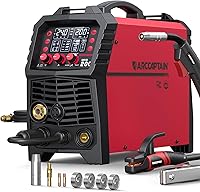
| ARCCAPTAIN Stick Welder | Stick, Lift TIG | 110V/220V | 200A output and shoulder strap |
| Hpoouo 200Amp 20PCS Rods Stick Welder | Stick | 110V | 20 rods included |
| ANDELI 110V/220V PULSE Flux Core MIG Welder | Pulse Flux Core MIG, Gasless MIG, Lift TIG, MMA | 110V/220V | Pulse mode and helmet included |
| Siasky Mini Welding Machine | Stick | 110V | Compact machine with 20 rods |
| bestarc 145A MIG Welder | Gas MIG, Flux Core MIG, Stick, Lift TIG | 110V/220V | Solid and flux core wire options |
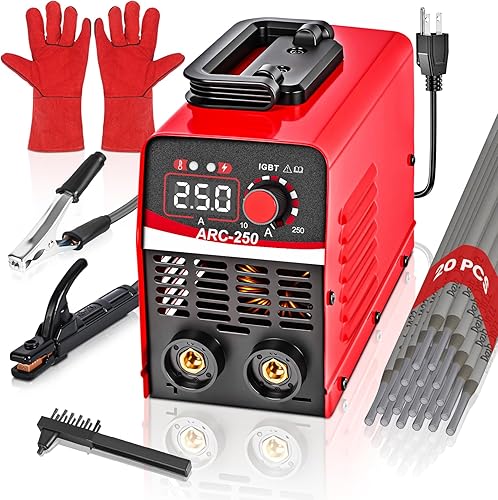
| WRDLOSY 250A Stick Welder 110V | Stick | 110V | 150A effective output at 110V |
Which home workshop welders suit different jobs?
Multiprocess MIG machines suit home shops that need options for wire welding and stick work. Stick machines make more sense when you want a focused setup for repair and outdoor maintenance.
Which welder for home use gives the most process options?
The YESWELDER 160A MIG Welder covers Flux Core MIG, Gas MIG, Stick and Lift TIG. Its dual-voltage input and synergic control make it the broadest general-purpose option here, though the Lift TIG torch is an extra.
YESWELDER 205Amp Stick Welder Digital Inverter IGBT: Best for a versatile stick setup
- 205A output
- 110V/220V dual voltage
- Stick and Lift TIG modes
- LED display
This dual-voltage stick machine adds Lift TIG capability and adjustable Hot Start and Arc Force. Its LED display and carry handle suit a home shop that may also need outdoor repair work.
Pros
- Dual voltage
- Adjustable Hot Start and Arc Force
- LED display
Cons
- Stick is the main process
- Lift TIG torch is not specified among included components
YESWELDER's 205Amp stick machine is a strong choice if stick welding is your main need but you want Lift TIG available too. It supports 110V and 220V input and has an LED display, plus adjustable Hot Start and Arc Force.
The included components list an electrode holder, ground clamp, stick welder and a 220V-to-110V adapter. It works with most 6010, 6011, 6013 and 7018 rods, according to YESWELDER.
This is not the simplest route if you mainly want to feed wire for quick projects. Choose it for electrode-based repairs where dual voltage and adjustment controls are useful.
YESWELDER 160A MIG Welder: Best for process flexibility
- Flux Core MIG, Gas MIG, Stick and Lift TIG
- 110V/220V dual voltage
- Synergic and manual controls
- Supports 2 lb and 10 lb spools
Four process options let you move between wire welding and stick work. Lift TIG requires an extra torch, while dual voltage and synergic control add flexibility for a home workshop.
Pros
- Four welding modes
- Dual voltage
- Synergic and manual control
Cons
- Lift TIG torch is extra
- More modes require setup choices
This is the most process-flexible pick for a home shop, combining Flux Core MIG, Gas MIG, Stick and Lift TIG. The synergic mode recommends voltage and wire speed based on thickness or amperage, and manual controls let you adjust them yourself.
The machine supports 2 lb and 10 lb spools of .030 and .035 in solid or flux core wire. Its Lift TIG mode needs a separately purchased torch, so factor that into your setup if you expect to use that process.
Choose this model if your projects vary and you want several methods in one machine. If you're weighing the finer control of TIG against the simpler setup of stick, see our tig welder vs stick welder comparison.
YESWELDER 135A MIG Welder: Best for 110V flux core work
- 135A output
- 110V input
- Flux Core MIG, Stick and Lift TIG
- Synergic control
This 110V machine keeps the process choices focused on flux core MIG and stick, with Lift TIG as another mode. Its synergic control pairs suggested voltage with wire feed speed.
Pros
- Works from 110V input
- Flux core wire is included
- Synergic control
Cons
- No 220V input
- Lift TIG torch is extra
This 110V machine focuses on Flux Core MIG, Stick and Lift TIG. YESWELDER says its synergic control matches a recommended voltage to wire feed speed, with a small voltage adjustment range for manual tuning.
It includes E71T-GS flux core wire and does not need a shielding gas cylinder for that mode. The output is 135A, and the maker says it handles mild steel up to 3/32 in thick.
Pick it for home projects where 110V input and flux core are priorities. Lift TIG needs an extra torch, and the machine does not offer the 220V input available on several other picks.
Which stick welder is a practical choice for home repair?
A dual-voltage stick welder is useful when your home setup may include access to 110V and 220V power. The ARCCAPTAIN offers 200A output, Stick and Lift TIG modes, and a shoulder strap for moving it between work areas.
ARCCAPTAIN Stick Welder: Best for portable stick repairs
- 200A output
- 110V/220V dual voltage
- Stick and Lift TIG
- LED screen and shoulder strap
A compact stick setup with dual voltage is suited to moving between a garage and outdoor maintenance. Lift TIG is available, but its torch is not included.
Pros
- Dual voltage
- Shoulder strap included
- Synergic control
Cons
- Lift TIG torch is extra
- Primarily a stick machine
ARCCAPTAIN's stick machine combines 110V/220V input with an LED screen and synergic control. Select an electrode diameter and the machine matches current and voltage, while still allowing current adjustment.
It supports common 6010, 6011, 6013 and 7018 rods. Lift TIG is available, but the torch is not included, so treat it as a stick-first machine unless you plan to add that equipment.
Choose this one for portable repairs where the power source may vary. For brand-specific alternatives, see our best lincoln electric welders guide.
Hpoouo 200Amp 20PCS Rods Stick Welder: Best for a small starter kit
- 110V input
- 20–200A adjustable current
- 20 welding rods included
- Compact stick machine
The included rods and small form make this a straightforward option for basic stick practice and household repair jobs. It uses 110V input and has hot start, arc force and anti-stick functions.
Pros
- 20 rods included
- Small and portable
- Hot start and anti-stick
Cons
- 110V input only
- Stick process only
The Hpoouo package includes 20 welding rods, two chip hammers and gloves. Its 110V stick machine has an adjustable current range of 20 to 200A, along with Hot Start, Arc Force and Anti-Stick functions.
Hpoouo describes it as suitable for materials from 0.06 to 0.2 in thick. For stainless steel, its guidance specifies E308L-16 rods, so check rod type and polarity for the material you plan to weld.
This is a compact starter option for basic stick practice and home repairs. Choose another machine if you need MIG wire feed or a 220V input.
ANDELI 110V/220V PULSE Flux Core MIG Welder: Best for pulse flux core welding
- 110V/220V dual voltage
- Pulse flux core MIG, Gasless MIG, Lift TIG and MMA
- Supports .030, .035 and .040 in flux core wire
- LED display
This multiprocess machine combines pulse flux core MIG with gasless MIG, Lift TIG and MMA modes. Lift TIG requires a separate torch, and the supplied accessories include a helmet and gloves.
Pros
- Dual voltage
- Pulse flux core mode
- Helmet and gloves included
Cons
- Lift TIG torch is separate
- Several modes add setup complexity
ANDELI combines pulse flux core MIG, gasless MIG, Lift TIG and MMA modes with 110V/220V input. It supports .030, .035 and .040 in flux core wire and has adjustable inductance control.
The included accessories list a helmet, gloves, flux core wire, torch and an electrode holder. The Lift TIG torch is sold separately, so its four process labels do not mean every mode is ready without additional gear.
Consider it if pulse flux core MIG is a feature you want alongside other processes. Its multiple modes make it less direct than a single-purpose machine, so plan time to learn each setup.
Which small home welder is enough for occasional jobs?
A small stick machine can be enough for occasional repairs if its input and effective output fit the job. These compact picks prioritize portability and a simple 110V setup over multiple welding processes.
Siasky Mini Welding Machine: Best for compact stick jobs
- 110V input
- Stick welding
- LED screen
- 20 welding rods included
A compact 110V stick machine with an LED screen and 20 included rods suits small repair and practice jobs. Its package also includes electrode and work clips, a face shield and brushes.
Pros
- 110V household input
- 20 rods included
- Compact carry design
Cons
- Stick process only
- No output range specified
The Siasky is a compact 110V stick machine with an LED screen and 20 included rods. Its package also lists electrode clips, work clips, a face shield, brushes and a user manual.
The machine includes Hot Start, Arc Force and Anti-Stick features. No output range is specified in the product details, so compare the actual job requirements with the manual before relying on it for thicker material.
Choose it for small repair tasks where a portable stick setup matters more than process flexibility. For a more mobile wire-feed option, see our best portable flux core welder picks.
bestarc 145A MIG Welder: Best for mixed garage projects
- 145A output
- 110V/220V dual voltage
- Gas MIG, Flux Core MIG, Stick and Lift TIG
- Synergic control
Four process options and dual voltage make this a flexible choice for varied garage tasks. It supports both solid and flux core wire, and the package includes a shoulder strap.
Pros
- Four process modes
- Dual voltage
- Solid and flux core MIG options
Cons
- Lift TIG torch is not listed among included components
- More setup choices than a single-process machine
The bestarc combines Gas MIG, Flux Core MIG, Stick and Lift TIG in a 145A machine with 110V/220V input. It supports solid and flux core wire, and synergic control matches suggested voltage and wire speed to the selected wire.
It weighs 13.7 lb according to the maker and includes a shoulder strap. The package lists a MIG torch, earth clamp, stick holder, wire, contact tips and rollers, plus a 220V-to-110V adapter.
This suits a home garage where you want several methods and the option to move the unit. Lift TIG is listed as a supported process, but its included components do not include a TIG torch.
WRDLOSY 250A Stick Welder 110V: Best for light-duty stick repairs
- 110V input
- 20–250A displayed range
- 150A effective output at 110V
- 20 rods included
This small stick kit is aimed at light home repair and practice. The maker describes 250A as peak and gives 150A as effective output at 110V, so use the effective figure when comparing it with other machines.
Pros
- 110V input
- 20 rods and gloves included
- Hot Start and Arc Force
Cons
- Stick process only
- Maker says a dedicated 20A circuit is best
WRDLOSY's stick machine is designed for 110V input and small repair jobs. The maker describes its 250A figure as peak output and states an effective output of 150A at 110V, which is the more useful figure to compare with home circuit limits.
The kit includes 20 rods, gloves, a brush, an electrode holder and an earth clamp. WRDLOSY says a dedicated 20A circuit is best, so check your circuit and the machine's instructions before use.
Choose it for light-duty repairs and practice if a small stick setup is enough. It is not the pick for aluminum or jobs that need wire-feed control.
How should you choose a home use welder?
Choose by process, input power and the metal you'll work on most. A machine with more modes helps only if you have the right accessories and know how to set each mode up.
A MIG welder is often convenient for repeated workshop joints because it feeds wire continuously. Flux core avoids shielding gas and can work outdoors in wind, while gas MIG is commonly chosen for cleaner indoor work; stick is straightforward to carry to repair jobs.
TIG gives more control but takes practice and may require a separate torch on multiprocess models. Read [What Is a Portable Welder?
A Quick Guide](/what-is-a-portable-welder/) if you need to move your equipment, and check What Size Welder Do I Need? What to Know before choosing output.
Input voltage matters as much as the advertised amperage. If you need power where there is no outlet, see our portable welder generator guide.
A dual voltage welder can accept 110V or 220V, but confirm the circuit, plug and manual requirements for your work area.
What safety checks matter for home welding?
A home welding setup needs proper eye and face protection, gloves, ventilation and a clear area free of flammable items. Keep sparks away from fuel, paint, dust and household materials, and use the machine's manual for setup and shutdown steps.
Welding can produce intense light, hot metal, fumes and fire risk. Use suitable protective gear and ventilation for the process and material, keep a fire extinguisher nearby, and never rely on a small face shield or included gloves as proof that your setup is fully protected.
Which is the best welder for home use?
Choose the YESWELDER 160A if you want one home machine for MIG, flux core, stick and Lift TIG. Pick the YESWELDER 205Amp Stick Welder for a stick-focused setup with dual voltage, or the YESWELDER 135A for 110V flux core work.
If your priority is portability for outdoor repairs, compare the ARCCAPTAIN and smaller stick models. Use the best welder for beginners guide to narrow the options if you're learning your first process.
Our top 3 picks at a glance
-
1
Best for a versatile stick setup
YESWELDER 205Amp Stick Welder Digital Inverter IGBT
9.7/10 our score
See it on Amazon -
2
-
3
Frequently asked questions
What type of welder is best for home use?
A multiprocess MIG welder suits a home workshop with varied projects because some models combine flux core MIG, gas MIG, stick and Lift TIG. A stick welder can be a simpler fit for basic repairs, especially outdoors.
Choose by your materials, project type, outlet and willingness to manage wire, gas or electrodes.
Can I use a welder on a regular household outlet?
Some machines are designed for 110V input, but the outlet and circuit still need to match the machine's requirements. A 110V/220V welder gives you an input choice, but it does not make every outlet suitable for every setting.
Check the manual and circuit before connecting the welder.
Is MIG or stick welding easier for home projects?
MIG can feel more approachable for some beginners because wire feed and synergic controls can reduce setup steps. Stick welding uses replaceable electrodes and can suit outdoor repair, though controlling the arc takes practice.
The best fit depends on the metal, work position and the kind of joints you need to make.
What should I check before buying a home welder?
Check the welding process, input voltage, output range, compatible wire or electrodes and included accessories. Also confirm the circuit can support the machine and make room for safe ventilation, a stable work area and fire protection.
A dual-voltage label alone does not confirm your wiring is ready.