Dual Voltage Welders: How to Choose the Right Input Power
A dual voltage welder can connect to either 110V or 220V power, but its available output may depend on the input. Check the machine’s rated output for each voltage, then confirm your outlet, circuit and plug can support the setup.
On this page (6 sections)
A dual voltage welder accepts either 110V or 220V input, when connected with the correct plug and supply. That flexibility can help when you work in different places, but the available welding output may vary by input voltage.
Before choosing one, match the welder’s voltage options to the outlets and circuits you can safely use. Then compare the output at each voltage with the metal thickness, welding process and duty cycle you need.
A welder’s input voltage is only one part of the choice. For a quick overview of how these machines receive and control power, see [What Is a Welding Power Source?
The Basics](/what-is-a-welding-power-source/).
What does dual voltage mean on a welder?
A dual voltage welder is designed to run from two input voltage options, commonly 110V and 220V. It does not mean the machine will deliver the same output on both supplies.
The higher-voltage connection can allow a welder to draw the power needed for higher output, depending on the machine’s design and the circuit. Check the manufacturer’s output ratings and duty cycle at each input voltage, since those details vary by model.
“110V” and “120V” are often used for the same household supply range, while “220V” and “240V” refer to another common range. Use the exact voltage and plug requirements in the machine’s manual and on its rating plate.
How input voltage affects a dual voltage welder
Input voltage affects how much electrical power the machine can draw from a supply. A lower-voltage outlet may limit the maximum welding current or the length of time you can weld before the machine needs to cool.
The relationship is not a simple promise that doubling the input voltage doubles the output. The machine’s design, circuit capacity and duty cycle also matter.
Compare the rated output at each voltage rather than judging by the voltage label alone.
For a clear explanation of voltage’s role in the arc, read What Is Voltage in Welding? Tips to Know.
Can you use a dual voltage welder on a regular outlet?
You can use a dual voltage welder on a regular outlet only if the machine supports that voltage and the outlet’s circuit meets its requirements. Check the plug, breaker, wire size and any extension cord before connecting it.
A standard household outlet may share a circuit with lights or other tools. If the welder draws more current than the circuit can safely provide, a breaker may trip or wiring may overheat.
Do not replace a breaker with a larger one to stop tripping; ask a qualified electrician to check the circuit.
A 220V outlet may require a dedicated circuit and a matching receptacle. Do not adapt a plug or change wiring based on appearance alone.
The outlet and circuit must match the welder’s requirements.
What should you check before plugging it in?
Check the welder’s manual and rating plate for its input voltage, required current, plug type and any separate output ratings. Then compare those details with the receptacle and circuit where you plan to work.
- Supply voltage: confirm whether the outlet is 110/120V or 220/240V.
- Circuit capacity: compare the machine’s input current with the breaker and wiring requirements.
- Plug and adapter: use only a compatible plug or manufacturer-approved adapter.
- Extension cord: follow the recommended length and wire gauge; a long or undersized cord can cause voltage drop.
- Other loads: avoid running high-draw equipment on the same circuit.
- Work location: use a supply that is properly grounded and protected for the environment.
If the outlet’s rating or wiring is unclear, have an electrician verify it before use. A plug that fits does not prove that the circuit is suitable.
How much output do you need on 110V and 220V?
Choose a welder by the process, material thickness and output you need at the voltage you’ll actually use. A machine’s highest advertised amperage may only be available on a higher-voltage supply.
Small repair work and thinner material may fit the output available from a 110V circuit, depending on the machine and process. Thicker material, longer welds or larger electrodes may call for more output, which can require a 220V circuit.
Compare the machine’s output range, duty cycle and recommended material or electrode sizes at both inputs. A duty cycle shows how long a machine can weld within a set period before it needs to cool.
The manual should state how that rating changes with amperage and input voltage.
For help matching output to your jobs, use What Size Welder Do I Need? What to Know.
Will a dual voltage welder deliver full power on a household outlet?
Not necessarily. A welder may offer a lower maximum output on 110/120V than it does on 220/240V, or its duty cycle may be shorter at a given setting.
Look for a voltage-by-voltage output chart in the manual or maker’s specifications. If the machine gives only a single maximum amperage without showing which supply supports it, verify the rating before relying on that output.
A YESWELDER ARC-205DS PRO, for example, supports 110V and 220V input and is rated up to 205A. Its output at each input should be checked against the machine’s specifications before you plan a job around the maximum.
Which welding process should you match to the input?
Match the input supply to the process and work you plan to do. Stick, MIG and TIG machines can have different input needs and output limits, even when they share a voltage label.
Stick welding can be useful for outdoor repair and heavier work, but electrode choice and amperage determine what the machine can handle. MIG welding can suit wire-fed work, while a 110V model may be aimed at lighter material and shorter welds.
TIG settings and torch requirements also vary by machine.
Do not assume one dual voltage model supports every process or performs equally well in each mode. Check which processes it offers, the accessories required and the rated output for each input.
When does 220V make sense?
A 220/240V supply can make sense when your planned work needs more output or a longer duty cycle than the 110/120V setup can provide. It can also be useful in a shop where a suitable higher-voltage circuit is already available.
The higher voltage does not make every weld better by itself. You still need the correct process, settings, consumables and joint preparation for the material.
If you want a portable stick option with both input choices, the YESWELDER ARC-205DS PRO supports 110V and 220V. Check the correct circuit and machine settings for the job before starting.
When is 110V enough?
A 110/120V setup can be enough for lighter repair and hobby tasks when the machine’s output and duty cycle fit the work. It can also make sense where a suitable 220/240V circuit is not available.
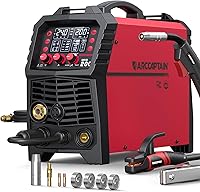
The YESWELDER 135A MIG Welder is rated for 110V input and offers gasless flux core MIG, stick and lift TIG modes. The maker specifies 135A output and mild steel up to 3/32 in thick for this model; lift TIG requires an extra torch.
Do not treat 110V as a shortcut around circuit limits. Check the required input current, outlet and duty cycle, especially if you plan to weld for long periods.
What else should you compare before choosing?
Compare input compatibility, output, process, portability and the work area together. Dual voltage is most useful when you have a real need to switch between suitable supplies.
A transformer welder and an inverter welder can handle power differently. Many dual voltage machines use inverter designs, but the technology alone does not tell you which model fits your jobs.
See Transformer vs Inverter Welder: Which Should You Choose? for the trade-offs.
Also consider how often you will move the machine. A YESWELDER stick welder in the ARC-205DS PRO series is described as weighing about 8.4 lb and has a carry handle, though the machine’s output and required supply still determine where it can work.
For wire-feed users comparing machines, see our best wire feed welder 110V/220V guide. If MIG is your main process, compare the best dual voltage MIG welders and best dual voltage stick welders for options suited to each process.
Is a dual voltage welder worth choosing?
A dual voltage welder is worth considering if you regularly work at locations with different suitable power supplies. It gives you an option to connect to either voltage, subject to the machine’s limits and the site’s circuit.
If you will only weld in one place, choose based on the supply and output you need there. A single-voltage welder may be a simpler fit when it matches your circuit and planned work.
How do you choose the right input power?
Choose input power by starting with the outlet you can safely use, then confirming the output it provides for your work. Verify the circuit with the machine’s manual and rating plate, and get electrical help if any requirement is unclear.
Pick 110/120V when the machine’s output and duty cycle fit your lighter tasks and the circuit supports it. Pick 220/240V when your work needs more output and you have a suitable circuit.
If you need both, choose a dual voltage welder whose ratings at each input cover your likely jobs.
A dual voltage label is a flexibility feature, not a guarantee of full power from every outlet. Match the machine’s process and output limits to your metal and weld length, then review dual voltage MIG welder options or dual voltage stick welder options for a process-specific comparison.