How to Choose a Welding Machine – Explained
On this page (9 sections)
Choosing the right welding machine depends on your project and skill level. For beginners, a MIG welder is often the easiest to learn. If you need versatility for different metals, a multi-process welder might be best. Understanding your needs ensures you pick a machine that works for you.
Different types of welding machines offer unique advantages. Stick welders are great for dirty or rusty metal. TIG welders provide precise control for clean, detailed work. We found that considering the materials you’ll weld and the amperage needed helps narrow down your options considerably.
- Consider your project needs and skill level.
- MIG welders are user-friendly for beginners.
- TIG welders offer precision for detailed work.
- Stick welders handle rougher materials well.
- Match the machine’s amperage to your metal thickness.
Let’s walk through the key factors to consider so you can make an informed decision about which welding machine is right for your shop.
Selecting the Right Welding Machine for Your Needs
Choosing a welding machine can feel like a big decision. You want a tool that helps you get the job done right. We’ve found that thinking about a few key things makes this process much clearer. Let’s break down what matters most.
Understanding Different Welding Processes
There are several ways to join metal using heat and electricity. Oxy-acetylene welding uses a gas flame to join metal. Each method has its own strengths and best uses. Understanding these processes is your first step. It helps you match the machine to your tasks.
MIG Welding (Gas Metal Arc Welding – GMAW)
MIG welding is often recommended for beginners. It’s sometimes called “wire welding.” A wire electrode is fed through the welding gun. This wire melts to form the weld. A shielding gas protects the molten metal. We found that MIG is generally easier to learn than other methods. It offers good speed and control for many projects.
Pros of MIG Welding
- Easy to learn and master quickly.
- Can weld various metal thicknesses.
- Good for production work due to speed.
- Produces clean welds with minimal spatter.
Cons of MIG Welding
- Requires a gas cylinder and regulator.
- Less effective on dirty or rusty metal.
- Can be less portable due to gas tank.
TIG Welding (Gas Tungsten Arc Welding – GTAW)
TIG welding offers the highest level of control. It uses a non-consumable tungsten electrode. You add filler metal separately with your other hand. A shielding gas protects the weld pool. Many professionals prefer TIG for its precision. We found that TIG welds are known for being very clean and strong. It’s ideal for detailed or cosmetic work.
Pros of TIG Welding
- Produces very clean and precise welds.
- Can weld a wide range of metals, including thin ones.
- No spatter or fumes if done correctly.
- Excellent control over the weld puddle.
Cons of TIG Welding
- Has a steeper learning curve.
- Much slower process than MIG or Stick.
- Requires a lot of coordination.
- Sensitive to surface contaminants.
Stick Welding (Shielded Metal Arc Welding – SMAW)
Stick welding is a robust and forgiving method. It uses an electrode coated in flux. This flux melts to create shielding gas and slag. The slag protects the weld as it cools. Stick welders are often very affordable and portable. We found that stick welders are excellent for outdoor work and on materials that aren’t perfectly clean.
Pros of Stick Welding
- Works well on dirty, rusty, or painted metal.
- Less sensitive to wind than gas-shielded processes.
- Equipment is typically less expensive.
- Very portable, often can run on generators.
Cons of Stick Welding
- Produces more spatter and requires slag removal.
- Steeper learning curve for smooth welds.
- Can be challenging on very thin metals.
- Produces more fumes than MIG or TIG.
Considering Your Projects and Materials
What will you be welding? This is a major factor in your decision. Different machines are better suited for specific metals and thicknesses.
Metal Thickness and Amperage
Amperage is the measure of electrical current. More amperage means more power to melt metal. Thicker metals require higher amperage. You need enough power to get good penetration. Too little power results in a weak weld. Too much power can burn through thin materials.
We found that most hobbyist welders operate in the 100-200 amp range. This is usually sufficient for projects up to about 3/8 inch thick steel. Always check the machine’s specifications for its recommended material thickness.
Type of Metal
Are you welding steel, stainless steel, or aluminum? Steel is the most common. Aluminum requires higher amperage and specific techniques. Some machines are better equipped for certain metals. For example, AC TIG welders are often needed for aluminum.
Power Requirements and Portability
Think about where you’ll be welding. Do you have access to standard household power? Or do you need a machine that can run off a generator or a less common power source?
Voltage and Amperage Input
Most smaller machines run on 110V or 120V power. This is standard in most homes. These machines are great for thinner materials and general repairs. Larger, more powerful machines often require 220V or 240V input. This offers more amperage for thicker metals. Some machines are “dual voltage” and can run on either. We found this feature offers great flexibility.
Portability Needs
Will your welding machine stay in one spot? Or do you need to move it around your shop, yard, or even to job sites? Smaller, lighter machines are easier to move. Stick welders and some compact MIG units are very portable.
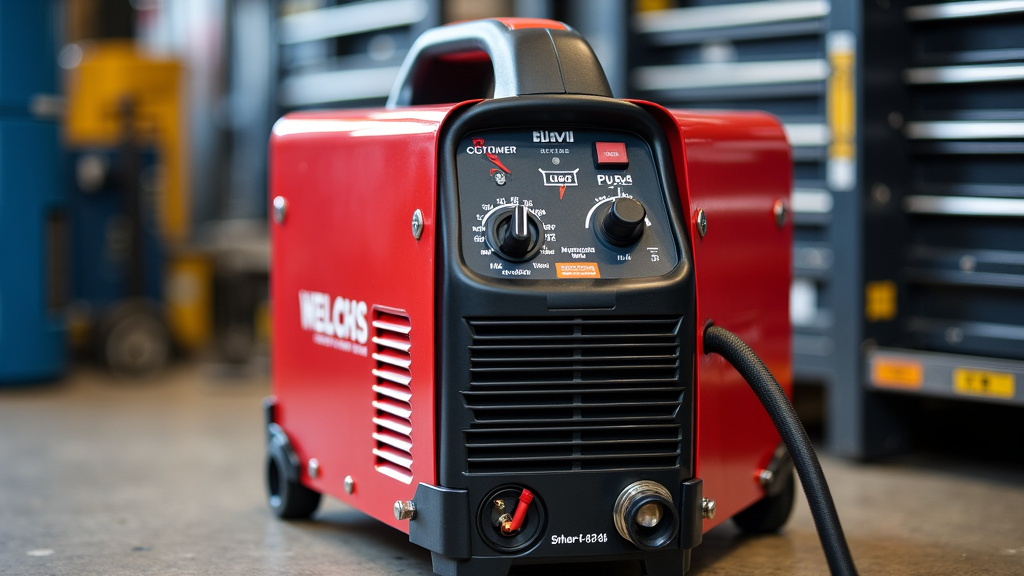
Understanding Multi-Process Welders
What if you want the benefits of more than one welding process? This is where multi-process welders shine. These machines can often do MIG, TIG, and Stick welding. They offer great versatility in a single unit. While they may cost more upfront, they can save space and money compared to buying individual machines.
We found that multi-process welders are an excellent choice for those who work with different metals and projects. They are a fantastic investment for a serious home shop. Just be sure each process meets your specific needs.
Key Features to Look For
Beyond the basic process, several features can impact your welding experience. Here are a few things we recommend considering.
Duty Cycle
Duty cycle tells you how long a machine can weld continuously within a 10-minute period at a given amperage. For example, a 60% duty cycle at 100 amps means the machine can weld for 6 minutes and then needs to cool down for 4 minutes. For home use or light fabrication, a lower duty cycle might be fine. For heavy-duty work, look for a higher percentage.
Inverter vs. Transformer Technology
Older welding machines often used transformer technology. They are heavy and less energy-efficient. Modern inverter machines are lighter, more energy-efficient, and often provide a more stable arc. We found that inverter technology generally offers a better welding experience.
Ease of Use and Controls
Look for machines with clear, simple controls. Adjustable settings for wire speed, voltage, and amperage are important. Some machines have digital displays which can help with precision.
Your Welding Machine Checklist
To help you summarize, here’s a quick checklist. Use this to guide your final decision:
- What metals will you primarily weld?
- What thickness will these metals be?
- What is your skill level, and how much do you want to learn?
- Where will you be welding (shop, outdoors, travel)?
- What is your power source availability (110V, 220V)?
- What is your budget?
Conclusion
You’ve learned that picking the right welding machine involves looking at your projects, skill level, and workspace. We found that matching the machine’s process (MIG, TIG, or Stick) to your needs is key. Don’t forget to consider the metal thickness and the power available. A multi-process welder offers flexibility if you tackle diverse tasks. Now, review your project list and your budget. This information will help you make a confident purchase.
Frequently Asked Questions
What’s the easiest welding machine for a complete beginner to use?
For most beginners, a MIG welder is the easiest to start with. It’s often called “wire welding” and is quite forgiving. We found that its controls are generally more straightforward than TIG or Stick welders.
Do I need a special outlet for a welding machine?
Many smaller welding machines use standard 110V or 120V household outlets. Larger, more powerful machines may need a 220V or 240V outlet. Always check the machine’s power requirements before buying.
Can a single welding machine do MIG, TIG, and Stick welding?
Yes, these are called multi-process welders. They offer great versatility by combining different welding capabilities into one unit. We found they can be a smart investment for a varied workshop.
How important is duty cycle for a home welder?
Duty cycle tells you how long a machine can run before needing to cool down. For occasional home use, a lower duty cycle might be fine. If you plan on longer welding sessions, look for a higher duty cycle for less downtime.
Is it worth buying a more expensive welding machine?
It depends on your needs. A higher-priced machine often means better build quality, more features, and a higher duty cycle. We found that investing a bit more can lead to a more enjoyable and productive welding experience long-term.