TIG Welder vs Stick Welder: Which Should You Choose? (November 2026)
Choose TIG for cleaner, more precise welds, or stick for simpler outdoor repairs and thicker metal. Your best choice depends on finish quality, portability, setup time and the materials you weld.
On this page (9 sections)
- TIG welder vs stick welder: which is better?
- How does TIG compare with stick for precision?
- Which process is easier to carry and set up?
- Which welder works better for home use?
- Which process suits outdoor and repair work?
- How much power do you need?
- What equipment and consumables do you need?
- How should you choose between these 4 machines?
- TIG welder vs stick welder: what is the final choice?
Choose TIG for precise, cleaner welds, or stick for simpler repairs, outdoor work and easier portability. The TIG welder vs stick welder decision depends on the finish you need, the metal you work with and how much setup you want.
TIG uses a tungsten electrode and gives you close control over the arc and filler material. Stick uses a coated electrode that creates its own shielding as it melts, which makes it practical for repair work and changing locations.
Think about where most of your welding happens. A bench in a quiet garage allows a different setup from a farm yard, a rooftop or a job site where equipment must move quickly.
Think about how the weld will be seen after the work is done. A visible joint on a small fabricated part rewards careful control, while a repair on equipment may reward speed and a strong bond more than appearance.
Think about the metal itself. Thin work asks for careful heat control, and thicker material asks for enough output to melt the joint properly without rushing the process.
Think about setup and storage too. TIG asks you to guide the torch and add filler with separate movements, while stick asks you to manage angle, arc length and a shortening electrode, and a multi process setup needs clear space for leads, electrodes and accessories.
For a broader starting point, read How to Choose a Welding Machine – Explained before comparing output, voltage and welding processes. Use that guide to check your outlet, your likely metal thickness and the space you have for work and storage.
It also helps to write down one or two typical jobs. A repair list and a fabrication list often point toward different processes, even when both use the same power source at home.
Do not rush the choice based on one feature alone. Finish, portability, setup and metal type work together, and the best fit is the one that matches your usual work without daily friction.
Start with the job you weld most often today. The first machine should make your common tasks simpler rather than more complicated.

 Best for adjustable arc control
YESWELDER 205Amp Stick Welder Digital Inverter IGBT ARC Welding Machine
TIG welder vs stick welder: which is better?
TIG is better for precision, while stick is better for straightforward repairs and outdoor flexibility. Neither process wins every job because they solve different problems.
TIG suits visible welds, careful joints and projects where heat control and appearance matter. It usually takes more coordination because you guide the torch and manage filler material separately.
Stick welding suits repairs, farm equipment maintenance and thicker metal work where a tidy cosmetic finish is less important. The electrode is easy to carry, and the process does not require a shielding gas cylinder.
Your choice also depends on how often you weld. A hobbyist who makes small, visible metal projects may value TIG control, while someone repairing brackets or equipment may prefer stick simplicity.
Consider the life of the finished part. A piece that stays in a workshop and gets handled often may need a neat edge and a clean bead, while equipment that returns to hard service may need strength first.
Consider also how clean you can keep the joint before welding. TIG rewards clean metal and steady hands, while stick can cope better with the rough reality of many repair jobs.
Consider the weather and wind. TIG is happier in a sheltered space, while stick electrodes carry their own shielding and are easier to use when air movement makes other setups less forgiving.
Consider travel between jobs. A stick kit fits a toolbox more easily, and electrodes can be carried in small packs for short repairs away from the main workshop.
Consider learning time. TIG control comes from practice with torch movement and filler timing, while stick control comes from practice with arc starts, rod angle and travel speed.
Consider cleanup time after each weld. TIG usually leaves a cleaner result, while stick leaves slag that must be chipped away between passes and before painting.
Consider the thickness you face most days. Thin material punishes excess heat, so slower and more controlled work may be worth it, while thick repair work may favour a simpler process with strong penetration.
Consider also what happens when the electrode or tungsten is used up. Rod changes are part of stick work, and sharpening or replacing tungsten is part of TIG work, so both processes need regular attention.
Neither option is weaker in an absolute sense. Each one trades appearance, simplicity, portability and setup effort in a different way, and your usual jobs should decide which trade is worth making.
How does TIG compare with stick for precision?
TIG offers finer control over the weld pool and filler, so it is the better choice for neat, detailed work. Stick welding can make strong joints, but its electrode coating creates more residue that needs attention after welding.
TIG is useful when you want to control the amount of filler added to a joint. That can help when appearance matters or when the work needs a careful hand.
Stick electrodes are convenient, but they leave slag that you remove between passes. You also need to manage rod angle, arc length and the changing length of the electrode.
The S7 200A TIG Welder combines DC TIG and Stick functions, so it suits a garage user who wants TIG control without giving up stick welding. It supports 110V and 220V input and includes a TIG torch, ground clamp and electrode holder.
Which process is easier to carry and set up?
Stick is usually easier to carry and set up because the machine and electrodes are the main equipment. TIG needs a torch and compatible consumables, so storage and preparation take more planning.
The YESWELDER 205Amp Stick Welder weighs 8.8 lb and supports 110V/220V input. Its LED display, precision value knob, Hot Start and Arc Force controls give you clear settings while keeping the machine portable.
Hot Start helps with arc ignition, while Arc Force supports arc stability. Both controls have 1–10 adjustment levels, and Anti-Stick helps reduce problems when an electrode contacts the work.
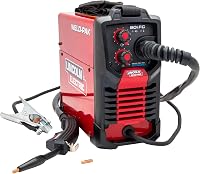
A smaller option is the Hpoouo 200Amp 20PCS Rods Stick Welder. It weighs 3.7 lb, measures 7.8 x 3.9 x 5.3 in and accepts 110V input, making it easier to carry to a garage, rooftop, farm or remote job site.
Which welder works better for home use?
A dual-voltage TIG and stick machine gives the widest process choice for a home workshop. A 110V stick machine can be easier to store and use, but it offers fewer process options.
Before choosing, check the outlet available in your work area. The S7 supports 110V and 220V input, while the YESWELDER 205Amp also supports 110V and 220V.
The Hpoouo is a 110V machine.
For a wider comparison of workshop setups, see our guide to the best welder for home use. You can also compare common brands in Best Lincoln Electric Welders.
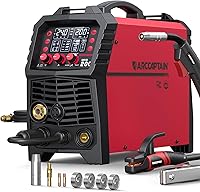
A multi-process machine may suit you if your projects change. The YESWELDER 135A MIG Welder combines gasless flux core MIG, lift TIG and stick functions in one 110V machine.
It delivers 135A and is designed for mild steel up to 3/32 in. It includes E71T-GS flux core welding wire in .030 in and .035 in sizes, an electrode holder, a ground clamp and a MIG torch.
An extra lift TIG torch is required for lift TIG use.
Which process suits outdoor and repair work?
Stick is usually the stronger choice for outdoor repairs because its coated electrodes provide shielding without a separate gas cylinder. TIG can work well in a controlled shop, but wind and setup demands make it less convenient outside.
Stick still needs clean metal, a dry work area and the correct electrode for the job. The YESWELDER 205Amp supports 6010, 6011, 6013 and 7018 rods, while the Hpoouo supports common rod types including E6013, E6011, E6010, E7018 and E308.
The Hpoouo includes 20 welding rods, 2 chip hammers, gloves and an instructions manual. Its current adjusts from 20A to 200A, which gives you room to match the setting to the work.
TIG is more attractive when the weld will remain visible or when you need controlled work on stainless steel and mild steel. The S7 is described for stainless steel welding, mild steel work and light metal fabrication.
How much power do you need?
Choose output based on your typical material and electrode needs, not the largest number alone. A higher rated machine gives more adjustment room, but your outlet and welding method still limit practical use.
The S7 provides up to 200A. The YESWELDER stick machine provides up to 205A, while the Hpoouo adjusts from 20A to 200A.
The YESWELDER 135A has a lower output, but its gasless flux core MIG function may be more useful than extra amperage for someone working on mild steel panels and general home projects.
You should also consider duty cycle information, which is not available for these product choices. Avoid assuming that 200A output means every machine can weld continuously at that setting.
Start by listing the metal you weld most often. Thin panels, brackets and general mild steel work do not all ask for the same current, and the process you choose changes that need as well.
Look at the low end of the range as carefully as the top. A machine that can turn down smoothly is easier to use on light work than one that only feels comfortable near its maximum.
Look at electrode choice for stick welding. Different rods suit different joints and positions, and output should leave room to set the current for the rod size you actually use.
Look at voltage in the same practical way. A 110V machine may suit a home garage outlet, while a dual voltage machine gives more choice when the work moves between locations.
Do not treat a higher headline number as automatic proof of better welds. Control, arc behaviour, lead quality and your own technique all shape the result as much as the rated maximum.
Consider how long a job lasts. Short repairs and longer fabrication sessions place different demands on a machine, so think about heat, breaks and ventilation before committing to a setting.
Consider also the cost of running too hot. Excess current can blow through thin metal, damage small parts and make cleanup harder, while too little current can leave a weak and uneven joint.
Check the included package against your plan. A torch, holder, clamp and rods may cover a first session, but you will still need the right consumables for the process and metal you choose.
Keep a simple record as you learn. Note the metal, rod or wire, current and result, and those notes will tell you more about your needs than any headline output figure.
What equipment and consumables do you need?
Stick needs electrodes, a holder and a ground connection, while TIG adds torch consumables and more control parts. Your total setup depends on the machine, process and metal you plan to weld.
TIG accessories can include tungsten electrodes, ceramic cups and collets. The S7 works with common TIG accessories and includes a TIG torch, ground clamp, electrode holder and other accessories.
Stick work needs suitable rods and a way to remove slag. The Hpoouo includes rods and chip hammers, while the YESWELDER 205Amp includes an electrode holder and ground clamp.
Before buying accessories, check the parts of a welding machine so you know which connections and consumables your process uses. For cleanup around a repair, a die grinder rubber wheel can help with suitable finishing work after welding.
How should you choose between these 4 machines?
Choose the S7 for the strongest TIG and stick balance, the YESWELDER 205Amp for portable stick control, the YESWELDER 135A for multi-process 110V use, and the Hpoouo for very light stick repairs.
The S7 is the clearest fit when you want DC TIG and stick in one dual-voltage machine. Its 200A output, digital current display and included TIG torch support a garage or home workshop.
The YESWELDER 205Amp is the better stick-focused choice when portability and adjustable arc behavior matter. Its 8.8 lb weight and dual-voltage input make it easier to move between suitable work areas.
The YESWELDER 135A makes sense when flux core MIG is part of the plan. Its 110V input and 3-in-1 functions add flexibility, but its 135A output is lower than the other options.
The Hpoouo is the simplest grab-and-go choice. Its 3.7 lb body and included 20 rods make it useful for small repair kits, though it does not offer TIG precision or dual-voltage input.
TIG welder vs stick welder: what is the final choice?
Pick TIG when clean control and visible weld quality matter most. Pick stick when you need a simpler, portable process for repairs, outdoor work or changing job locations.
For one machine that covers both needs, the S7 200A TIG Welder is the most balanced option here. For stick-only work, choose between the YESWELDER 205Amp for adjustable controls and the Hpoouo for minimum weight.
If your projects include wire welding as well as repairs, the YESWELDER 135A adds gasless flux core MIG to lift TIG and stick. Your final choice should match your outlet, materials, workspace and willingness to manage process-specific setup.
For another stick-focused comparison, see What Is a Stick Welder? The Quick Answer.
If TIG is still unfamiliar, What Is a TIG Welder? A Practical Answer explains the process before you choose.
Frequently asked questions
Is TIG welding better than stick welding?
TIG welding is better for precise, clean-looking work and careful control of the weld. Stick welding is better for simple repairs, outdoor work and jobs where portability matters more than finish quality.
The right choice depends on your metal, working conditions and comfort with setup.
Which is easier for a beginner, TIG or stick?
Stick welding is usually the simpler starting point because it needs fewer parts and no separate shielding gas setup. TIG gives you more control, but you must manage the torch, electrode and filler material carefully.
A machine with a clear display and adjustable controls can make either process easier to learn.
Can a TIG welder also stick weld?
Some TIG welders also support stick welding, but check the exact functions before choosing one. The S7 200A TIG Welder combines DC TIG and Stick modes, while the YESWELDER 135A machine combines flux core MIG, lift TIG and stick functions.
Is stick welding good for outdoor repairs?
Stick welding can suit outdoor repairs because the process does not depend on a shielding gas cylinder that wind can disturb. You still need a dry work area, safe electrical setup, suitable rods and proper protective gear.
Wind, moisture and dirty metal can still affect the weld.
What should I buy for home welding?
For home welding, choose TIG when finish and control matter most, or stick when you want a compact repair machine with simple consumables. A dual-voltage model gives more flexibility around outlets.
Review your typical metal thickness, available power and storage space before choosing.