9 Best Inverter Welding Machines (November 2026)
The best inverter welding machines include the YESWELDER 205Amp Stick Welder Digital Inverter IGBT for dual-voltage stick welding, the Lincoln Electric 90i FC Flux Core Wire for simple 120V flux-core work, and the ARCCAPTAIN Stick Welder for portable stick and lift TIG.
On this page (6 sections)
The best inverter welding machine for most buyers is the YESWELDER 205Amp Stick Welder, because it supports 110V and 220V power, reaches up to 205A and offers adjustable hot start and arc force. Choose the Lincoln Electric 90i FC for simple 120V flux-core work, or a multi-process model when you need MIG, stick and lift TIG options.
We compared inverter welders across stick, flux-core MIG and multi-process work. For a different welding technology, see our laser welding machine reviews.
The main differences are available voltage, output range, process support, rod or wire compatibility, portability and what you need to add before welding.
Start with What Is a Welding Power Source? The Basics if you are still comparing power-source types.
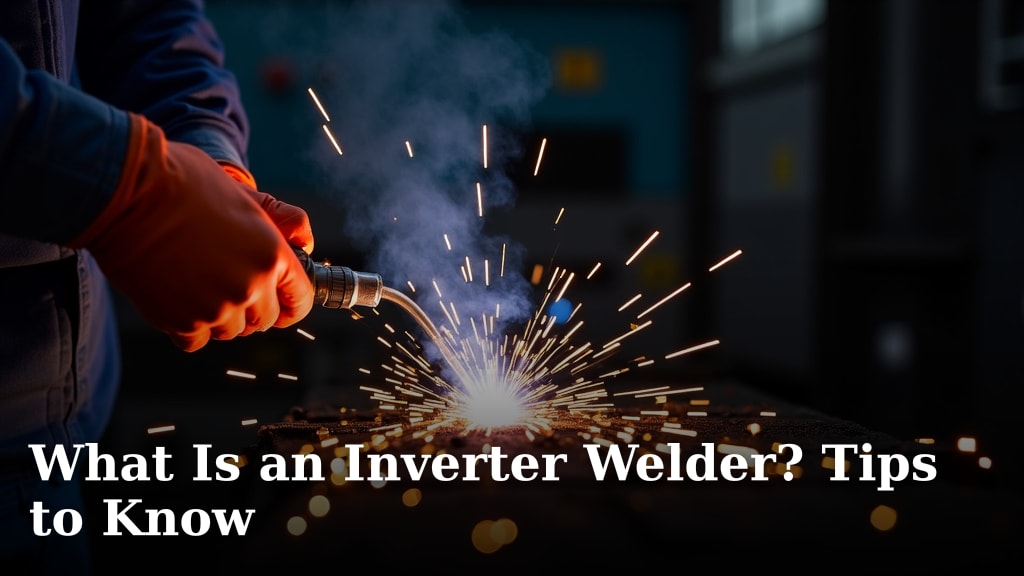
Our What Is an Inverter Welder? Tips to Know explains the compact power design behind these machines.
Our picks at a glance
-
1
 Best for dual-voltage stick welding
YESWELDER 205Amp Stick Welder Digital Inverter IGBT
9.7/10 our score
See it on Amazon -
2
 Best for simple 120V flux-core work
Lincoln Electric 90i FC Flux Core Wire
9.5/10 our score
See it on Amazon -
3

- 4
 Best for compact multi-process workCheck it
- 5
 Best for beginner gasless MIG setupCheck it
- 6
 Check it
Hpoouo 200Amp 20PCS Rods Stick Welder
Best for a compact rod starter kit - 7
 Best for ultra-light 110V stick workCheck it
- 8
 Check it
FEMEROL 140A 3 in 1 MIG Welder
Best for a ready-to-use 3-in-1 kit - 9
 Best for adjustable 110V and 220V duty cyclesCheck it
The best inverter welding machines for different jobs
The best inverter welding machine depends on the process and outlet you already have. For a specialized laser option, compare mini laser welding machines.
YESWELDER leads for dual-voltage stick work, Lincoln Electric keeps 120V flux-core use simple, and the multi-process picks give you more ways to approach a repair.
YESWELDER 205Amp Stick Welder Digital Inverter IGBT: Best for dual-voltage stick welding
- Up to 205A
- 110V and 220V support
- 1–10 hot-start and arc-force adjustment
- LED display
YESWELDER combines high output, dual-voltage support and adjustable arc controls in a portable stick welder. It suits home, garage, farm and outdoor maintenance work.
Pros
- Up to 205A output
- Broad 6010, 6011, 6013 and 7018 rod support
- LED display
Cons
- Lift TIG torch is not included
- Needs the right voltage adapter for setup
YESWELDER is the strongest all-around pick for buyers who want a portable stick welder with both 110V and 220V support. Its output reaches 205A, and it works with most 6010, 6011, 6013 and 7018 rods.
The LED display shows current, function mode and welding mode. A precision value knob lets you adjust settings while wearing a helmet and gloves, and hot start and arc force each offer 1–10 levels.
The machine weighs 8.8 lb and has a carry handle. Its automatic voltage fluctuation compensation, overcurrent protection, overload protection and temperature control are useful considerations for garage, farm and outdoor maintenance work.
The box includes a 220V-to-110V adapter, electrode holder, ground clamp and stick welder. Lift TIG is available, but the product data does not identify a TIG torch as included.
Choose it when you need one compact stick machine for two common supply voltages. It is less suitable if your main goal is wire-fed MIG work.
Lincoln Electric 90i FC Flux Core Wire: Best for simple 120V flux-core work
- 120V input
- 15 lb portable inverter
- Two-knob control
- Protective metal case
The Lincoln Electric 90i FC is built around easy 120V flux-core welding. Its shoulder strap, metal case and simple controls fit small home repairs and mobile jobs.
Pros
- Simple voltage and wire-speed controls
- Protective metal case
- Accessories included
Cons
- Flux-core process only
- Maximum welding thickness is 1/4 in
The Lincoln Electric 90i FC is the easiest choice here for small 120V flux-core jobs. It uses a corded 120V power source, weighs 15 lb and can weld up to 1/4 in.
Two knobs control wire speed and voltage, with infinite voltage adjustment for finer changes. That plain layout suits a first wire-feed welder because you can learn one variable at a time and see the effect on the bead.
The package includes a welding gun, nozzle, contact tip, work cable and clamp, while the protective metal case helps with transport and storage. You still need to keep the gun and cable dry.
A shoulder strap supports mobile use, and the inverter design is more portable than a traditional transformer format. At 15 lb it is not the lightest pick here, yet the strap and case make short carries and job site moves more manageable.
This is a flux-cored welder, so it does not offer stick or lift TIG modes. That limit keeps setup simple, but rod work or TIG style repairs are outside its range.
Choose it for home repairs, hobby work and small jobs where a simple wire-feed setup matters more than process range. Read our best 110 volt welder guide for more 110V comparisons.
ARCCAPTAIN Stick Welder: Best for portable stick and lift TIG
- 200A ARC output
- 110V and 220V support
- Stick and lift TIG modes
- 7.2 lb welder
ARCCAPTAIN gives you stick and lift TIG modes with synergic control, hot start and arc force. Its low listed welder weight and shoulder strap suit mobile repair work.
Pros
- Two welding modes
- Automatic current and voltage matching
- 110V and 220V adapter
Cons
- Lift TIG torch is not included
- The product data lists an unusual voltage value
ARCCAPTAIN suits buyers who want stick and lift TIG in one 110V/220V machine. It supports 6010, 6011, 6013 and 7018 rods, and its synergic control can match current and voltage after you select the electrode diameter.
That automatic matching helps beginners set a starting point, while experienced users can still adjust current to suit the joint. The rod list covers common mild steel work, so you are less likely to need extra electrodes for basic repairs.
Hot start, arc force and automatic anti-stick support easier arc starts and electrode removal. The digital LED screen displays settings, while the included shoulder strap and 10 ft electrode holder and ground clamp support mobile work.
Those cable lengths matter on a farm gate or a trailer frame where the work piece cannot move to the welder. Keep the cables clear of sharp edges and check the clamps before each session, since a loose ground can spoil an otherwise good arc.
The package also includes a 110V and 220V power adapter, brush, hammer and user manual. The product data says the lift TIG torch is not included, so you would need to confirm that accessory before planning TIG work.
Choose ARCCAPTAIN when dual-voltage portability and two process options matter. The product data lists a voltage value of 1 volt in one specification field, so confirm the electrical details before ordering.
SEESII 135A MIG Welder 110V: Best for compact multi-process work
- 30–135A range
- Gasless MIG, MMA and lift TIG
- 110V input
- 7.7 lb stated welder weight
SEESII covers gasless MIG, stick and lift TIG in a 110V format. It fits buyers who want several processes for home DIY, farm repairs and outdoor work.
Pros
- Three welding modes
- Included flux-core wire and MIG torch
- Large digital display
Cons
- Lift TIG torch is not included
- 110V input limits voltage flexibility
SEESII is the most compact choice here for buyers who want gasless MIG, MMA stick and lift TIG from a 110V machine. Its stated current range is 30-135A, and the title identifies an IGBT inverter with a large digital display.
The lower end of that range is useful for thin sheet and small brackets, while the upper end is aimed at thicker mild steel. You still need to match wire or rod size to the job, because maximum current alone does not tell you how the weld will behave.
The package includes a MIG torch, ground clamp, electrode holder, flux-core welding wire and contact tips. The product data also describes a 1 lb spool of .030 in wire, which gives you a starting point for gasless MIG work.
Having wire and tips in the box shortens the first setup, yet consumables will run out on longer projects. Keep spare tips organized, since a worn tip can cause feeding trouble that looks like a machine fault.
Its stated welder weight is 7.7 lb, making it suited to outdoor tasks, home DIY and quick farm repairs. Lift TIG is available, but the torch is not included.
Choose it when three processes are more useful than dual-voltage operation. A 110V-only design is easier to place near a household outlet but gives you less supply-voltage flexibility.
FEMEROL MIG Welder: Best for beginner gasless MIG setup
- 130A output
- Flux-core MIG and MMA
- 110V operation
- 2-in-1 synergic control
FEMEROL pairs gasless MIG with stick welding and automatic matching of wire speed and voltage. Its accessory kit gives beginners several items for an initial setup.
Pros
- MIG and MMA modes
- Synergic and manual control
- Accessories include wire, mask and gloves
Cons
- No lift TIG mode
- 110V operation only
FEMEROL's 130A machine is a good beginner pick for gasless MIG and stick welding. Its synergic control matches voltage and wire-feed speed after you select wire diameter, while manual control remains available for more experienced users.
That mix helps because you can start with automatic settings for practice joints, then move to manual adjustment as your technique improves. It also lets two people with different habits share the same machine.
The machine can weld mild steel up to 4.0 mm and holds rolls of wire up to 2.2 lb. Its package includes a MIG torch, electrode holder, ground clamp, welding mask, brush, 0.5 kg of 0.8 mm flux-cored wire, gloves and contact tips and nozzles.
A mask and gloves in the kit lower the extra cost of a first setup. You should still check that they fit you well and that the wire is stored dry before you begin.
The stated welder weight is 9 lb, and the compact handle supports moving it around a workshop or repair area. It operates on 110V power and does not include a lift TIG mode.
Choose it when automatic wire settings and a broad starter accessory kit matter more than TIG capability. For routine care, clean the ground clamp contact area and inspect the torch cable for kinks before storage.
Hpoouo 200Amp 20PCS Rods Stick Welder: Best for a compact rod starter kit
- 20–200A adjustment
- 110V input
- 20 welding rods
- 3.7 lb stated welder weight
Hpoouo focuses on portable 110V stick welding and includes 20 rods, chip hammers and gloves. Its small stated dimensions suit a toolbox or backpack.
Pros
- 20 welding rods included
- Hot start, arc force and anti-stick
- Supports several rod types
Cons
- 110V only
- Rod terminal connections vary by electrode type
Hpoouo fits buyers who want a small stick-welding kit with rods included. Its adjustable current runs from 20-200A on 110V, and its stated dimensions are 7.8 x 3.9 x 5.3 in.
That footprint is small enough for a toolbox or a high shelf, which helps if garage space is tight. The wide current range gives you room to start low on thin metal and turn up for heavier sections, provided the rod and joint suit the setting.
The kit includes 20 welding rods, 2 chip hammers, gloves and an instruction manual. The welder supports E6013, E6011, E6010, E7018 and E308 rods in 1/16-1/8 in sizes, with a specific E308L-16 requirement for stainless steel in the product information.
Twenty rods will cover practice and a first repair, but they will not last long on a larger build. Keep a dry place for spare electrodes, since damp rods can make arc starts harder.
Hot start, anti-stick and arc-force functions help with starting and maintaining an arc. The machine also has over-voltage, over-current, overheating and overload protection.
Choose it for portable 110V rod work where the included consumables reduce your first setup steps. Pay close attention to electrode polarity because the correct terminal arrangement varies by rod type.
Siasky Mini Welding Machine: Best for ultra-light 110V stick work
- 110V input
- MMA-250A title rating
- Hot start, arc force and anti-stick
- 20 rods included
Siasky is a very light 110V stick welder with automatic current matching, an LED screen and a starter kit. It suits small maintenance and DIY tasks where carrying weight matters.
Pros
- Very light design
- 20 welding rods included
- LED current display
Cons
- 110V only
- The product data does not give a verified output range
Siasky is the lightest stated welder in this group at 3.3 lb, and it runs from a standard 110V household supply. Its title identifies an MMA-250A inverter with hot start, arc force and anti-stick functions.
That weight helps when you carry the welder up a ladder, across a yard or into a small workshop. Portability alone does not prove output range or duty cycle for thicker work.
An LED screen shows welding current, and automatic current matching simplifies setup for beginners. The package includes electrode clips, work clips, face shields, brushes, 20 welding rods measuring 2.5 mm and a user manual.
The rods and brushes cover a basic start, but regular use will require more electrodes. Check the face shield and brushes for comfort before a long session.
The compact design suits garage, farm, craft and outdoor maintenance work. The product data does not give a verified output range, so do not rely on the title rating alone for jobs that need a specific current level.
Choose Siasky when minimum carry weight and a basic 110V stick setup matter most. Let the fan cool the unit after use and store rods away from damp air.
FEMEROL 140A 3 in 1 MIG Welder: Best for a ready-to-use 3-in-1 kit
- 140A output
- Flux-core MIG, lift TIG and stick
- 110V input
- Auto-darkening helmet included
This FEMEROL adds lift TIG to flux-core MIG and stick welding while including a helmet, torch, wire and contact tips. It fits buyers building a broad 110V setup.
Pros
- Three welding modes
- Synergic and manual control
- Auto-darkening helmet included
Cons
- 110V only
- The product data does not state a TIG torch is included
This FEMEROL model is the strongest ready-to-use choice for buyers who want flux-core MIG, lift TIG and stick welding in a 110V package. It provides 140A output and supports material up to 1/8 in according to the product information.
That thickness guidance helps you judge whether it fits furniture repair, gates or light fabrication. It also sets a limit, so heavier structural joints may need a higher output machine or a different approach.
Synergic control matches voltage and wire speed after wire diameter selection, while manual control lets experienced users adjust voltage and current. The LED display shows voltage, current and other parameters without requiring you to remove your helmet.
Reading settings without lifting your helmet saves time between passes. You can still need to stop and check the joint, but fewer interruptions help keep a rhythm on longer seams.
The accessory kit includes a ground clamp, electrode holder, welding torch, .030 in flux-cored wire, nozzles, contact tips and an auto-darkening welding helmet. The machine weighs 8.9 lb.
Choose it when three-process flexibility and included safety gear matter. Confirm the TIG torch arrangement before planning lift TIG work.
HONE Stick Welder: Best for adjustable 110V and 220V duty cycles
- 10–120A at 110V
- 10–140A at 220V
- 40% duty cycle at rated output
- Digital display
HONE offers separate 110V and 220V output ranges, digital controls and support for common stick rods. It is a practical choice for household and small workshop repairs.
Pros
- 110V and 220V operation
- 40% duty cycle at rated output
- Hot start, arc force and anti-stick
Cons
- Lower output than the highest-rated picks
- Included accessories are described generally
HONE is a practical stick welder for buyers who need separate 110V and 220V output ranges. It provides 10-120A at 110V and 10-140A at 220V, with a 40% duty cycle at those rated outputs.
Those separate ranges are easy to compare when you know which outlet you will use most. A higher number at 220V does not help if your workshop only has a 110V circuit, so check the circuit before you rely on the top setting.
The machine supports 1/16-1/8 in E6013, E7018, E6011 and E6010 rods, along with E308. Its digital display shows the actual welding current, and hot start, arc force and anti-stick help with arc starting and electrode removal.
The rod range covers common household and workshop electrodes. You should still match rod diameter to material thickness, because a small rod on thick steel will take longer and may need more passes.
The product data gives a 9.44 lb weight and 9 x 3.9 x 5.6 in dimensions. It also identifies protection against overheating, overcurrent, over-voltage, under-voltage and short circuits.
Choose HONE when clear current ranges and dual-voltage stick welding fit your workshop. Its lower maximum output places it behind the 200A-class picks for heavier work.
How we compared inverter welding machines
Our score weighs specs, features and buyer feedback against your likely use. We gave more weight to process fit, voltage flexibility, usable controls, portability and clearly stated accessories.
Process fit comes first because stick and wire-feed welders need different skills and consumables. A flux-core buyer should not pay for unused modes, and a stick buyer needs a kit with a rod holder.
Voltage flexibility matters when the best outlet is not near the job. A 110V model suits a home garage, while a dual-voltage model may suit a farm shop with a 220V circuit.
Usable controls include a clear display, simple knobs and hot start. These can reduce setup time and make settings easier to repeat, but they do not replace practice on scrap metal.
Portability covers weight, size, handle design and cable reach. A light welder is easier to move, but you still need enough cable to reach the work.
Clearly stated accessories affect starting cost. A kit with a torch, holder, clamp, wire or rods gets you welding sooner, while a missing TIG torch or helmet adds a purchase.
Output current matters, but a higher number is not always better. Match it to your outlet, electrode or wire, material thickness and duty-cycle needs.
Duty cycle matters on longer jobs because the welder may need rest under load. A stated duty cycle at rated output is more useful than a headline amp number for back to back passes.
Material thickness is another check. Rod size, wire size and joint access still limit what you can weld, even with high maximum current.
YESWELDER scores highest with 205A output, 110V and 220V support, rod compatibility and adjustable arc controls. That broad fit does not suit every shop.
A wire-fed flux-core buyer may prefer Lincoln Electric, while a three-process buyer may prefer SEESII or FEMEROL. Missing torch details, unclear ranges or unusual voltage fields are reasons to confirm before ordering.
Which inverter welding process should you choose?
Choose stick welding for rod-based repairs, outdoor work and less clean surfaces. Hpoouo, Siasky and HONE focus on stick work, while YESWELDER and ARCCAPTAIN add lift TIG.
Stick welding can burn through light rust and reach repairs away from a gas bottle. The trade-off is slag cleanup and more frequent electrode changes.
Rod choice changes the arc. Common 6013 electrodes suit general work, while 6010 and 6011 suit deeper penetration on suitable joints.
Always follow maker guidance for polarity and current.
Choose gasless MIG for wire feeding on home repairs and small fabrication. Lincoln Electric keeps it simple, while SEESII and FEMEROL add stick or lift TIG modes.
Wire feeding speeds continuous seams and helps steady travel speed. Gasless flux-core wire also avoids carrying a cylinder outdoors and in small workshops.
Practice with voltage and wire speed, since small changes affect bead shape and penetration. Test settings on scrap before welding a visible part.
A multi-process machine adds options but also setup details. Check torch, wire, rod and contact-tip requirements before assuming every mode is ready.
For a broader decision process, use How to Choose a Welding Machine – Explained. You can also compare this category with Best Plasma Cutters for the Money if your work includes metal cutting.
Consider where you will weld as much as what you weld. Outdoor, bench and farm jobs favour different processes, and electrodes and flux-core wire need dry storage.
What voltage do you need?
A 110V inverter welder is convenient for household outlets and portable repairs. Lincoln Electric, SEESII, both FEMEROL models, Hpoouo and Siasky use 110V input.
That convenience suits a home garage, a side yard or a workshop without a heavy duty circuit. It also makes it easier to move the welder to the job, since you are less tied to a fixed 220V outlet.
The limit is output and circuit load. A 110V supply may not support the same current range as a 220V supply, and some circuits are not suitable for welding equipment.
Check the circuit and follow local electrical guidance before use.
A dual-voltage machine gives you more flexibility when a 220V outlet is available. YESWELDER, ARCCAPTAIN and HONE identify 110V and 220V operation, but you should still confirm the outlet, adapter and circuit requirements before use.
Voltage does not equal welding output by itself. Compare the current range at each voltage, especially if you expect to use larger rods or work on thicker steel.
A maker may list a high headline current at one voltage and a lower range at another. That difference can decide whether a thicker joint is practical or whether you need a slower, multi-pass approach.
Cable and plug condition also affect safe use on any voltage. Inspect cords for damage and do not use a machine with a loose or overheating plug.
How should you set up and care for an inverter welder?
Start by checking the voltage setting, cable connections and electrode or wire choice. Use the correct ground connection, keep the work area clear and follow the instructions before striking an arc.
Set the welder on a stable, dry surface with room around the vents. A tight corner or rags near the fan can trap heat and reduce cooling.
Check that the electrode holder and ground clamp are tight and cable insulation is not cut or pinched. A loose clamp can cause a weak arc and may heat up.
Keep ventilation around cooling openings. Protection systems can reduce damage, but they do not replace safe operation or a suitable circuit.
Give the machine rest when hot or when maker guidance calls for a pause. Forcing extra passes can shorten welder life and harm weld quality.
Remove slag after stick passes and keep consumables dry and organized. Store the machine clean and dry, and inspect cables, holders, torches and clamps before the next job.
Clean spatter from contact tips and nozzles, since buildup can disturb wire feeding. Replace worn tips instead of welding through a fault.
Keep electrodes in a dry container and discard damp or damaged rods. Clean rust or paint from the ground clamp contact face where it meets the work.
Store cables coiled loosely, not kinked or trapped under heavy items. Cable lugs and terminals affect connections, so see our guide to best welding machine lugs when replacing cable ends.
Which is the best inverter welding machine for you?
The best inverter welding machine depends on the work ahead. Pick YESWELDER for dual-voltage stick work, Lincoln Electric for 120V flux-core repairs and ARCCAPTAIN for portable stick and lift TIG work.
Choose SEESII or either FEMEROL model when multiple processes matter. Pick Hpoouo or Siasky for light 110V stick work, and HONE for stated 110V and 220V current ranges.
Start with your outlet, as it rules out more models than headline amps. A household circuit points to a 110V pick, while a 220V outlet gives a dual-voltage model more room to grow.
Next, match the process to the repair. Stick suits rod-based outdoor work, while gasless MIG suits wire-fed home repairs and small fabrication.
Lift TIG is a bonus only with the right torch and technique.
Then check consumables. Rod type and size, wire diameter and contact tips affect setup and cost.
A kit with wire, rods or a helmet can save early purchases, but plan for replacements.
Weight matters if the welder moves often. A very light model suits farm calls and outdoor maintenance, while a slightly heavier model may balance output and control better.
For beginners, simple controls and clear displays shorten learning. Synergic settings, hot start and anti-stick help, yet practice on scrap is still needed.
For experienced users, manual adjustment and stated duty cycle may matter more. Check outlet first, then process, rod or wire and thickness, as that narrows the list faster than maximum amperage alone.
Our top 3 picks at a glance
-
1
Best for dual-voltage stick welding
YESWELDER 205Amp Stick Welder Digital Inverter IGBT
9.7/10 our score
See it on Amazon -
2
Best for simple 120V flux-core work
Lincoln Electric 90i FC Flux Core Wire
9.5/10 our score
See it on Amazon -
3
Frequently asked questions
What is the best inverter welding machine for beginners?
The best inverter welding machine for a beginner depends on the process you want to learn. The Lincoln Electric 90i FC has simple two-knob 120V control, while the YESWELDER and ARCCAPTAIN offer digital displays and adjustable stick-welding controls.
Choose a machine that matches your available outlet and the metal work you plan to do.
Are inverter welders better than transformer welders?
Inverter welders are usually easier to carry because they use a smaller power design. They can also offer digital controls and several welding modes in a compact case.
Transformer welders may suit buyers who want a simpler, heavier design.
Compare both in our transformer vs inverter welder guide.
Can an inverter welder run on 110V?
Yes. Several picks here use 110V input, including the Lincoln Electric 90i FC, SEESII, FEMEROL and the Hpoouo and Siasky stick welders.
Dual-voltage models such as YESWELDER, ARCCAPTAIN and HONE can also use 220V when the correct outlet and setup are available.
What does IGBT mean on an inverter welder?
IGBT is a power-switching technology used in many modern inverter welders. In practical terms, it helps the machine control welding current in a compact design.
IGBT alone does not tell you which process, rod size or thickness the welder can handle.
Match those details to your project.
Should you choose MIG or stick welding?
Choose gasless MIG when you want wire feeding and a process suited to small repairs with a 110V machine. Choose stick welding when you need rod-based work, outdoor repairs or a simpler setup.
Multi-process welders add flexibility but may require more setup and accessories.