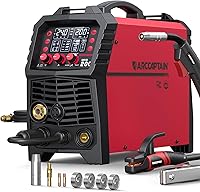
Welder and Plasma Cutter Combos
Choose a welder and plasma cutter combo only if you need both functions in one setup. Match its welding processes to your projects, then check whether its cutting capacity suits the metal you plan to cut.
On this page (7 sections)
- What does a multiprocess welder with plasma cutter combine?
- How should you choose between combo machine types?
- What cutting capacity should you check?
- What welding processes are worth having together?
- Should you buy one combo unit or separate machines?
- What should you check before buying a combo?
- Which type should you choose?
A welder and plasma cutter combo is a good fit when you need both welding and metal cutting and want them in one setup. Choose by the welding processes you use and the cutting capacity you need, since a multiprocess welder may include several welding modes without a plasma cutter.
The phrase “multiprocess welder with plasma cutter” can describe different machine arrangements. Some combo machines weld and cut; others only combine welding processes such as MIG, TIG and stick.
Start by listing the jobs you expect to do. Then confirm that the machine supports each needed process and has the cutting capacity for your material thickness.
What does a multiprocess welder with plasma cutter combine?
A combo machine combines one or more welding processes with plasma cutting in a shared unit. The exact processes and equipment vary, so check each function rather than relying on “multi-process” in the name.
A multiprocess welder may offer MIG, flux-core MIG, TIG or stick. Plasma cutting is a separate function that uses a torch to cut conductive metal.
It does not mean the welder automatically includes a cutter.
If you need a quick explanation of the welding side, start with What Is a Multi Process Welder? The Basics.
For a broader look at welding-only machines, see our best multi process welding machine guide.
How should you choose between combo machine types?
Choose the combo type that covers your regular work, not every process you might use someday. The right mix depends on the metal, joint, cut and work location.
| Your main jobs | Welding features to check | Cutting features to check |
|---|---|---|
| Repair and general fabrication | MIG or flux-core MIG, plus stick if needed | Cutting capacity for your common material thickness |
| Aluminum welding and cutting | Spool gun MIG or AC TIG, depending on your method | Capacity for the aluminum thickness you plan to cut |
| Sheet metal projects | Fine control for the welding process you use | Clean cuts at the thickness you handle |
| Outdoor repairs | Flux-core capability can avoid shielding gas | Cutting setup and power needs at the worksite |
| Several kinds of work | The exact set of welding processes you will use | Whether the cutter meets your thickest routine cut |
Check the machine’s input power requirements and the available outlet before buying.
Dual-voltage welders can offer more input-power flexibility. A combo unit still needs a suitable power source and the correct accessories for each mode.
Is a MIG welder and plasma cutter combo right for you?
A MIG welder and plasma cutter combo suits projects that need wire-fed welding and separate metal cuts. Confirm whether the MIG function is gas MIG, flux-core MIG or both, then check what the plasma side can cut.
A MIG welder and plasma cutter combo may also support spool gun MIG for aluminum. That feature does not guarantee the spool gun is included, so verify the required equipment and whether the machine supports your preferred welding method.
For a MIG-focused setup, the YESWELDER 205A offers gas MIG, flux-core MIG, spool gun MIG, lift TIG and stick. For a closer look at this YESWELDER multiprocess machine, read the YESWELDER MIG-205DS Pro review.
Its product details say the spool gun and lift TIG torch are required separately.
That model does not list plasma cutting among its welding functions. Treat it as a multiprocess welder option, not a welder and plasma cutter combo.
When does a TIG welder plasma cutter combo make sense?
A TIG welder plasma cutter combo can make sense if you need TIG welding for controlled work and want cutting in the same unit. Check for AC TIG if aluminum is part of your plan, and confirm the TIG torch requirements.
TIG and plasma cutting solve different jobs. TIG joins metal with a controlled arc, while a plasma cutter makes cuts.
One function does not replace the other.
If you want TIG for aluminum, review our guide to best TIG welders for aluminum. For machines specifically offering AC TIG, compare the options in best multiprocess welders with AC TIG.
What cutting capacity should you check?
Choose a plasma cutter by the thickest metal you expect to cut regularly and the quality of cut you need. Check the manufacturer’s cut capacity and duty cycle for the exact material and power supply you plan to use.
Do not assume that a welder’s output tells you how thick its cutter can cut. Welding amperage and plasma cutting capacity describe different functions.
Consider these questions before choosing:
- What material do you cut most often?
- What is its maximum thickness?
- Do you need clean, finished edges or rough separation?
- Will you cut indoors, outdoors or at different work sites?
- Does the unit need a particular air supply or electrical circuit?
A combo may reduce the number of separate machines, but it can also mean choosing one unit around the capabilities you need most. Compare the cutting specifications and welding modes individually.
What welding processes are worth having together?
Pick only the welding processes that fit your planned jobs. Extra modes help only if you have the right accessories and know when to use them.
MIG can suit wire-fed fabrication and repair. Flux-core MIG can avoid shielding gas, while stick welding can be useful for other repair tasks.
TIG can offer more control for certain joints and materials, but may need a separate torch. For longer TIG sessions, see water-cooled TIG welders.
The YESWELDER 135A combines gasless flux-core MIG, stick and lift TIG. Its extra lift TIG torch is required, and the machine is described for mild steel up to 3/32 in thick.
The FORNEY Easy Weld 140 is a flux-core wire welder rather than a plasma cutter combo. Compare it with other 110V wire feed welders if household power is a priority.
It uses 0.030 in flux-core wire, weighs 19 lb and can run on standard household power with at least a 20 amp breaker.
Compare more welding modes and machine types in our best ESAB multiprocess welder guide.
Should you buy one combo unit or separate machines?
A combo unit can save space and simplify transport when you need welding and cutting at the same work area. Separate machines can be easier to match to specialized welding and cutting needs.
Before choosing a combo, compare:
- The welding processes you use most.
- The cutting capacity you need most.
- Input power requirements for both functions.
- Required torches, guns, air supply and other accessories.
- Whether the machine can support your work pace.
A machine with a long list of modes may still need extra equipment for some functions. Confirm what comes with the unit and what you would need to add.
For a wider decision framework, see How to Choose a Welding Machine – Explained. If you already own a welder, comparing best welding machine accessories may be a simpler path than replacing it.
What should you check before buying a combo?
Check the welding process list, cutting capacity, input power and included accessories before choosing. These details determine whether one unit can handle the jobs you actually have.
Use this checklist:
- Confirm that plasma cutting is included as a function.
- Match the cutter’s capacity to your material and thickness.
- Confirm the exact welding processes, including AC TIG if needed.
- Check whether a torch, spool gun or other required accessory is extra.
- Match the power requirements to your outlet and work location.
- Consider whether the unit’s size and weight suit your setup.
The word “combo” alone does not tell you what the machine can do. Read the process and capacity details for each function.
Which type should you choose?
Choose a MIG and plasma combo if wire-fed welding and cutting are your regular tasks. Choose a TIG and plasma combo if you need TIG, especially AC TIG for aluminum, and want cutting in the same unit.
If you mainly need welding, a multiprocess welder without plasma cutting may be enough. If you need a particular cutting capacity or specialized welding setup, compare separate machines before deciding.
For other welding-only options, start with our best multi process welding machine guide. Your choice should match the processes you use and the material you cut most often.
Frequently asked questions
Does a multiprocess welder with plasma cutter do both jobs at once?
No. A welder and plasma cutter combo provides separate welding and cutting functions, and you use one process at a time.
Check which welding modes and cutting method the machine includes, along with the setup each mode requires.
Can a MIG welder and plasma cutter combo weld aluminum?
Some machines support aluminum welding, but the method and required equipment vary. Check whether the welder supports spool gun MIG or AC TIG and whether the needed torch or gun is included.
A plasma cutter cuts metal; it does not weld aluminum.
Is a TIG welder plasma cutter combo good for aluminum?
It can suit aluminum work if the welding side includes AC TIG, since that is the TIG mode commonly sought for aluminum. Confirm the machine's AC TIG capability and torch requirements, then check its separate cutting capacity for your material.
Should I buy a combo machine or separate machines?
Choose a combo if saving floor space and keeping both functions in one unit matter most. Separate machines may make more sense if you need specific welding features or a cutting capacity that a combo does not provide.
Compare process requirements before deciding.