What Is a Portable Welder? A Quick Guide
On this page (7 sections)
A portable welder is a compact and lightweight welding machine that you can easily move from job to job. They are designed for convenience, offering welding power on the go without needing a dedicated workshop. Think of it as your mobile welding station for quick repairs or projects anywhere.
Unlike traditional, heavy welding units, portable welders often run on battery power or small generators. This makes them perfect for situations where access to mains electricity is limited or impossible. Many users find them incredibly useful for tasks around the house or for taking to different worksites, greatly increasing your flexibility and project scope.
- Portable welders are small and light for easy transport.
- They let you weld in places without electricity.
- Many use batteries or small generators.
- They offer great flexibility for various projects.
Ready to see what these handy machines can do? Let’s break down exactly what makes a welder portable and how it can help you.
Understanding the Versatile Portable Welder
So, what exactly makes a welder portable? It’s all about its design. Portable welders are built to be lightweight and compact. This means you can pick them up and carry them easily. They aren’t stuck in one spot like bigger, heavier machines. Think of them as your go-anywhere welding solution.
These machines are a godsend when you need to weld away from your garage or workshop. Maybe you’re working on a fence in the backyard. Or perhaps you need to fix farm equipment out in a field. Even if you’re helping a friend with a project across town. A portable welder lets you tackle these jobs without hauling a massive unit.
What Powers a Portable Welder?
The power source is a big factor in portability. Many portable welders run on batteries. These are often rechargeable lithium-ion batteries, similar to what you find in power tools. This gives you complete freedom from power outlets. You can weld almost anywhere the machine can go.
Other portable units might plug into a standard wall outlet. But they are designed to be much lighter than traditional welders. Some smaller models can even be powered by a portable generator. This is great for remote locations where electricity isn’t available at all. It’s all about giving you options.
Key Features That Define Portability
When we talk about portable welders, a few things stand out. Their size and weight are the most obvious. You’ll find models weighing just a few pounds up to around 30-50 pounds. This makes a huge difference in transport. Compare that to some industrial welders that can weigh hundreds of pounds.
Another key feature is their power source flexibility. As we mentioned, battery power is common. But some also have AC/DC power options. This means you can plug them into the grid if needed. The ability to switch between power sources adds to their usefulness. It’s like having a multi-tool for welding.
Durability is also important. Since these welders are meant to be moved around, they need to be tough. Most are built with rugged casings. This protects them from bumps and drops that can happen on job sites. You want a machine that can handle a bit of wear and tear.
Why Choose a Portable Welder for Your Projects?
So, why would you pick a portable welder over a more traditional one? The main reason is undoubtedly convenience. If you don’t have a dedicated workshop, a portable welder is a game-changer. It means you don’t need a large space to set up your welding operations.
Think about quick repairs. Your car’s exhaust needs a patch. A metal railing on your porch is loose. These aren’t usually jobs that require a huge setup. A portable welder lets you handle these tasks efficiently. You can get the job done and put the welder away without fuss.
Flexibility for Different Welding Needs
Portable welders offer surprising flexibility for various welding tasks. Many can handle different welding processes. This includes Stick welding (SMAW), TIG welding (GTAW), and sometimes MIG welding (GMAW). The specific processes available depend on the model, of course.
For example, a portable Stick welder is great for outdoor projects. It works well even in windy conditions. A portable TIG welder is excellent for precision work on thinner metals. Some advanced models can even switch between processes. This means one machine can handle a wider range of jobs.
Ideal Scenarios for Portable Welding
Where do these welders shine? We found they are perfect for DIY enthusiasts. If you’re a hobbyist who loves working with metal, a portable unit lets you weld at home or at a friend’s place. It’s accessible for people with limited space.
They are also a favorite among field technicians and maintenance crews. Imagine a plumber needing to weld a pipe on-site. Or an HVAC technician needing to make a quick repair on a rooftop unit. A portable welder allows them to perform these tasks without returning to a central shop. This saves a lot of time and resources.
Farmers and ranchers also find them incredibly useful. Fixing equipment in the field is a common need. A portable welder can be taken directly to the problem. This minimizes downtime for essential machinery. It’s about getting things back up and running quickly.
Types of Portable Welders to Consider
Not all portable welders are the same. They come in different types, each suited for specific needs. Understanding these types will help you find the right one. We’ll break down the most common ones.
Battery-Powered Welders
These are the ultimate in portability. Battery-powered welders, often called cordless welders, use rechargeable batteries. This means no cords, no generators, and no need for an electrical outlet. They are perfect for truly remote locations.
The welding time on a single charge will vary. It depends on the battery capacity and the type of welding you’re doing. Some can provide enough power for several welds. Others might be better suited for very light-duty tasks or quick touch-ups. Many experts suggest checking the amp-hour rating of the battery. This gives you a good idea of how long it can sustain welding.
Plug-In Portable Welders
These portable welders still need electricity, but they are designed to be light and easy to move. They often plug into a standard 120V household outlet. Some might require a 240V outlet for higher power output.
Their advantage is continuous power. You don’t have to worry about battery life. As long as you have access to an outlet, you can keep welding. They are often more affordable than battery-powered models. Many DIYers find these to be a great starting point. They offer a good balance of portability and power.
Generator-Powered Welders
These units are designed to run off a portable generator. This is ideal for job sites where there’s no grid power available. You’ll need a generator that can supply enough wattage for the welder. Always check the generator’s requirements carefully.
This setup gives you portability and the ability to weld anywhere. It requires managing two pieces of equipment: the welder and the generator. They are often used by contractors and for work on remote properties. We found this option provides a lot of versatility.
Making the Right Choice: A Portable Welder Checklist
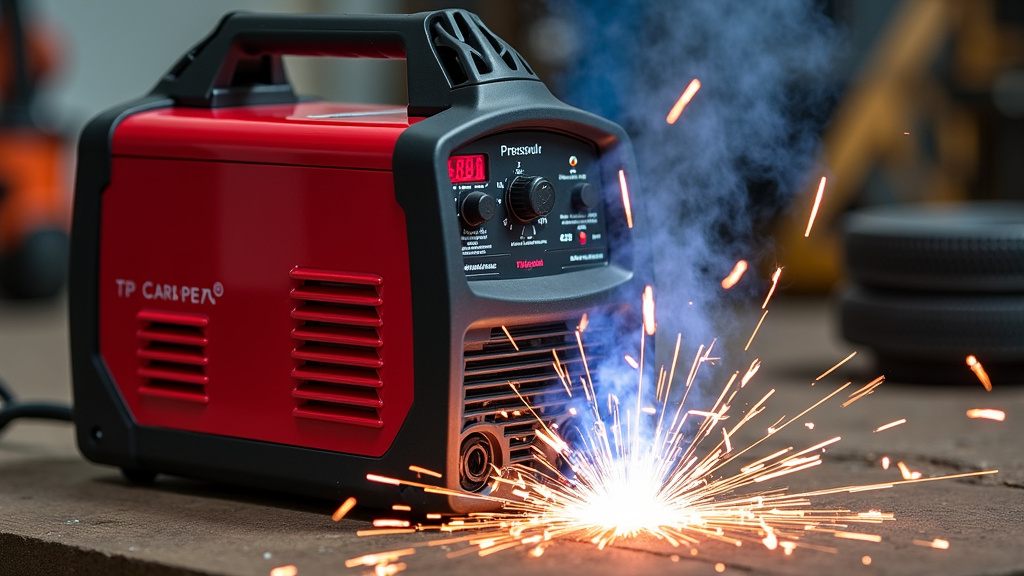
Choosing a portable welder can feel overwhelming. The right welder size depends on your materials and the work you plan to do. To help you make a decision, consider these key points. This checklist will guide you through the important factors.
- Power Needs: What kind of welding projects will you be doing? Thicker metals require more power.
- Portability Factor: How often will you be moving the welder? Consider its weight and size.
- Power Source: Do you need battery power, or will you have access to outlets or a generator?
- Welding Process: Will you be Stick, TIG, or MIG welding? Ensure the welder supports your preferred method.
- Budget: Portable welders vary in price. Set a realistic budget before you start looking.
- Duty Cycle: This indicates how long a welder can run at a certain amperage before it needs to cool down.
Portable Welder vs. Traditional Welder: Key Differences
It’s helpful to see how portable welders stack up against their larger counterparts. This comparison highlights why you might choose one over the other.
| Feature | Portable Welder | Traditional Welder |
|---|---|---|
| Size & Weight | Compact and lightweight, easy to carry. | Large and heavy, often stationary. |
| Power Source | Battery, standard outlet, or small generator. | Typically requires a dedicated high-amperage outlet or industrial generator. |
| Mobility | High mobility, ideal for various job sites and remote locations. | Low mobility, best for fixed workshop environments. |
| Power Output | Generally lower amperage, suitable for thin to medium materials. | Higher amperage, capable of welding thicker metals and heavier applications. |
| Cost | Can range from affordable to moderately expensive. | Can be very expensive, especially industrial units. |
As you can see, portable welders excel in mobility and convenience. Traditional welders offer more power for heavy-duty industrial tasks. Your choice depends entirely on your specific needs and where you’ll be welding.
Conclusion
You’ve learned that portable welders are your go-to solution for welding away from a fixed workshop. Their compact design and flexible power sources mean you can tackle repairs and projects just about anywhere. Whether you’re a DIYer, a farmer, or a technician, these welders offer incredible convenience. They let you bring your welding power right to the job. Ready to get started? Now that you understand the basics, it’s time to compare models based on your specific project needs and power source availability.
Frequently Asked Questions
Can a portable welder replace a traditional workshop welder?
For most DIY projects and field repairs, yes, a portable welder can be sufficient. However, if you regularly work with very thick materials or require extremely high amperage for extended periods, a traditional workshop welder might still be necessary.
How long can a battery-powered portable welder operate on a single charge?
The welding time varies greatly depending on the battery capacity (amp-hours) and the type of welding you’re doing. Lighter tasks and lower amperage will allow for longer runtimes compared to continuous, high-amperage welding.
Are portable welders difficult to learn how to use?
Most portable welders are designed with user-friendliness in mind. If you have some basic understanding of welding, you’ll likely find them straightforward. Many models come with clear instructions and tutorials to help you get started.
What is the typical weight range for a portable welder?
Portable welders vary in weight, but they are generally designed for easy transport. You can find models weighing as little as a few pounds up to around 30-50 pounds, making them significantly lighter than stationary units.
Can I use a portable welder for TIG or MIG welding, or just Stick welding?
This depends on the specific model. Many portable welders are designed for Stick welding, but you can also find portable units that support TIG welding. Some advanced models even offer multi-process capabilities for TIG, MIG, and Stick welding.