Flux Core vs MIG Welding: Which Should You Choose? (November 2026)
Choose flux core for outdoor work and less setup, or MIG for cleaner welds in a sheltered space. Flux core vs MIG welding differs mainly in shielding, cleanup and how each process handles wind.
On this page (8 sections)
- Flux Core vs MIG Welding: Which Should You Choose?
- Flux core vs MIG welding: what is the main difference?
- Which process works better outside?
- Which gives you less cleanup?
- How do the welds differ?
- Which machine and setup should you choose?
- What safety and cleanup gear do you need?
- Which process should you choose for your project?
Flux Core vs MIG Welding: Which Should You Choose?
Choose flux core for outdoor work and less setup, or MIG for cleaner welds in a sheltered space. Flux core vs MIG welding differs mainly in shielding, cleanup and how each process handles wind.
Flux core uses tubular wire with flux inside. Self-shielded wire creates shielding as it burns, while conventional MIG uses solid wire and shielding gas from a cylinder.
Both feed wire continuously and can suit repairs and fabrication. Your material, work location, cleanup needs and machine setup point to the better process.
For a comparison of other welding processes, see TIG vs laser welding.
 Best for hand and forearm coverage
TOPDC Welding Gloves 16-Inch 932°F Heat Resistant
Flux core vs MIG welding: what is the main difference?
Flux core wire carries flux that creates shielding, while conventional MIG relies on a separate gas supply. That changes the setup and the way you handle wind and post-weld cleanup.
Flux core wire is hollow, with flux inside. As the wire melts, the flux helps shield the weld area and forms slag over the bead.
Conventional MIG feeds solid wire while gas flows from the torch to shield the weld pool. The gas cylinder, regulator and hose add setup, and drafts can disturb the gas coverage.
The term “MIG” is often used broadly for wire-feed machines, including machines that also run flux core. For a quick overview of the name, read what MIG stands for in welding.
What does the flux do?
Flux helps protect the weld as it forms and affects how the arc behaves. Self-shielded flux core wire can work without an external gas cylinder, but it leaves slag to remove after the pass.
Learn more about what flux does in welding and what flux core wire is. The wire type matters because self-shielded and gas-shielded flux core require different setups.
Which process works better outside?
Self-shielded flux core is usually more practical in wind because it does not depend on a gas cloud from a cylinder. MIG gas shielding can be blown away from the weld area, which may lead to poor protection.
That doesn't make flux core immune to conditions. Wind can still cool the work and carry fumes or sparks, so choose a safe location and follow the wire maker's and machine maker's instructions.
A gasless setup can also reduce equipment to move to a job. A spool and a compatible welder may be easier to carry than a machine, cylinder, regulator and hoses.
If you're weighing gas-free processes, see Can You Weld Without Gas? What to Expect for the tradeoffs.
For a closer look at shielding, read whether flux core welding needs gas.
Which gives you less cleanup?
Conventional MIG usually needs less post-weld cleanup because solid wire does not leave flux slag. Flux core requires you to chip or brush slag away before inspecting or coating the weld.
Both processes can create spatter. Wire choice, surface condition, machine settings and technique affect how much cleanup a job needs, so don't treat either process as spatter-free.
Flux core's slag is part of the process, not dirt to ignore. Remove it between passes where needed and inspect the weld surface before adding another pass or finish.
Conventional MIG can leave a cleaner-looking bead when the joint is prepared and the shielding is right. That does not guarantee a sound weld; fit-up, settings and technique still matter.
How do the welds differ?
Flux core often suits thicker steel and outdoor repairs, while MIG offers a clean process for controlled work on thinner material. The right wire, machine settings and joint preparation matter more than the label alone.
Self-shielded flux core can handle light rust and mill scale according to some wire specifications, but clean metal is still a better starting point. Heavy contamination can affect weld quality with either process.
Conventional MIG can be useful for thin sheet when the machine has suitable control and settings. Use short test welds on scrap of similar thickness before welding the actual part.
Flux core can make vertical or overhead work possible with suitable wire and technique. The weld pool and slag need careful control, so follow the wire's position guidance and practice before taking on a critical joint.
Neither process makes a weak joint strong by itself. Match the wire to the base metal and application, and consult a qualified welding professional for structural or safety-critical work.
Which machine and setup should you choose?
Choose a machine that explicitly supports the process and wire you intend to use. Check polarity, wire diameter, drive rolls and duty limits in the manual before you start.
Some machines handle both gas MIG and self-shielded flux core. Switching processes may require changing polarity and setup, so use the machine's instructions rather than assuming one configuration fits both.
The YESWELDER 135A MIG Welder supports gasless flux core MIG, stick and lift TIG modes, with 110V input and 135A output. For an explanation of the arc-start method, read what lift TIG welding is.
Its lift TIG mode requires an extra torch.
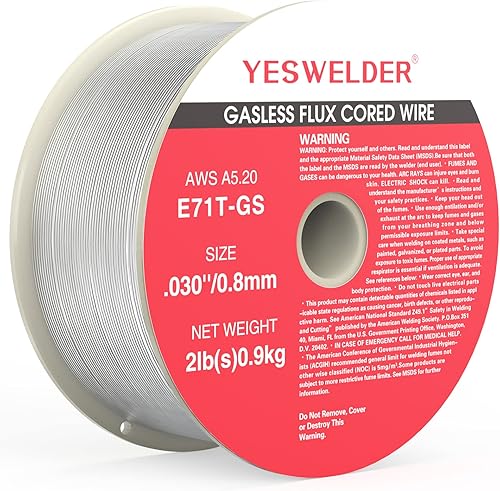
For gasless flux core wire, the YESWELDER E71T-GS spool is 0.030 in diameter and intended for mild and low-alloy steel. Match its diameter to the machine's feed setup.
What safety and cleanup gear do you need?
Use a welding helmet, suitable clothing, gloves and ventilation for either process. Flux core slag and spatter make eye and skin protection essential, while MIG gas cylinders need secure handling.
Keep flammable items away, protect nearby people from arc flash and follow the machine manual. Never weld on containers that may have held flammable materials unless a qualified person has made them safe.
Long gloves can cover more of the forearm during welding. The TOPDC gloves are 16 in long, made from split cowhide and cotton lined, with Kevlar stitching.
For MIG torch upkeep, Forney 37031 nozzle gel is made for MIG nozzles and contact tips. It is described as silicon free and non-flammable.
Which process should you choose for your project?
Pick flux core for outdoor work and a simpler gas-free setup; pick MIG for sheltered work where less slag cleanup matters. Then confirm the machine, wire and joint are suited to the material and thickness.
Choose self-shielded flux core if you work where wind makes gas shielding impractical, or you want to avoid bringing a cylinder. Expect slag removal and check the wire's intended steel and position.
Choose conventional MIG if you have a sheltered workspace, a compatible gas setup and want to avoid flux slag. It can suit controlled repairs and fabrication where a cleaner bead and less cleanup are useful.
If you're comparing another wire-feed process, see flux core welding vs stick. For another MIG comparison, explore laser welding vs MIG welding.
For MIG torch maintenance, push vs pull MIG welding covers another setup choice. Start with the process that fits your work area and cleanup tolerance, then follow the wire and machine instructions for setup.
Frequently asked questions
Is flux core welding the same as MIG?
They are both wire-feed arc welding processes, but the wire and shielding differ. Flux core wire contains flux that creates shielding, while conventional MIG uses a separate shielding gas.
Some machines support both, but they need the correct wire, polarity and setup for the chosen process.
Can you use flux core wire in a MIG welder?
You can use flux core wire in a MIG machine if it supports that wire size and process. Check the machine manual for polarity, drive roll, liner and setup instructions before loading wire.
A MIG machine name alone doesn't confirm it is ready for self-shielded flux core.
Which is better for welding outdoors, flux core or MIG?
Self-shielded flux core is usually the better fit outdoors because it does not rely on an external gas shield that wind can disturb. Wind can still affect the work area, so follow the wire and machine instructions and use safe ventilation and fire controls.
Does flux core welding need gas?
Self-shielded flux core wire does not need external shielding gas; its flux creates shielding during welding. Gas-shielded flux core wire is a different type and does need gas.
Check the wire label and machine instructions to confirm the process and setup.
Is MIG welding cleaner than flux core?
Conventional MIG generally leaves less slag because its solid wire has no flux core. Flux core leaves slag that needs removal, and wire type and settings affect spatter and bead appearance in either process.
Clean the joint and inspect each weld before continuing.


