9 Best Welders for Auto Body Work (November 2026)
The best welders for auto body work include the ARCCAPTAIN 200A MIG Welder 110V 220V for multi-process flexibility, the YESWELDER 160A MIG Welder for garage versatility, and the YESWELDER 135A MIG Welder for thin auto panels.
On this page (6 sections)
The best welder for auto body work for most repairs is the YESWELDER 135A MIG Welder, because its 110V flux-core setup and synergic control suit thin panels. Choose the ARCCAPTAIN for more welding modes, or the VEVOR when the job is dent pulling rather than seam welding.
Auto body work rewards controlled heat. Thin sheet metal can warp or burn through when the machine is set too high, so the best choice is usually a MIG or flux-core welder with a manageable low-current range.
If you need a broader look at thin steel, compare our guide to the best welder for sheet metal. For exhaust tubing, see the separate picks for the best welder for exhaust pipe.
Our picks at a glance
-
1
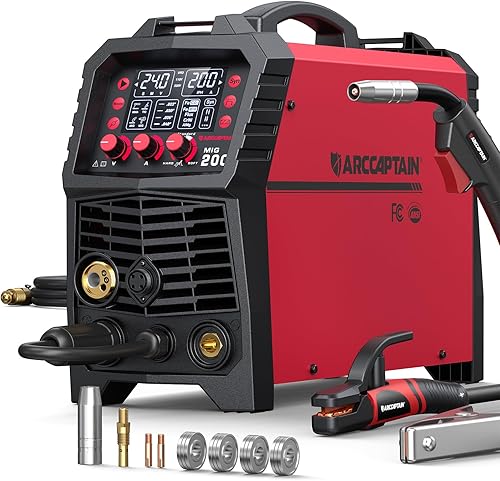 Best for multi-process flexibility
ARCCAPTAIN 200A MIG Welder 110V 220V
9.7/10 our score
See it on Amazon -
2

-
3

- 4
 Check it
Eioehtl 250Amp Stick Welder 110V/220V Dual Voltage
Best for heavier repair work - 5
 Check it
TECWELD 200A Stick Welder 110V
Best for portable stick repairs - 6
 Check it
VEVOR 90E Stud Welder Dent Repair Kit
Best for pulling shallow dents - 7
 Best for a ready-to-start garage kitCheck it
- 8
 Check it
Sakerplus Portable Welding Machine
Best for simple mobile repairs - 9
 Best for basic dual-voltage stick workCheck it
The best welders for auto body work by repair type
The best welder for auto body work depends on whether you're joining thin panels, repairing brackets or pulling dents. MIG and flux-core machines lead this group for panel seams, while stick and stud welders solve narrower problems.
Our score weighs specs, features and buyer feedback against the needs of automotive sheet-metal repair. We checked the stated output, input options, process control, included equipment and fit for thin or heavier work.
| Product | Best for | Output | Input | Modes | Our score |
|---|---|---|---|---|---|
| ARCCAPTAIN 200A MIG Welder 110V 220V | multi-process flexibility | 200A | 110V or 220V | MIG, flux core, stick, spot, lift TIG and spool-gun connector | 9.7 |
| YESWELDER 160A MIG Welder | garage versatility | 160A | 110V or 220V | 9.6 | |
| YESWELDER 135A MIG Welder | thin auto panels | 135A | 110V | 9.5 | |
| Eioehtl 250Amp Stick Welder 110V/220V Dual Voltage | heavier repair work | 250A | 110V or 220V | 9.4 | |
| TECWELD 200A Stick Welder 110V | portable stick repairs | 200A | 110V | 9.3 | |
| VEVOR 90E Stud Welder Dent Repair Kit | pulling shallow dents | 8.9 | |||
| Futelo 145A MIG Welder | a ready-to-start garage kit | 30A to 145A | 110V | 8.6 | |
| Sakerplus Portable Welding Machine | simple mobile repairs | 110V | 8.1 | ||
| DEKOPRO 110/220V MMA Welder | basic dual-voltage stick work | 160A | 110V or 220V | 8.0 |
ARCCAPTAIN 200A MIG Welder 110V 220V: Best for multi-process flexibility
- 6 welding modes
- 110V and 220V input
- Synergic MIG control
- 10 preset settings
A broad set of welding modes makes this a flexible choice for garages that handle more than thin automotive panels. Its synergic controls and 10 presets can shorten setup between jobs.
Pros
- 110V and 220V input
- MIG and spot-welding modes
- 10 preset settings
Cons
- TIG gun and spool gun are not included
- .023 in and .040 in rollers must be bought separately
The ARCCAPTAIN 200A MIG Welder is the most flexible pick for a garage that handles body panels, brackets and general metal repairs. It supports gas MIG, gasless flux-core MIG, stick, spot welding and lift TIG, with an optional spool-gun connector.
Its 110V and 220V input gives you more setup options than a 110V-only machine. Synergic MIG control matches recommended current and wire speed to the selected wire diameter and gas material, while manual adjustment remains available.
The machine supports .023 in, .030 in and .035 in solid wire, .030 in and .035 in flux-core wire, and .035 in or .040 in aluminum wire. The .023 in and .040 in rollers must be bought separately, and the TIG gun and spool gun are not included.
Ten preset settings can save time when you return to common jobs. Choose it when one machine needs to cover body repair and several other welding processes.
YESWELDER 160A MIG Welder: Best for garage versatility
- 4-in-1 welding
- 110V and 220V input
- Synergic and manual controls
- Works with 2 lb and 10 lb spools
This 4-in-1 machine suits a garage that needs MIG, flux core, stick and lift TIG functions. Dual voltage gives you more outlet flexibility, while manual controls leave room for fine adjustments.
Pros
- Dual-voltage input
- Synergic and manual control
- MIG, flux core, stick and lift TIG
Cons
- Extra lift TIG torch required
- Heavier than the compact 110V picks
The YESWELDER 160A MIG Welder fits a garage that wants one machine for automotive work, fabrication and DIY repairs. Its 4-in-1 design covers gas MIG, flux core, stick and lift TIG.
The dual-voltage 110V/220V input helps when your workspace has different power options. Synergic control adjusts recommended voltage and wire speed as you change thickness or amperage, while manual controls let experienced users fine-tune the settings.
It works with 2 lb and 10 lb spools of .030 in and .035 in solid or flux-core wire. Stick mode supports most 6010, 6011, 6013 and 7018 rods.
The included components are a 220V-to-110V adapter, gas hose, drive roller, ground clamp, electrode holder, MIG torch and MIG torch tips.
Choose this model if you want more range than a compact 110V panel welder. Its 27.5 lb weight makes it less convenient for carrying around a vehicle than the lighter options.
YESWELDER 135A MIG Welder: Best for thin auto panels
- 110V flux-core MIG
- Synergic control
- 3-in-1 operation
- Includes .030 in and .035 in flux-core wire
The 135A output and synergic control make this the clearest match for thin automotive sheet metal in this group. It also adds stick and lift TIG modes for occasional repair work.
Pros
- Thin-panel focus
- Flux-core wire included
- Lightweight 110V format
Cons
- Extra lift TIG torch required
- No dual-voltage input
The YESWELDER 135A MIG Welder is the strongest thin-panel match in this roundup. Its 110V flux-core design and synergic control help keep setup simple while giving you a lower-output platform for mild steel up to 3/32 in.
The machine also supports stick and lift TIG, although an extra lift TIG torch is required. It includes E71T-GS flux-core wire in .030 in and .035 in sizes, along with an electrode holder, ground clamp and MIG torch.
A voltage micro-adjustment of plus or minus 3V gives experienced users a way to fine-tune the arc. The oversized LED display shows real-time current, which helps you check settings without removing your helmet.
At 18.3 lb, it is not the lightest machine here, but it remains practical for a home garage. Pick it when thin auto panels are the main job and you do not need 220V input.
Eioehtl 250Amp Stick Welder 110V/220V Dual Voltage: Best for heavier repair work
- 250A output
- 110V and 220V auto-switching
- Hot start, arc force and anti-stick
- Includes 10 rods and clamps
This stick welder is better suited to brackets, frames and heavier repairs than delicate visible body seams. Its dual-voltage design and compact 8.56 lb body help with mobile work.
Pros
- High stated output
- Dual-voltage auto-switching
- Complete basic stick-welding kit
Cons
- Stick welding is harder to control on thin sheet metal
- 220V adapter sold separately
The Eioehtl 250Amp Stick Welder is aimed at heavier repairs, including brackets, farm equipment and thicker steel parts around a vehicle. Its 110V/220V auto-switching design works with either a household outlet or a 220V jobsite source, although the 220V adapter is sold separately.
It supports 3/32 in to 1/8 in electrodes and includes 10 welding rods, an electrode holder, ground clamp and brush. Hot start helps with arc ignition, arc force supports penetration and anti-stick helps reduce rod adhesion.
The 8.56 lb body is easy to carry, but stick welding is less forgiving than MIG on thin visible panels. Use it when the repair needs electrode welding and more current, not as the first choice for a smooth body seam.
TECWELD 200A Stick Welder 110V: Best for portable stick repairs
- 200A output
- Hot start, arc force and anti-stick
- 5 lb mini inverter body
- Includes helmet, gloves and 20 rods
The small 110V body is easy to carry for repairs away from the garage. It can weld several steel types, but stick electrodes demand careful heat control on thin body panels.
Pros
- Very light body
- Safety gear and rods included
- Hot start and anti-stick
Cons
- Stick process is less forgiving on thin panels
- 110V only
The TECWELD 200A Stick Welder suits mobile repairs where you need a small machine and a complete basic kit. Its 5 lb body measures 8.6 x 4.1 x 5.5 in and includes a shoulder strap for carrying.
It welds stainless steel, alloy steel, carbon steel and copper up to 1/4 in thick according to its stated use. The machine supports E6013, E6011, E6010 and E7018 rods from 1/16 in to 1/8 in.
Hot start, arc force and anti-stick make electrode starts easier to manage. The kit includes a ground clamp, electrode holder, folding helmet, welding brush, shoulder strap, 20 welding rods and professional welding gloves.
This is a useful choice for brackets and thicker repair pieces. For thin exterior panels, use short welds and careful heat control because the stick process produces a different arc and cleanup routine than MIG.
VEVOR 90E Stud Welder Dent Repair Kit: Best for pulling shallow dents
- 7 welding modes
- 110V and 3KW input power
- Single-sided welding
- Accessory kit in a toolbox
This is a dent-pulling tool rather than a general MIG welder. Its single-sided stud-welding design suits body panels when you need to attach pulling points without reaching the rear side.
Pros
- Made for dent removal
- 7 operating modes
- Accessory kit included
Cons
- Heavy at 53.8 lb
- Not a general-purpose seam welder
The VEVOR 90E Stud Welder Dent Repair Kit is the right specialist tool for pulling dents from automotive body panels. It attaches studs through single-sided welding, so you can work from the outside when access behind the panel is limited.
Its 7 welding modes cover different stud types and dent sizes. The stated single-sided welding thickness is 0.6 to 1.2 mm, and the kit includes an accessory set stored in a toolbox.
This machine is not a replacement for a MIG welder when you need to join seams or install patches. At 53.8 lb, it is also much heavier than the portable welders in this roundup.
Choose it for dent removal and controlled pulling work. If you need a dedicated comparison, see our guide to the best spot welder for auto body.
Futelo 145A MIG Welder: Best for a ready-to-start garage kit
- 30A to 145A output
- 3-in-1 MIG, stick and lift TIG
- Synergic control
- Includes torch, wire and safety gear
Futelo combines a compact 110V MIG machine with a broad starter bundle. Its current range and suggested metal thickness can help new welders set up repairs without guessing every control.
Pros
- Compact 110V design
- MIG, stick and lift TIG modes
- Many starter accessories included
Cons
- TIG torch is not included
- Lower output than the larger MIG picks
The Futelo 145A MIG Welder is a compact starter option for home garages and small repair jobs. Its 30A to 145A range supports MIG, stick and lift TIG, while synergic control adjusts voltage and wire speed after you select wire diameter or amperage.
The 110V machine weighs 7.48 lb and includes a 14AK MIG torch, ground clamp, electrode holder, five 2.5 in welding rods, .9 mm flux-core wire, two contact tips, a wrench, safety goggles, gloves, a hammer and a user manual.
It supports carbon and stainless steel from 1 to 5 mm according to its stated use. The TIG torch is not included, so lift TIG requires an extra purchase.
Choose Futelo if portability and a ready-to-start accessory set matter more than dual-voltage operation. Its lower maximum output keeps it closer to light repair work than heavy fabrication.
Sakerplus Portable Welding Machine: Best for simple mobile repairs
- 3.75 lb handheld body
- 5 current settings
- 110V input
- Includes 30 welding rods and safety gear
The handheld format is useful for short repairs in tight spaces or away from shop power. Its lower current settings are aimed at controlled heat, but it remains an electrode welder rather than a thin-panel MIG.
Pros
- Very light handheld design
- Five simple current settings
- Carry case and safety items included
Cons
- Stick process requires more technique on sheet metal
- 110V only
The Sakerplus Portable Welding Machine is built for simple repairs where carrying weight matters. Its 3.75 lb handheld body uses 110V power and offers five current settings: 20A, 45A, 70A, 95A and 120A.
The lower settings are intended for controlled heat on thin sheet metal, while the higher settings provide more penetration on thicker steel. It works with alloy steel, carbon steel and iron and uses 3/32 in to 1/8 in electrodes.
The kit includes a carry case, welding ground wire, welding helmet, brush, chipping hammer, 30 3/32 in welding rods, gloves and safety goggles. That makes it convenient for small mobile jobs.
It is still an electrode welder, so it needs more technique for clean body-panel work than a MIG machine. Choose it for occasional repairs in tight spaces, not for long visible seams.
DEKOPRO 110/220V MMA Welder: Best for basic dual-voltage stick work
- 160A output
- 110V and 220V operation
- Hot start and anti-stick
- Digital display
DEKOPRO is a straightforward option for brackets, supports and general metal repairs where stick welding fits the job. Its dual-voltage design adds flexibility, but it is not the first choice for clean, thin body seams.
Pros
- Dual-voltage design
- Hot start and anti-stick
- Compact carrying handle
Cons
- MMA only
- Less suited to thin automotive sheet metal
The DEKOPRO 110/220V MMA Welder is a basic dual-voltage stick option for brackets, supports and general metal repairs. Its 160A output and IGBT inverter design work with mild steel, stainless steel, cast iron and other stated metal materials.
Hot start increases current during ignition, anti-stick helps prevent the electrode from sticking to the workpiece and arc stability supports work on thin pieces. A digital display and carrying handle keep the controls and transport simple.
The package includes an electrode holder, work clamp, input power adapter cable and brush. It is a practical choice when you already know stick welding and need a compact machine for heavier repairs.
For exterior automotive panels, a MIG or flux-core model is usually easier to control. Choose DEKOPRO when dual-voltage stick welding matters more than fine sheet-metal work.
How should you choose a welder for auto body work?
Choose a MIG or flux-core welder with controlled low output for thin body panels, then match the wire size and heat to the metal thickness. A machine with synergic controls can simplify setup, but you still need clean metal, correct fit-up and short welds.
A 110V machine is convenient for a home garage. Dual-voltage input is more useful when you have access to a 220V circuit or need the same machine for heavier repairs.
The What Is a Portable Welder? A Quick Guide explains the trade-off between easy transport and higher-capacity machines.
You can also review What Size Welder Do I Need? What to Know before choosing a current range.
Is MIG or flux core better for car body panels?
MIG with shielding gas usually gives cleaner work when you can control the workspace, while flux core is useful outdoors or where a gas cylinder is inconvenient. Both processes still require low heat and careful travel speed on thin steel.
Flux-core machines can leave slag that must be removed before you inspect the weld. If you use gas MIG, protect the work area from drafts that can disturb shielding.
Do spot welders help with auto body repair?
Yes, spot and stud welders help with panel-specific repairs that are awkward with a standard torch. A stud welder can attach pulling points from one side, while a spot welder can support certain overlapping sheet-metal joints.
The best spot welder for sheet metal guide covers that narrower equipment category. Pick a stud or spot welder for the repair method, not as a general replacement for a MIG machine.
What setup practices reduce burn-through?
Clean paint, rust and coatings away from the weld area, fit the panels closely and practice on matching scrap before working on the vehicle. Use short stitches or skip welds when the panel is thin, then let the metal cool between sections.
Protect nearby glass, wiring, trim and interior materials from heat and sparks. Wear the correct helmet, gloves and clothing, keep ventilation moving, and follow the machine's electrical instructions.
If you use TIG for detailed work, compare a TIG collet body vs gas lens before choosing torch parts. That choice affects gas coverage and torch setup, not the basic need for clean metal and controlled heat.
Verdict: what is the best welder for auto body work?
The YESWELDER 135A MIG Welder is the best fit for most thin-panel repairs because its 110V flux-core process, synergic control and 135A output focus on manageable heat. Choose the ARCCAPTAIN when you need MIG, stick, spot and lift TIG modes in one machine.
Pick the VEVOR 90E for dent pulling, the Eioehtl or TECWELD for stick-based brackets and heavier repairs, and the Futelo for a compact starter kit. For another exhaust-focused option, continue with the best welder for exhaust pipe.
Our top 3 picks at a glance
-
1
Best for multi-process flexibility
ARCCAPTAIN 200A MIG Welder 110V 220V
9.7/10 our score
See it on Amazon -
2
-
3
Frequently asked questions
What is the best welder for auto body work?
The YESWELDER 135A MIG Welder is the best match here for thin auto body panels because it uses 110V flux-core MIG, synergic control and a 135A output rated for mild steel up to 3/32 in. A MIG process gives you more control over thin sheet metal than most stick welders.
Is MIG or stick better for auto body work?
MIG is usually easier to control on thin automotive sheet metal because the wire feed and heat can be adjusted in smaller steps. Stick welders are more useful for thicker brackets and structural repairs.
For clean body seams, choose a MIG model with low-current control.
How many amps do I need for auto body welding?
Thin body panels need controlled low heat more than a very high maximum amperage. A 135A 110V MIG machine can cover mild steel up to 3/32 in according to its stated use.
Set the machine for the panel thickness, weld in short sections and practice on matching scrap first.
Can a flux-core welder repair car panels?
Yes, a flux-core welder can repair car panels when you use suitable wire, low heat and short welds. It can be useful outdoors because it does not need a shielding-gas cylinder.
Clean the panel well and remove slag between passes before checking the seam.


