9 Best Welders for Sheet Metal (November 2026)
The best welders for thin sheet metal include the ARCCAPTAIN 200A MIG Welder 110V 220V for multiple welding processes, the YESWELDER 160A MIG Welder for dual-voltage flexibility, and the YESWELDER 135A MIG Welder for thin auto body panels.
On this page (6 sections)
Best Welders for Sheet Metal
The YESWELDER 135A MIG Welder is the best welder for sheet metal in this group because its synergic control and voltage micro-adjustment target thin-panel work. If you need more processes or 220V input, consider the ARCCAPTAIN 200A, but compare its low-end control with your material thickness.
Thin sheet metal needs controlled heat. A machine with a high maximum output can still work if its lowest settings are appropriate, but output range, wire choice and technique all matter.
For a plain-language primer on what a MIG welder is and signs to watch for, start there before comparing machines. If moving between jobs matters, our guide to what a portable welder is explains the tradeoffs.
Which welder works best for sheet metal?
A lower-output MIG machine with adjustable settings is usually the most direct fit for sheet metal. MIG lets you use short welds and tune wire speed and voltage, which can help limit heat buildup on thin panels.
We compared the listed processes, adjustment features, input options and any stated thin-material guidance. Our score weighs specs, features and buyer feedback against what you're shopping for.
Our picks at a glance
-
1
 Best for multiple welding processes
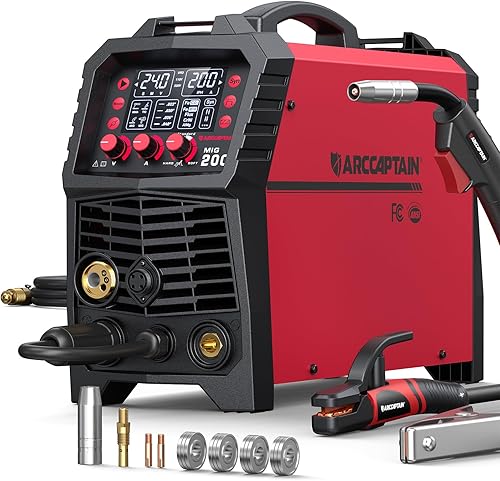
ARCCAPTAIN 200A MIG Welder 110V 220V
9.7/10 our score
See it on Amazon -
2

-
3

- 4
 Check it
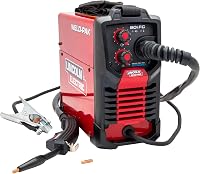
Lincoln Electric 90i FC Flux Core Wire
Best for simple flux-core setup - 5
 Best for rod welding outdoorsCheck it
- 6
 Check it
Hpoouo 200Amp 20PCS Rods Stick Welder
Best for portable stick repairs - 7
 Check it
ARCCAPTAIN 165A MIG Welder 110V 220V 4-in-1
Best for varied shop projects - 8
 Best for very small stick jobsCheck it
- 9
 Check it
FEMEROL 140A 3 in 1 MIG Welder
Best for a light MIG kit
How these sheet metal welders compare
The YESWELDER 135A is the clearest thin-panel match in this list, while the dual-voltage machines make sense when a broader range of shop work matters. Stick welders are included as portable alternatives, but they are not the first choice for delicate sheet.
| Product | Best for | Our score |
|---|---|---|
| ARCCAPTAIN 200A MIG Welder 110V 220V | multiple welding processes | 9.7 |
| YESWELDER 160A MIG Welder | dual-voltage flexibility | 9.6 |
| YESWELDER 135A MIG Welder | thin auto body panels | 9.5 |
| Lincoln Electric 90i FC Flux Core Wire | simple flux-core setup | 9.5 |
| ARCCAPTAIN Stick Welder | rod welding outdoors | 9.4 |
| Hpoouo 200Amp 20PCS Rods Stick Welder | portable stick repairs | 9.3 |
| ARCCAPTAIN 165A MIG Welder 110V 220V 4-in-1 | varied shop projects | 9.3 |
| Siasky Mini Welding Machine | very small stick jobs | 9.2 |
| FEMEROL 140A 3 in 1 MIG Welder | a light MIG kit | 9.2 |
Best welders for sheet metal by use
The right pick depends on whether your priority is thin-panel control, process flexibility or portability. Read the process notes before choosing a machine for body panels or other finished work.
ARCCAPTAIN 200A MIG Welder 110V 220V: Best for multiple welding processes
- 6-in-1 welding modes
- 110V and 220V
- Synergic MIG control
- Stores 10 preset settings
This dual-voltage machine covers several processes, including solid-wire MIG, flux-core MIG and spot welding. Its adjustable settings offer flexibility, though its 200A output range may be more than thin sheet metal needs.
Pros
- Six welding modes
- 110V and 220V input options
- Stores preset settings
Cons
- Some rollers must be bought separately
- TIG and spool gun are not included
The ARCCAPTAIN 200A is the most flexible pick here, with solid-wire MIG, flux-core MIG, stick, spot welding and lift TIG modes. It also has a spool gun connector, with the spool gun and TIG torch sold separately.
For thin sheet work, the useful detail is the synergic MIG control, which matches recommended current and wire speed to the selected wire diameter and gas material. You can adjust current, but the machine's 200A maximum does not by itself tell you how low it can run, so confirm its usable range for your sheet thickness.
The digital display shows settings, and 10 preset slots can save parameters for each welding mode. The machine works with several wire sizes, but the .023 in and .040 in rollers need to be bought separately.
Choose this if you want one unit for sheet metal plus other processes and have both 110V and 220V available. For a dedicated thin-panel setup, compare its minimum output and fine adjustment range with lower-output MIG options.
YESWELDER 160A MIG Welder: Best for dual-voltage flexibility
- 160A output
- 110V and 220V
- Synergic and manual controls
- MIG, flux-core, stick and lift TIG
The 160A output and dual-voltage input make this a flexible choice for a shop that handles more than thin sheet. Synergic settings offer a starting point, and manual controls let you adjust voltage and wire speed.
Pros
- Dual-voltage input
- Synergic and manual control
- Supports several welding processes
Cons
- Lift TIG torch is extra
- More output capacity than some thin-sheet jobs need
YESWELDER's 160A machine offers MIG, flux-core, stick and lift TIG, with 110V and 220V input options. Synergic control selects recommended voltage and wire speed based on the chosen thickness or amperage, and manual controls let you fine-tune both.
That combination can help if sheet metal is one of several jobs you handle. The product supports .030 in and .035 in solid and flux-core wire, along with 2 lb and 10 lb spools.
It does not state a minimum output or a specific sheet thickness range. Before using it on thin panels, confirm its low-end settings and practice on matching scrap.
Choose this for a flexible shop setup where dual-voltage operation and process options matter. For a single-purpose thin-sheet purchase, a lower-output machine with explicit panel guidance may be easier to assess.
YESWELDER 135A MIG Welder: Best for thin auto body panels
- 135A output
- 110V input
- Synergic control
- Voltage micro-adjustment
This lower-output MIG option is aimed at thin-panel work, with synergic control and a small voltage adjustment range. It runs on 110V and supports gasless flux-core MIG, stick and lift TIG.
Pros
- Lower output than the higher-amp picks
- Synergic control and voltage adjustment
- Flux-core wire included
Cons
- 110V input only
- Lift TIG torch is extra
The YESWELDER 135A is the most direct thin-sheet choice in this roundup. Its synergic control matches recommended voltage to wire speed, and a ±3V micro-adjustment gives you a way to fine-tune the arc.
The machine runs on 110V and supports gasless flux-core MIG, stick and lift TIG. It includes .030 in and .035 in flux-core wire, so you can start with those sizes if they suit your material and setup.
The product information specifically names thin auto body panels as a use case, but that does not guarantee a burn-through-free weld. Joint fit, travel speed, material condition and settings still matter.
Practice on scrap with the same thickness before working on a visible panel.
Choose it if low-output MIG control is your main priority and 110V is enough. For other vehicle sheet-metal jobs, compare our guides to the best welder for auto body work and the best welder for exhaust pipe.
Lincoln Electric 90i FC Flux Core Wire: Best for simple flux-core setup
- 120V input
- Flux-core wire feed
- Two-knob control
- 15 lb inverter design
This flux-core wire-feed machine keeps controls simple, with separate knobs for wire speed and voltage. Its maker describes it as best for small jobs, but the fixed 120V input and lack of other listed processes narrow its role.
Pros
- Simple two-knob controls
- Portable design with shoulder strap
- 120V input
Cons
- Flux-core process only
- No listed output range for fine comparisons
Lincoln Electric's 90i FC is a flux-core wire-feed welder with simple controls for wire speed and voltage. It runs on 120V and is described for small jobs, home workshops and portable maintenance work.
The two knobs allow adjustment, which is useful when you need to match a setup to your material. However, no low-end amperage range or thin-sheet thickness guidance is available here, so confirm that it can run at a suitable setting before committing to delicate panels.
The machine includes a gun, nozzle, contact tip, work cable and clamp. Its metal case and shoulder strap suit moving between work areas.
Choose this if you want a compact flux-core machine for small repairs and can verify its minimum output. For sheet metal that calls for a cleaner gas-shielded setup, compare a gas MIG model instead.
ARCCAPTAIN Stick Welder: Best for rod welding outdoors
- Stick and lift TIG modes
- 110V and 220V
- Synergic control
- Hot start and arc force adjustment
This stick welder is a portable option for outdoor maintenance and general metalwork. It is less suited to thin sheet than a MIG machine because the product information does not describe a low-output MIG process.
Pros
- Dual-voltage input
- Stick and lift TIG modes
- Portable with shoulder strap
Cons
- Not a MIG machine
- TIG torch is not included
The ARCCAPTAIN Stick Welder is a portable option for outdoor repair work, but it is less suited to thin sheet than the MIG picks. Stick welding uses an electrode rather than a continuously fed wire, and the product information does not give a low-output range for delicate panels.
It supports stick and lift TIG and accepts 110V or 220V power. Synergic control matches current and voltage to the selected rod diameter, while hot start and arc force can be adjusted.
This model is a reasonable choice when your work includes thicker repair material and you want a machine that is easy to carry. If you're comparing sheet-metal joining approaches, see our guide to the best spot welder for sheet metal.
Hpoouo 200Amp 20PCS Rods Stick Welder: Best for portable stick repairs
- 110V input
- Adjustable 20–200A current
- Includes 20 welding rods
- Hot start and anti-stick
This compact stick machine comes with rods for general repairs and lists use on metal from 0.06 to 0.2 in thick. That range and its stick process make it a less direct match for delicate sheet metal than a low-output MIG welder.
Pros
- Wide listed current adjustment
- Rods and gloves included
- Compact size
Cons
- Stick process rather than MIG
- 110V input only
Hpoouo's mini stick welder has an adjustable 20–200A current range and includes 20 rods. It is intended for 110V use and lists metal thickness from 0.06 to 0.2 in, which starts above many thin body panels.
The included rods and compact size suit small repair jobs where stick welding is appropriate. Hot start, arc force and anti-stick functions are included, but they do not make this the closest match for fine MIG work on thin sheet.
Choose it for portable stick repairs, not as a first pick for thin sheet-metal seams. If access to both sides of a lap joint is available, a spot welder may suit the job better.
ARCCAPTAIN 165A MIG Welder 110V 220V 4-in-1: Best for varied shop projects
- 165A output
- 110V and 220V
- Synergic and manual MIG
- 2 lb spool capacity
This machine combines gas MIG, flux-core MIG, stick and lift TIG in a portable dual-voltage unit. It holds a 2 lb spool and offers parameter adjustment, though its broad feature set may be unnecessary for one thin-sheet task.
Pros
- Dual-voltage input
- Four welding modes
- Synergic and manual MIG controls
Cons
- TIG torch must be bought separately
- Holds 2 lb spool only
This ARCCAPTAIN 165A machine combines gas MIG, flux-core MIG, stick and lift TIG in a dual-voltage unit. Its synergic and manual MIG controls let you adjust settings, and the machine supports a 2 lb wire spool.
For sheet metal, the useful feature is the ability to select synergic MIG parameters by plate thickness, voltage and welding speed. It is rated for mild steel workpieces up to 3/16 in thick, but that does not specify the thinnest material it can weld.
The compact machine includes a MIG torch, ground clamp, electrode holder, wire and related accessories. The TIG torch must be bought separately.
Choose it if you want MIG for sheet work plus stick and TIG modes for other tasks. Before welding thin panels, check the low-end adjustment range and test the setup on scrap.
Siasky Mini Welding Machine: Best for very small stick jobs
- 110V input
- Stick welding
- Hot start and arc force
- Compact design
This compact stick welder is meant for outdoor maintenance, garages and home DIY. It is not a MIG option, so use it only if stick welding suits your material and skill level.
Pros
- Compact and portable
- Current display
- Includes rods and basic accessories
Cons
- Stick process only
- No listed low-output MIG capability
The Siasky Mini Welding Machine is a stick welder for portable maintenance, garage work and home DIY. It has an LED current display and includes rods, electrode clips, work clips, a face shield and brushes.
The product information does not give a low-end output range or a thin-sheet thickness recommendation. Since it is not a MIG machine, it is a less direct fit for thin panel seams than the lower-output MIG options above.
Choose it when a small stick machine and included accessories matter more than MIG control. For joining auto-body panels, compare the best spot welder for auto body guide and the best 200 amp MIG welder roundup.
FEMEROL 140A 3 in 1 MIG Welder: Best for a light MIG kit
- 140A output
- 110V input
- Flux-core MIG, lift TIG and stick
- Synergic and manual control
This 140A machine offers MIG, lift TIG and stick modes, along with a helmet and basic accessories. Its synergic control can match voltage and wire speed to wire diameter, while manual adjustment gives you another way to tune the weld.
Pros
- Three welding processes
- Synergic and manual control
- Helmet included
Cons
- 110V input only
- No specific thin-sheet thickness range given
The FEMEROL 140A MIG welder supports flux-core MIG, lift TIG and stick, with synergic and manual control. The 110V machine is described for material up to 1/8 in thick and supports flux-core wire from .030 in to .040 in.
Synergic control matches voltage and wire speed after you select the wire diameter. If the suggested setting needs adjustment for your sheet, manual control gives you another way to tune it.
It weighs 8.9 lb and includes a welding helmet, torch, ground clamp, electrode holder, wire, nozzles and contact tips. No specific minimum output or thin-panel range is stated, so test on scrap before working on finished sheet.
Choose this if you want a light MIG kit for general home projects and can confirm it suits your material. For a broader model comparison, see the best VEVOR MIG welder guide.
What should you check before welding thin sheet?
Check the machine's minimum output, wire options and control range before using it on thin sheet. A high maximum output matters less than whether you can set a stable arc low enough for the material.
Does a lower output MIG welder help prevent burn-through?
A lower output range can make thin sheet easier to weld, but technique and setup still determine heat input. Look for fine voltage or current adjustment and use a wire size suited to the joint.
Do short stitches or tacks instead of running a long bead across a thin panel. Let the metal cool between sections and practice on scrap cut from similar material.
Should you use gas or flux-core wire?
Gas-shielded MIG can be a good indoor option when you want less slag cleanup, while flux-core wire can be useful outdoors because it does not rely on an external shielding gas supply. Wind, joint access and the machine's compatible wire sizes all affect the choice.
Do not assume every machine supports every wire diameter or spool size. Check those limits and match the wire to the material and process instructions.
Is a spot welder better for overlapping panels?
A spot welder may be better when you are joining overlapping sheet at discrete points and can reach both sides of the joint. It creates localized welds rather than a continuous seam.
For lap joints and auto-body panel replacement, review the best spot welder for sheet metal and best spot welder for auto body guides. The joint design and access determine whether spot welding is practical.
Which sheet metal welder should you choose?
Choose the YESWELDER 135A if thin-panel MIG control is your main goal, since it pairs synergic settings with voltage micro-adjustment and is specifically described for thin auto body panels. Pick the ARCCAPTAIN 200A for more processes, or the Lincoln 90i FC for simple flux-core work after confirming its low-end settings suit your sheet.
For vehicle panel repairs, compare the best welder for auto body work. If you need a portable unit for jobs away from the bench, read the portable welder quick guide.
Our top 3 picks at a glance
-
1
Best for multiple welding processes
ARCCAPTAIN 200A MIG Welder 110V 220V
9.7/10 our score
See it on Amazon -
2
-
3
Frequently asked questions
What type of welder is best for thin sheet metal?
A MIG welder with a low, controllable output is often the easiest place to start for thin sheet metal. Synergic control, voltage adjustment and suitable wire sizes can help you tune the setup.
Check the machine's low-end output and the metal thickness you plan to join before buying.
Can you use a 200A welder on sheet metal?
Yes, if it can be adjusted low enough for the sheet and the setup matches the material. A 200A maximum does not mean every weld runs at 200A, but the minimum output and control range matter for thin work.
Practice on matching scrap before welding a finished panel.
Is flux-core MIG suitable for thin sheet metal?
Flux-core MIG can join thin sheet, but heat control is important because thin material can burn through. Use the wire and settings recommended for your machine, and test on scrap of the same thickness.
A gas MIG setup may offer a cleaner weld area, depending on your conditions and equipment.
Should I choose MIG or spot welding for sheet metal?
MIG suits seams and repairs where you can control heat with short welds. Spot welding joins overlapping panels at separate points and can resemble factory-style resistance welds.
Choose based on the joint design, access to both sides and the equipment you have.
How do you reduce burn-through on thin metal?
Use the lowest practical heat setting, keep the wire and travel speed suited to the material, and avoid holding the arc in one spot. Tack or stitch short sections with pauses so the panel can cool.
Practice on scrap first, because the right settings depend on the machine, wire and joint.