What Is Resistance Welding? What to Know
Resistance welding is a manufacturing process that uses electrical current and pressure to join metal parts together. It works by passing a high current through the workpieces at a specific contact point. The resistance to this current creates intense heat, which melts the metal and forms a solid weld.
This method is widely used for its speed and efficiency in creating strong, consistent joints. It is common in automotive, aerospace, and appliance manufacturing. The process is clean and doesn’t require filler materials, making it a practical choice for many industrial applications.
- Resistance welding joins metals using electrical current and pressure.
- The heat is generated by the metal’s resistance to the electrical flow.
- Common types include spot, seam, and projection welding.
- It is fast, efficient, and creates strong, reliable joints.
- Widely used in industries like automotive and electronics manufacturing.
Below, we break down the key types of resistance welding and how the process actually works step by step.
How Resistance Welding Actually Works
At its heart, resistance welding is surprisingly straightforward. Think of it like toasting a sandwich with a very focused, powerful iron. Two pieces of metal are placed together under pressure. A heavy electrical current is then passed through that specific point. The secret ingredient isn’t a flame—it’s the metal’s own resistance to the electricity.
This resistance turns electrical energy into intense heat at the exact point of contact. The temperature shoots up, melting the metal at that tiny spot. The pressure is maintained, and as the current stops, the molten metal cools and solidifies into a single, unified joint. You get a strong weld without any added solder or filler material.
The Five-Step Process in Detail
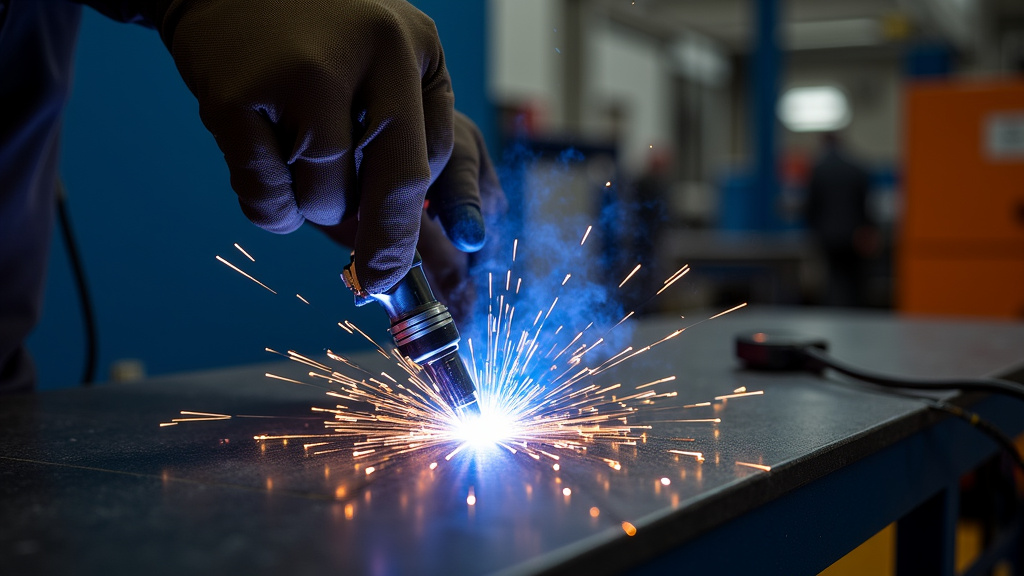
Let’s walk through what happens in a fraction of a second during a spot weld. First, the two metal sheets are clamped together between two copper alloy electrodes. Think of these electrodes like highly conductive fingers applying firm pressure.
Next, a precisely controlled electrical current flows from one electrode, through the metal, and into the other electrode. The resistance at the interface between the two metal sheets creates the heat. A small, molten nugget forms where the metals meet. The pressure holds everything still while the nugget cools. Finally, the current and pressure are released, leaving a solid, fused joint.
The Main Types of Resistance Welding
While the core principle is the same, manufacturers use different setups for different jobs. The most common types are spot, seam, projection, and upset welding. Each is a specialist for a particular kind of metal shape or product.
Spot Welding: The Auto Industry Favorite
This is what you probably picture. It uses two pointed electrodes to create individual, dot-like welds. You’ll find it all over car bodies. It’s perfect for joining overlapping sheets of steel quickly. A single car can have thousands of spot welds holding its frame together.
Seam Welding: For Leak-Proof Seams
Imagine spot welding’s continuous cousin. Instead of points, seam welding uses rotating wheel-shaped electrodes. As the wheels turn and press the metal, a series of overlapping spot welds creates a continuous, watertight seam. This is ideal for making fuel tanks, mufflers, or any container that needs to hold liquid or gas.
When to Choose Seam Over Spot
Choose seam welding when airtight or watertight integrity is non-negotiable. A series of individual spot welds might have microscopic gaps between them. A continuous seam eliminates that risk. It’s a slower process than spot welding, but the result is a fully sealed joint.
Projection Welding: Precision for Studs and Nuts
This type uses specially shaped parts that have a small bump or “projection.” The electrical current concentrates on these tiny projections, focusing the heat exactly where it’s needed. It’s the go-to method for attaching nuts, bolts, and fasteners to sheet metal parts. You see it in brackets and electronics chassis.
Upset Welding: Joining End-to-End
Unlike the others that join overlapping pieces, upset welding joins two pieces end-to-end. Think of making a bicycle chain link. The two ends are heated and then forcefully “upset” or pressed together. The material thickens at the joint, creating a very strong bond for rods, wires, and tubes.
Comparing Resistance Welding Types at a Glance
Choosing the right method depends on the geometry of your parts and the final product’s requirements. This table breaks down the key differences in a practical way.
| Type | Best For | Electrode Style | Key Advantage |
|---|---|---|---|
| Spot Welding | Overlapping sheets (e.g., car panels) | Copper points or tips | Extremely fast for joining multiple points |
| Seam Welding | Creating leak-proof seams (e.g., fuel tanks) | Rotating copper wheels | Produces a continuous, sealed joint |
| Projection Welding | Attaching hardware to sheets (e.g., nuts, brackets) | Flat platens or custom shapes | Focuses heat on specific points for accuracy |
| Upset Welding | Joining ends of rods, wires, or tubes | Clamping jaws | Creates a strong, thickened joint end-to-end |
Why Resistance Welding is an Industrial Workhorse
This process dominates factory floors for very good reasons. It offers a powerful combination of benefits that other welding methods struggle to match. We found that its advantages translate directly to lower costs and higher productivity for manufacturers.
- Speed: A single spot weld takes less than a second. You can complete hundreds of welds in the time it takes to set up for one arc weld.
- Automation: It’s perfectly suited for robots. High-volume assembly lines rely on its consistency and repeatability 24/7.
- Clean Process: No shielding gases, no fumes, no added filler metal. The result is a cleaner work environment and lower material costs.
- Strong Joints: When done correctly, the weld is often as strong as, or stronger than, the base metal itself.
- Energy Efficiency: Heat is generated only at the weld point, not along a long weld seam. This makes it very efficient.
Common Materials and Where You’ll Find It
Resistance welding works best on materials with low electrical resistance. This primarily means metals. The process is most common with steel and stainless steel. Aluminum is trickier because it’s highly conductive, so it requires much more specialized equipment and precise control.
You are almost certainly surrounded by products made with this technology. It’s not just for heavy industry. Your kitchen appliances, the metal furniture in your office, even the frame of your laptop may use it.
Automotive and Aerospace
This is the heartland of resistance welding. Car bodies, frames, and engine components are classic examples. In aerospace, it’s used for high-strength alloys where consistency and reliability are life-critical. Many guidelines point to it as essential for mass-producing safe, lightweight vehicles (Department of Energy).
Consumer Electronics and Appliances
Think about the metal casing of a microwave, a washing machine, or a computer server rack. These are often seam-welded for a clean, sealed look and structural integrity. It’s also used for smaller components like battery contacts in electronics.
What Are the Limitations?
No process is perfect. While resistance welding is incredible for many tasks, it has specific constraints. Understanding these helps you know when it’s the right tool and when you might need something else.
First, it requires good electrical conductivity. Materials like titanium or copper alloys with very low resistance can be challenging. Second, it needs a specific joint geometry. Overlapping sheets are ideal; joining thick plates or complex curves often requires a different method like MIG or TIG welding.
Access to both sides of the joint is usually necessary to place the electrodes. This isn’t always possible. Finally, it can leave surface marks from the electrodes. For applications where appearance is critical, these marks might need to be hidden or finished.
Quality Control: A Quick Checklist
A reliable resistance weld isn’t accidental. It’s the result of controlling several key variables. Manufacturers constantly monitor these factors to ensure every joint meets strength standards.
- Current Level: Too little current creates a weak “cold weld.” Too much can burn through the metal.
- Weld Time: The duration the current flows must be precisely timed for the material thickness.
- Electrode Pressure: Inconsistent pressure leads to poor contact and an inconsistent weld nugget.
- Electrode Condition: Worn or contaminated electrodes must be maintained or replaced regularly.
- Material Cleanliness: Oils, rust, or coatings can interfere with the electrical flow and heat generation.
The Final Word on Resistance Welding
So, what is resistance welding? It’s a cornerstone of modern manufacturing—a fast, efficient, and clean way to fuse metals using their own electrical resistance. From the car you drive to the appliances in your home, its fingerprints are everywhere.
You now know it’s not one single process, but a family of techniques. Spot, seam, and projection welding each solve specific problems. While it has limitations, its benefits in speed, automation, and joint strength make it irreplaceable for high-volume metal fabrication. It’s a perfect example of using a fundamental principle of physics to build the world around you.
Conclusion
Resistance welding is a fast, reliable, and efficient way to join metals using electrical current and pressure. You’ve learned it’s not one single method, but a family of techniques like spot, seam, and projection welding. Each type serves a specific purpose, from building car frames to creating leak-proof tanks. We found this process is a true workhorse in manufacturing because of its speed, strong joints, and clean operation. While it has limits, its benefits are clear for high-volume work. If you work with metal fabrication, understanding these methods helps you choose the right tool for the job and build better products.
Frequently Asked Questions
Is resistance welding the same as MIG or TIG welding?
No, they are different processes. Resistance welding uses electrical resistance and pressure to create heat, with no filler material. MIG and TIG welding use an electric arc and typically require a filler wire or rod. Resistance welding is faster for repetitive joints, while MIG and TIG offer more flexibility for complex shapes.
Can you use resistance welding on aluminum?
It is possible, but it’s much more challenging. Aluminum conducts electricity very well, which reduces the heat from resistance. Specialized equipment and precise control are needed to generate enough heat for a strong weld. It is not as straightforward as welding steel.
How strong is a resistance weld?
When done correctly, a resistance weld is extremely strong. The weld nugget is often as strong as, or stronger than, the surrounding base metal. The joint’s strength depends on proper control of current, time, and pressure, which is why quality control is critical in manufacturing.
What causes a weak resistance weld?
Weak welds often come from inconsistent process variables. Insufficient electrical current creates a “cold weld.” Dirty metal surfaces or worn electrodes can also disrupt the electrical flow. Poor electrode pressure can lead to inadequate contact and a weak joint.
Is resistance welding used for small projects?
It’s primarily used in industrial and manufacturing settings for high-volume production. While hobbyists can find small spot welders for projects like battery packs, it’s not common for general DIY or repair work. The equipment is usually specialized and expensive for one-off tasks.